La Caverne du Pont Neuf
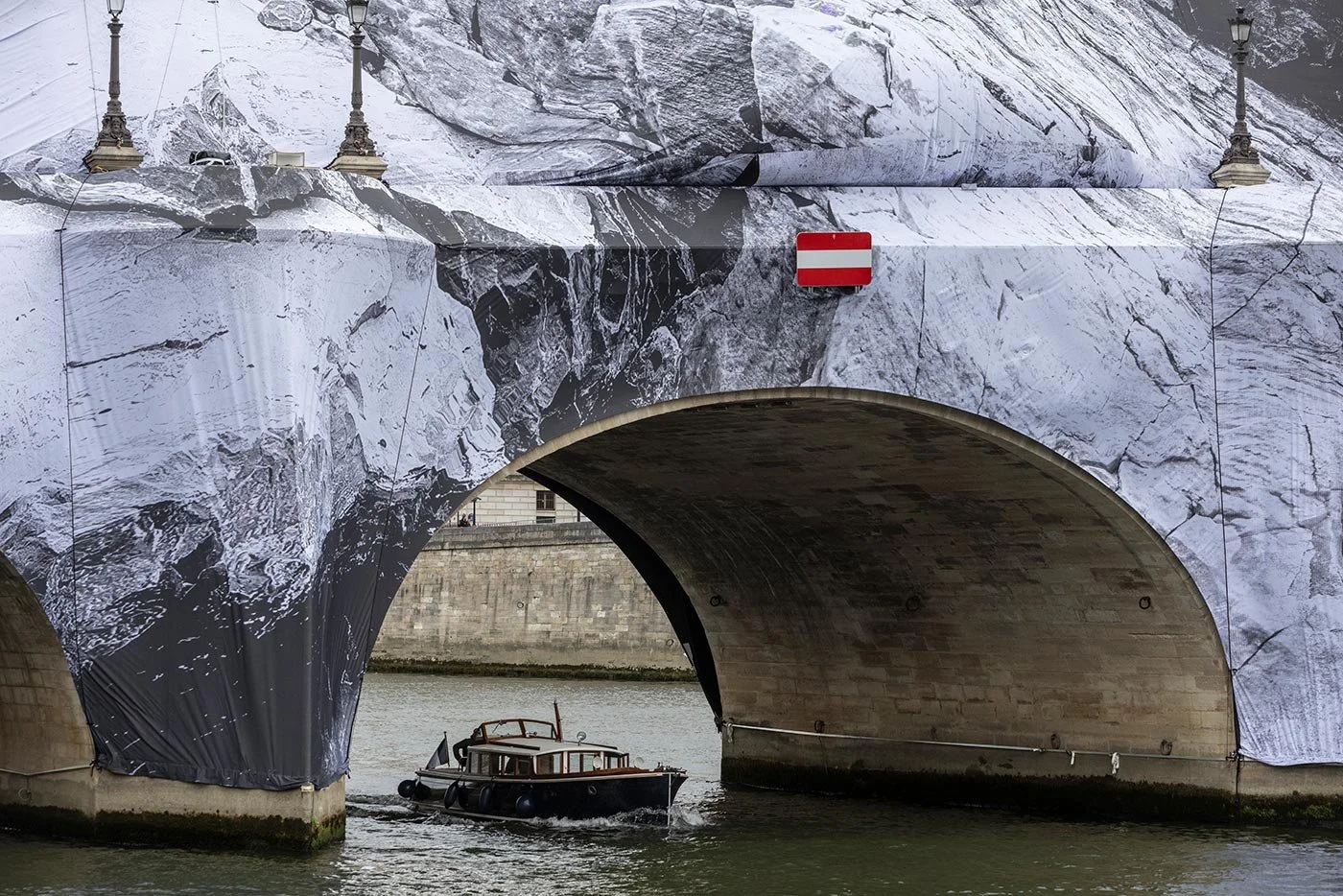
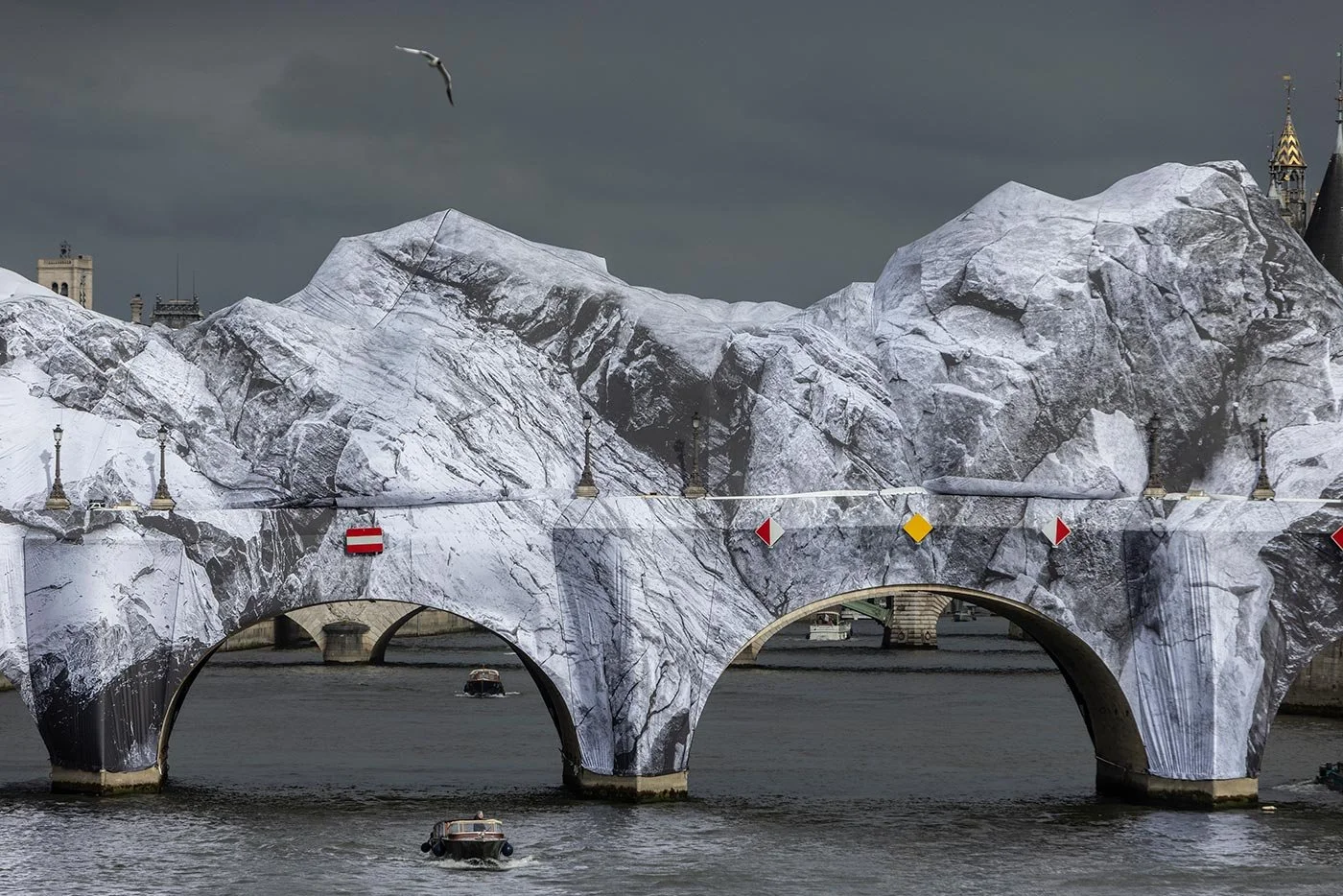
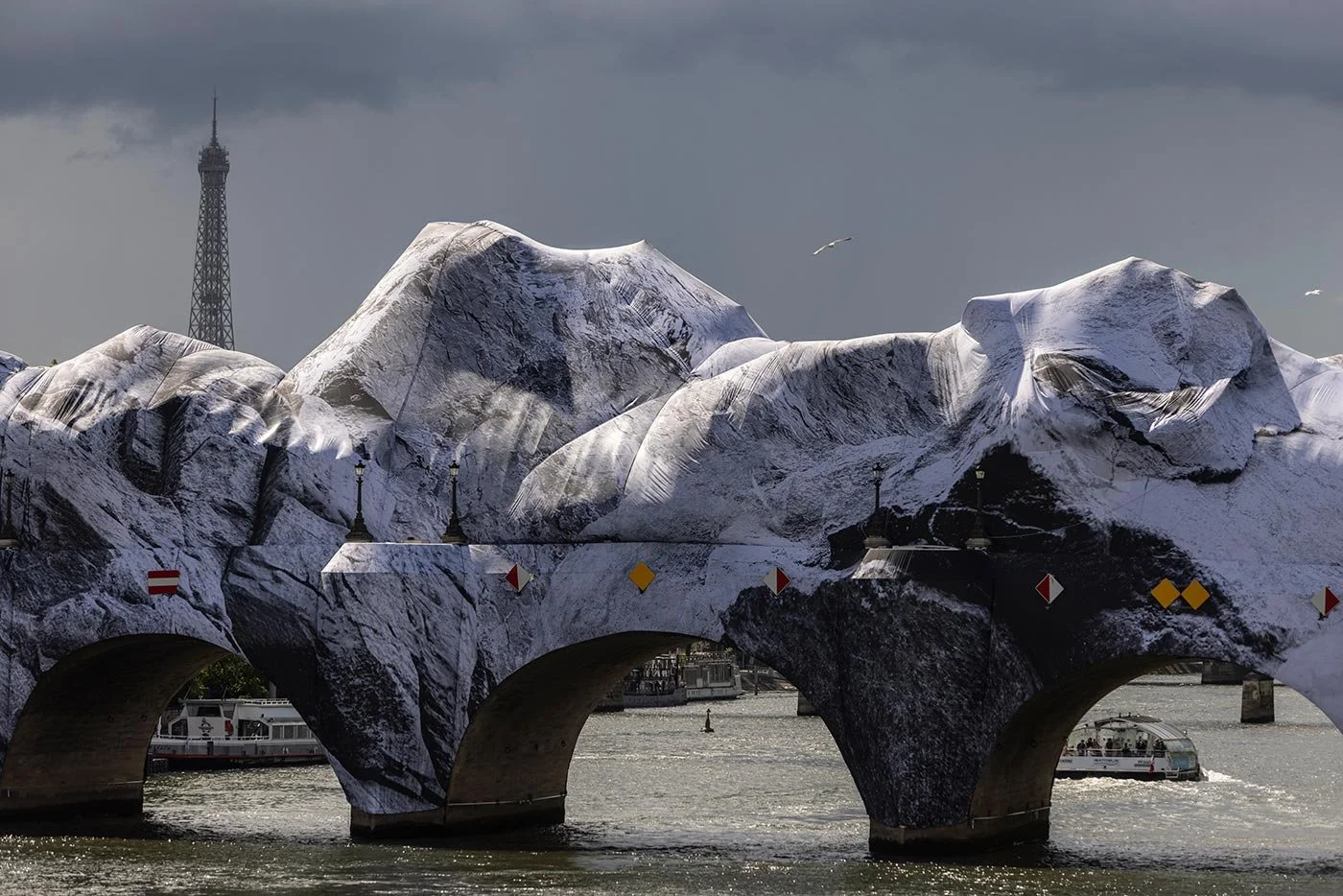
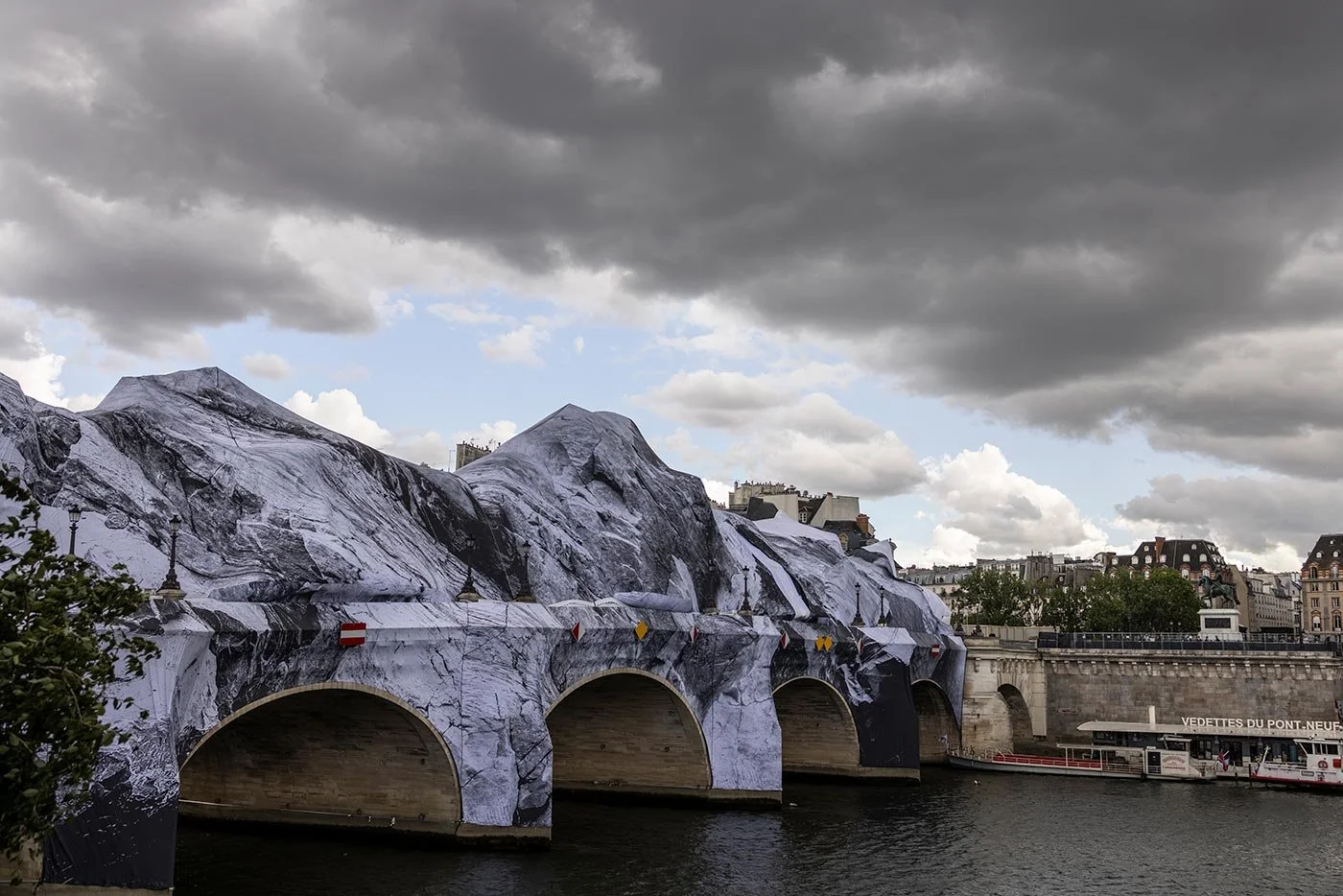
How far is a bridge too far (to paraphrase and quote an ol’ movie title)? In this case not too far, a quick plane journey, this bridge was situated on the River Seine in Paris. Last week saw me over there for a few days - a few days away from photographing my usual Glasgow, and a change of scenery. My assignment was to photograph La Caverne du Pont Neuf art installation by French artist JR, and which takes over as an installation the oldest bridge on the Seine, the Pont Neuf.
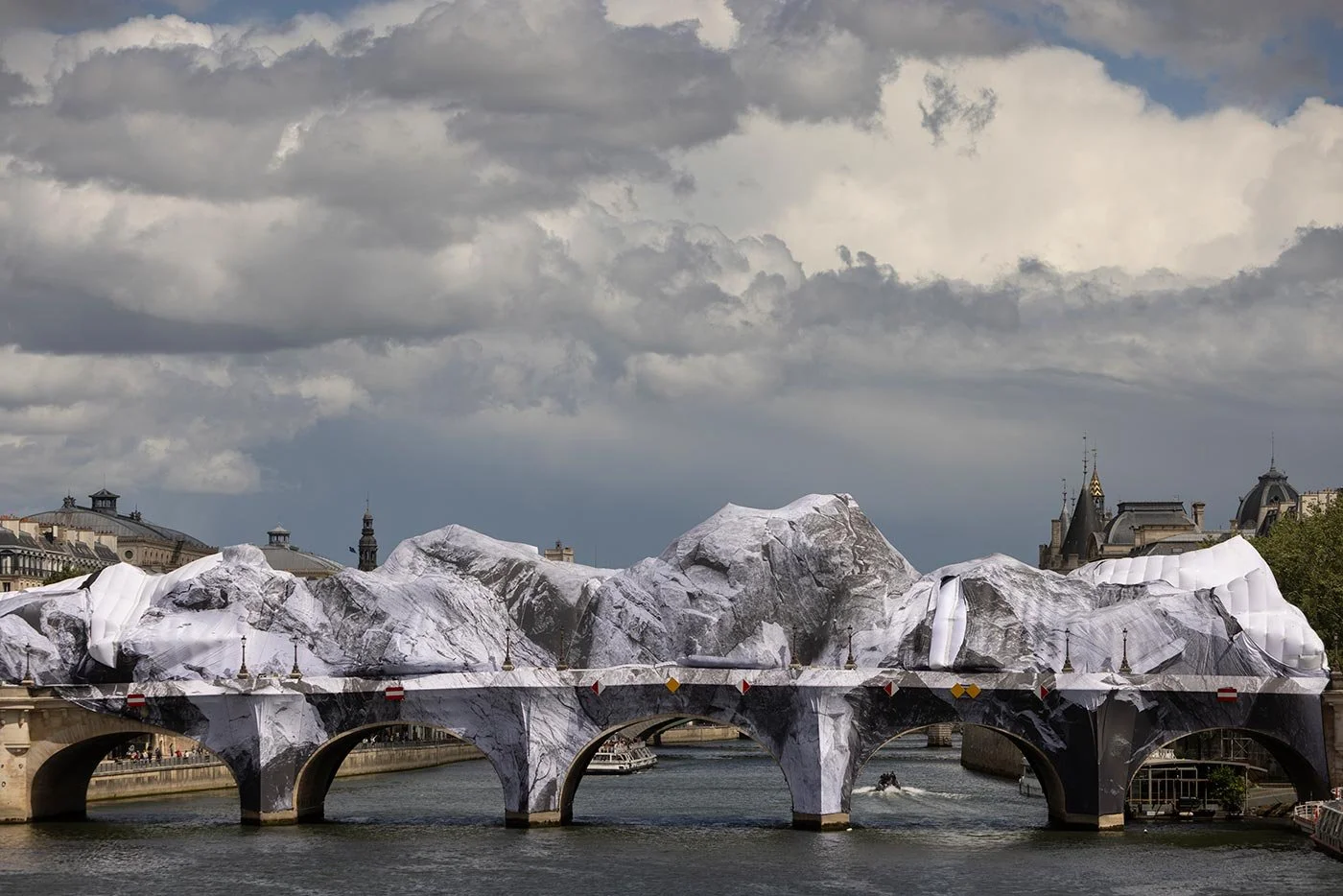
La Caverne du Pont Neuf, by French artist JR. All images ©Jeremy Sutton-Hibbert 2026, all rights reserved.
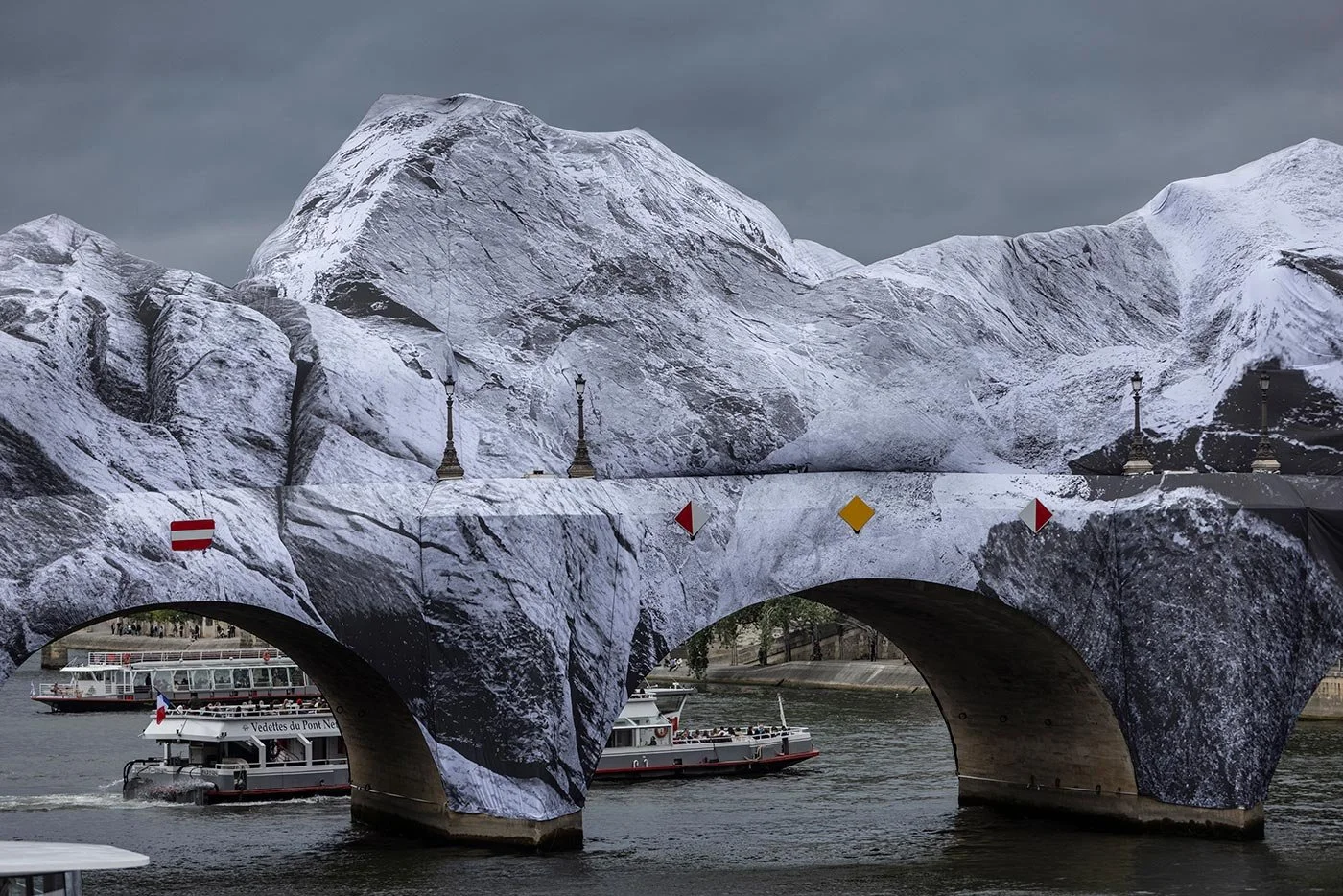
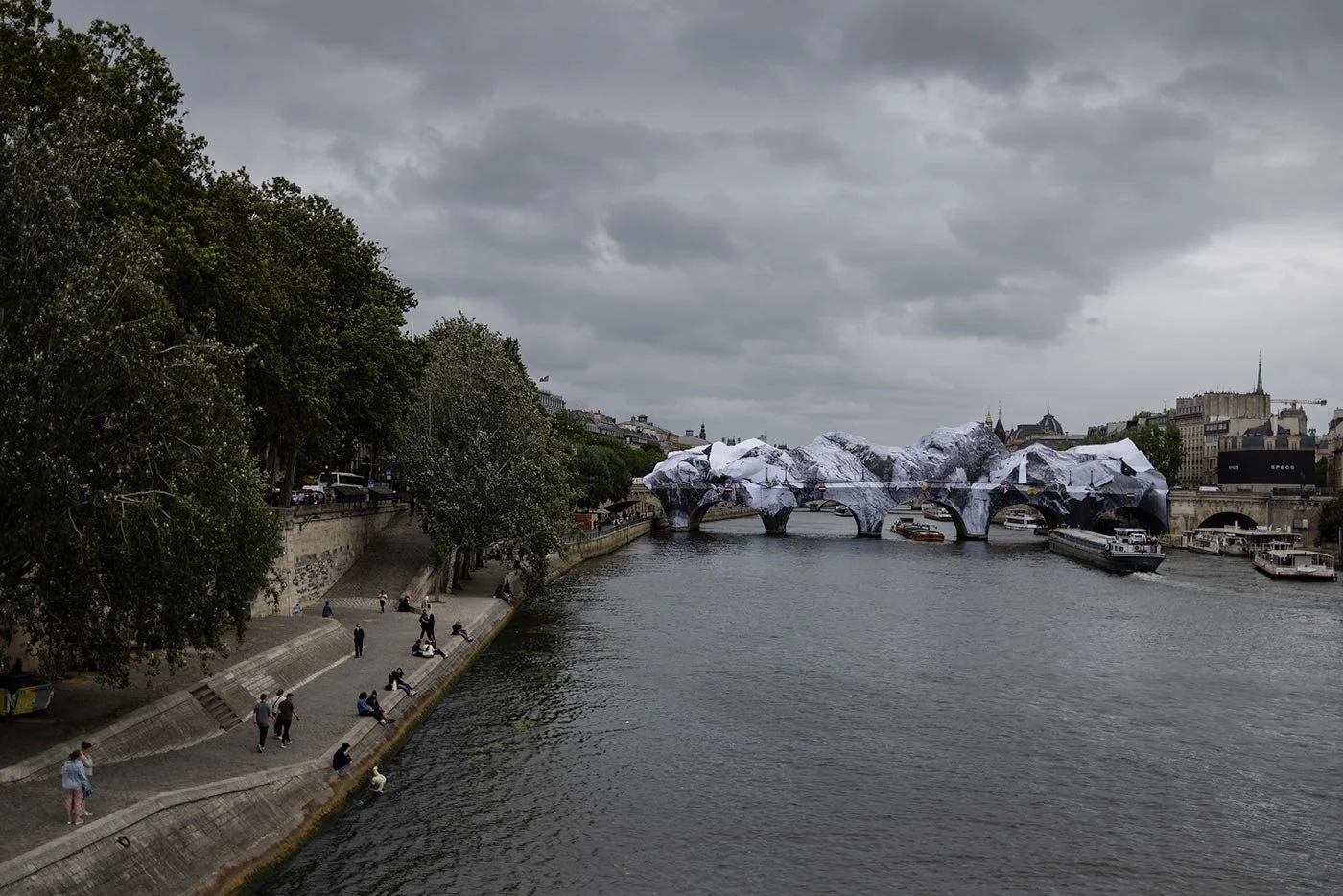
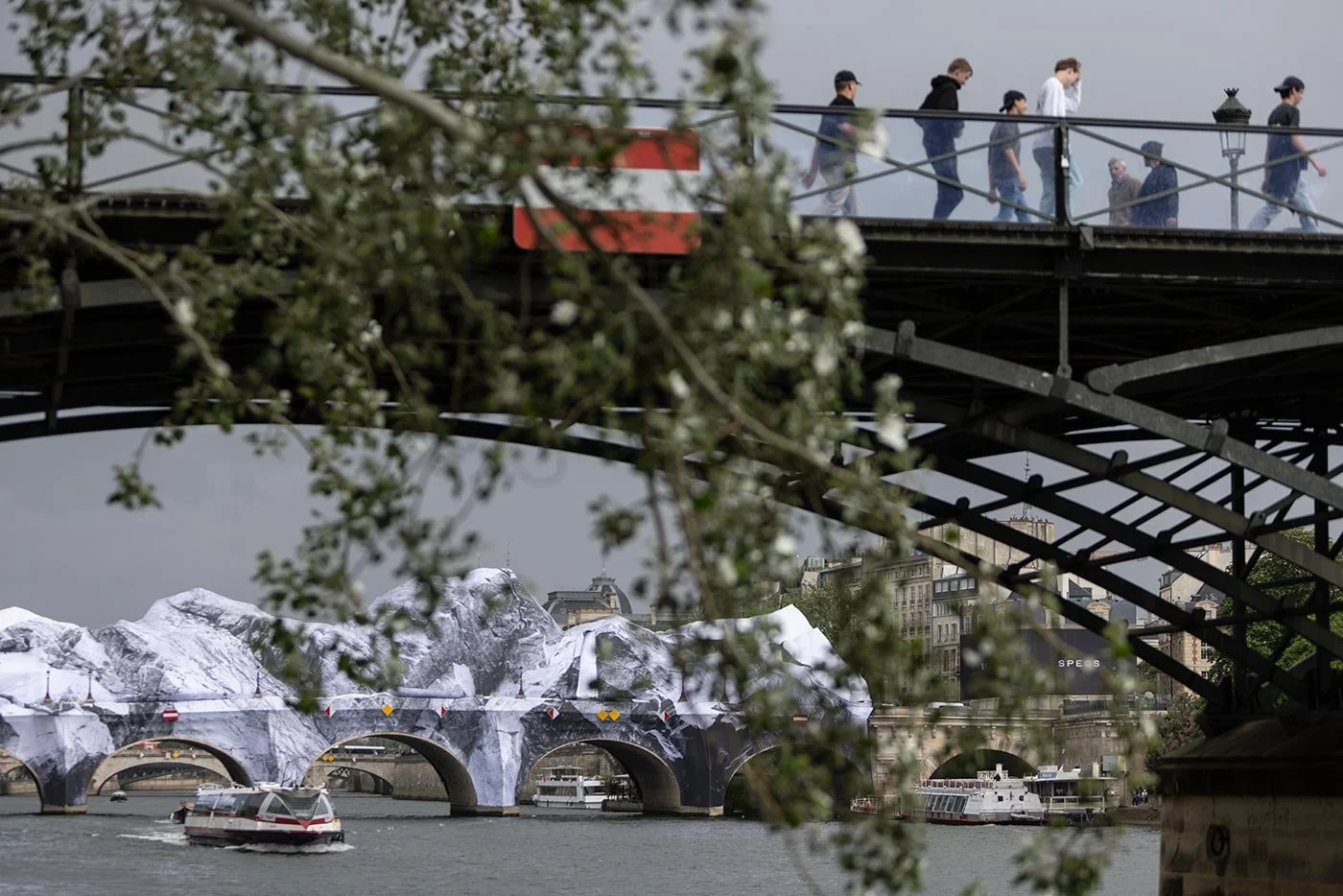
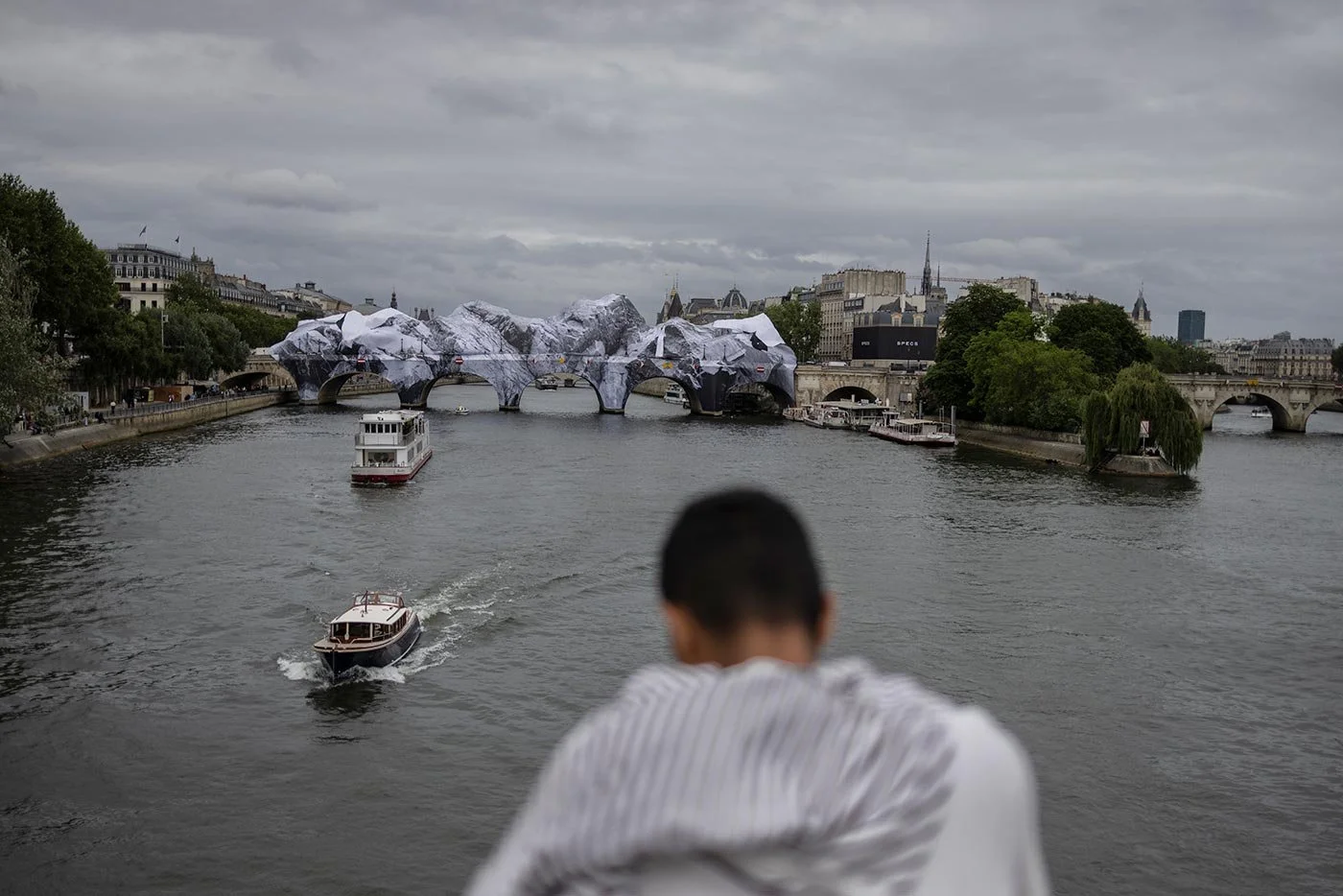
The Pont Neuf, above the River Seine, and connecting the Île de la Cité, was built at the tail end of the 16th and now finds itself the site of an inflatable art installation, La Caverne du Pont Neuf, by JR, the French artist known for his large scale works in cities across the world.
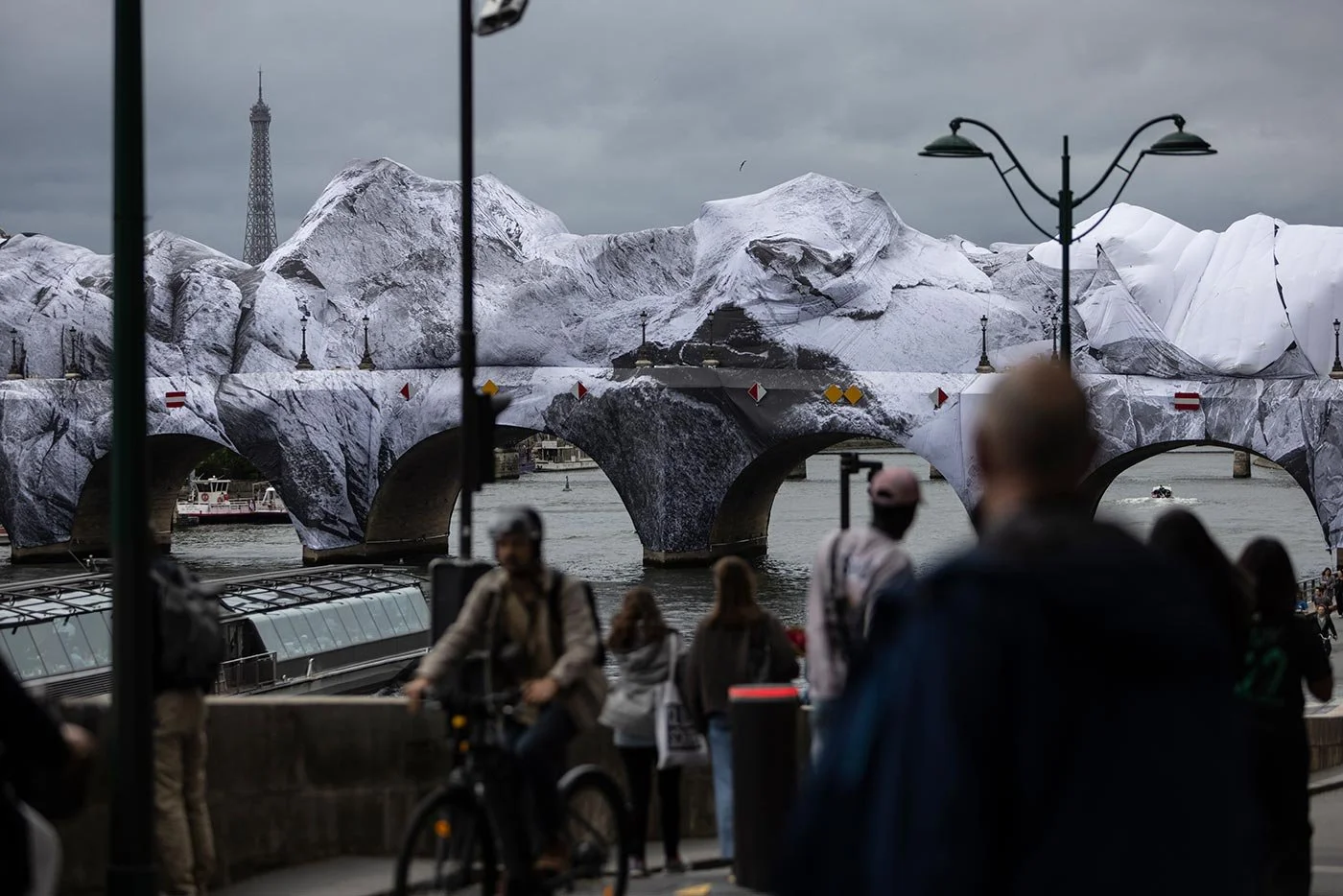
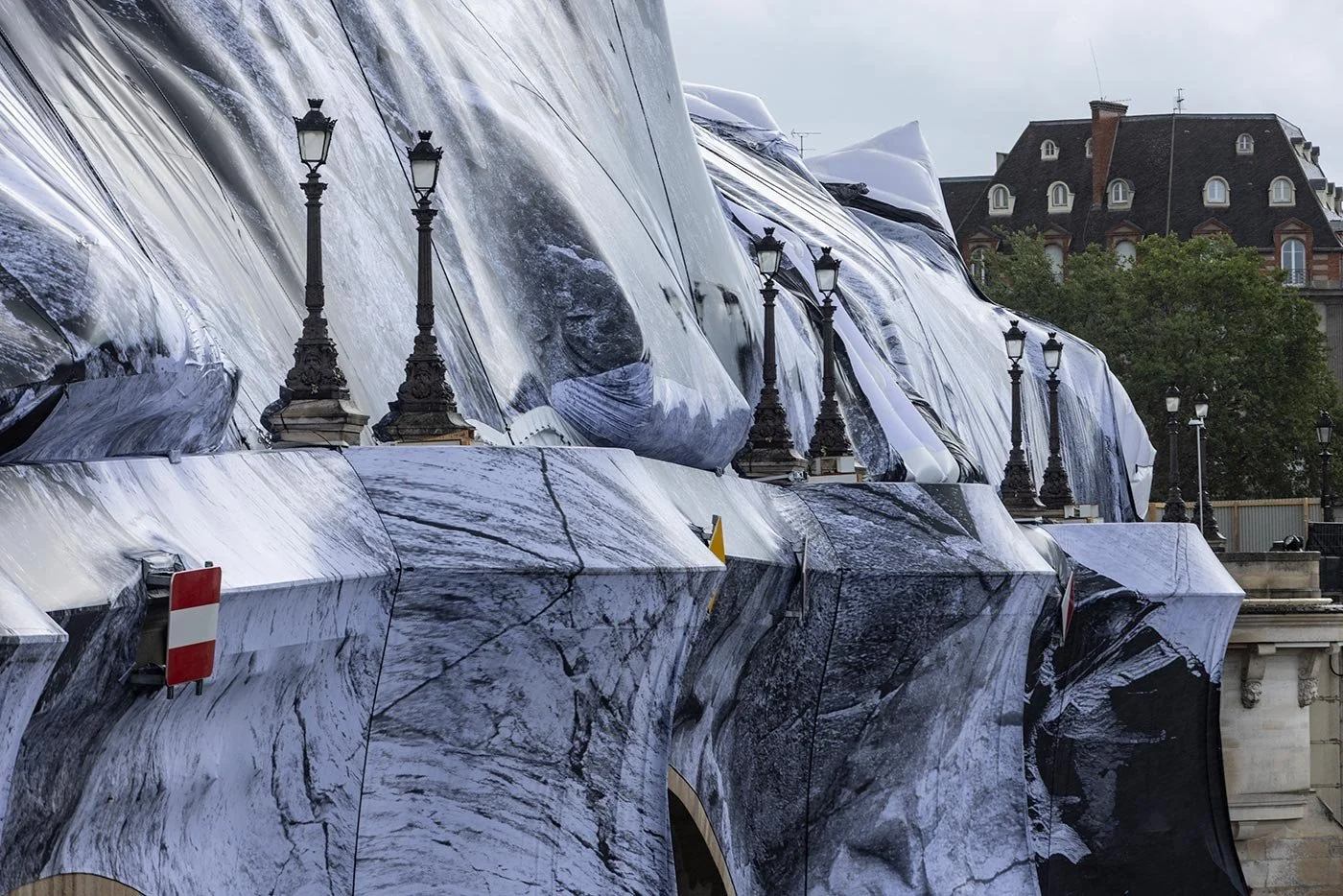
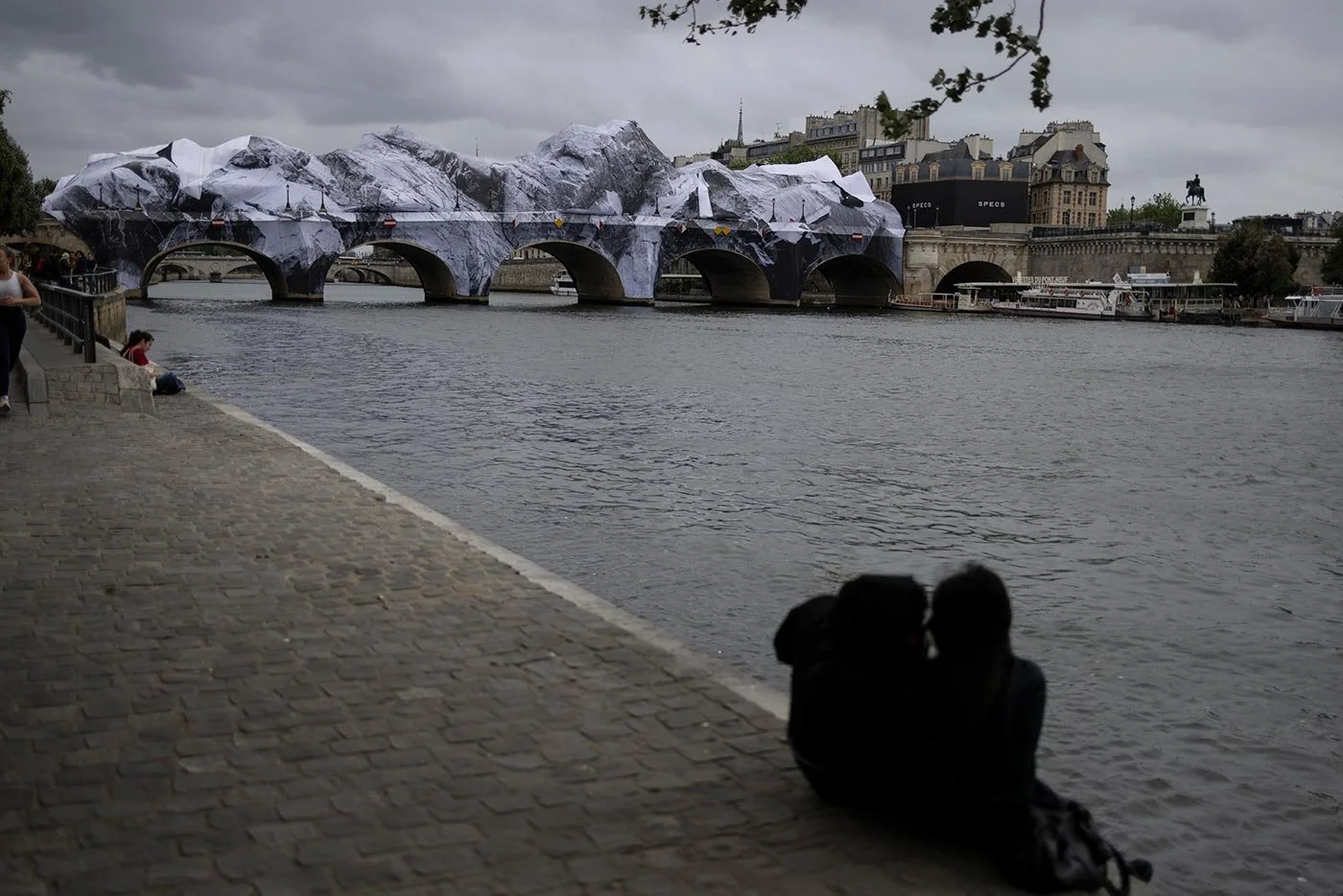
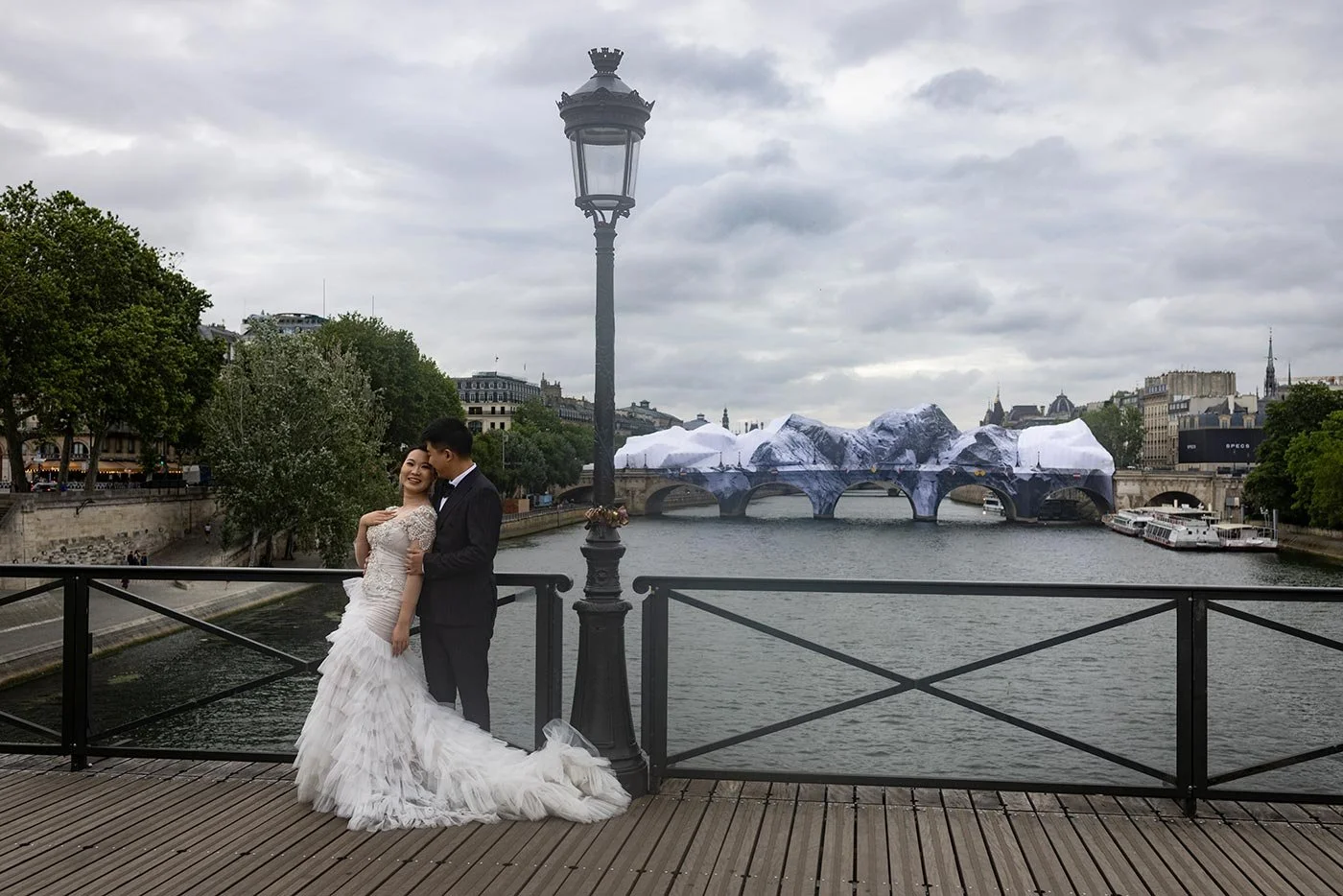
The artwork, which transforms the bridge into a rocky outcrop, and looks kind of snowy and icy, at the same time disrupts and transforms the Parisian cityscape as you look along the river, making one reflect on the quarries that provided the stone to build the city.
The inflatable artwork is a tribute to the 40th year anniversary (in 2025) of the wrapping of the same bridge by artist duo Christo and Jeanne-Claude in their artwork called The Pont Neuf Wrapped.
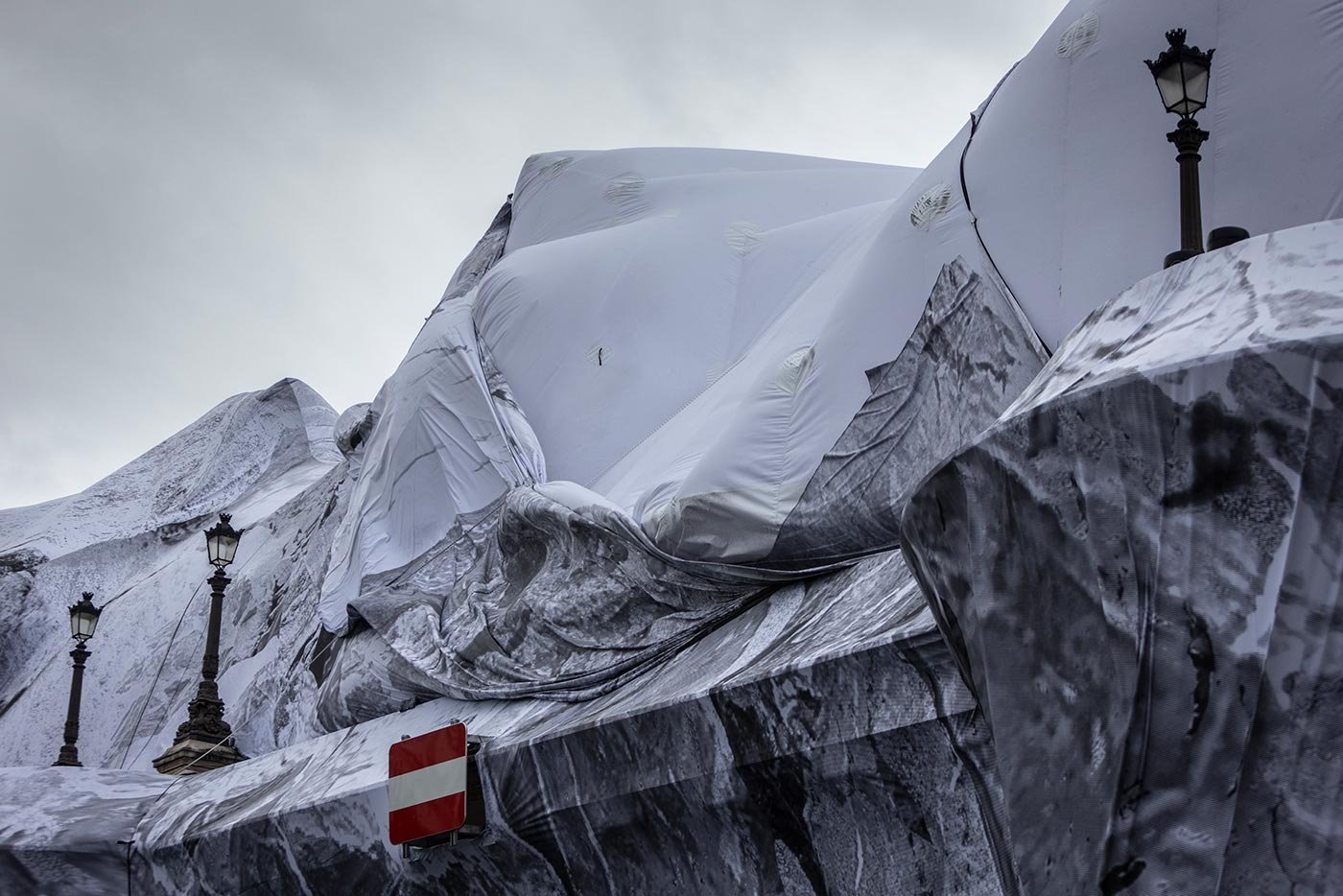
It was the intention that people would be able to walk through the inflatable ‘quarry arch’, and walk the length of the bridge, but after windy weather damaged the covering and thus the artwork, those plans have apparently been postponed. The damage, visible in one or two images, by seeing gthe white inflatable tunnel under the covering, shows how tricky it must be to mount such a large installation.
I’m not sure the Glasgow weather would be too accommodating of such an artistic endeavour. I’ll shelve my plan to cover any bridges here on the River Clyde, and stick to photographing alongside it.
La Caverne du Pont Neuf, by French artist JR. All images ©Jeremy Sutton-Hibbert 2026, all rights reserved.
“My vision for this project is inspired by both the past and present of this iconic bridge. I admire the artistic legacy of Christo and Jeanne-Claude and share their belief that art’s mission is to make us reflect, to question what is familiar to us. The debate that a project in the public space sparks is just as valuable as its realization.”
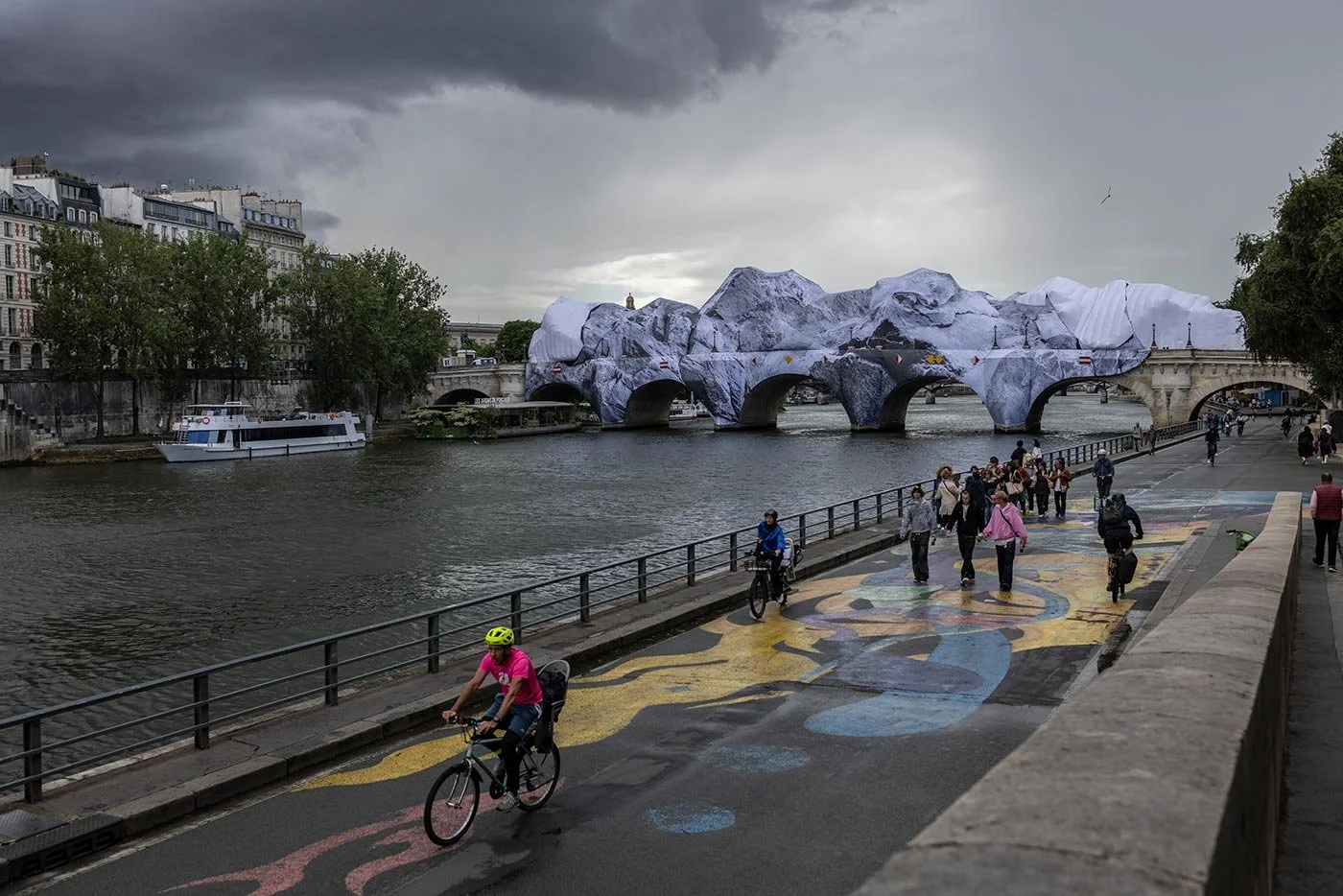
La Caverne du Pont Neuf, by French artist JR. All images ©Jeremy Sutton-Hibbert 2026, all rights reserved.
“The Pont Neuf was built with Lutetian limestone: stone extracted from the underground quarries of the Paris Basin, the same stone that gave rise to the Louvre, Notre-Dame, and the city’s grand facades. By imagining a cavern on this bridge, JR brings Paris back to its own raw material, to the subterranean origin of all its splendor. ”
Undertaking a photographic reportage
Going to photograph a bridge doesn’t sound too challenging really, the bridge is inanimate, it isn’t going to chat to you, to cause you trouble. But as a photographer approaching such a subject with the aim to get a series of images out of it, a nice reportage set of images, it is a great exercise in looking and actually seeing.
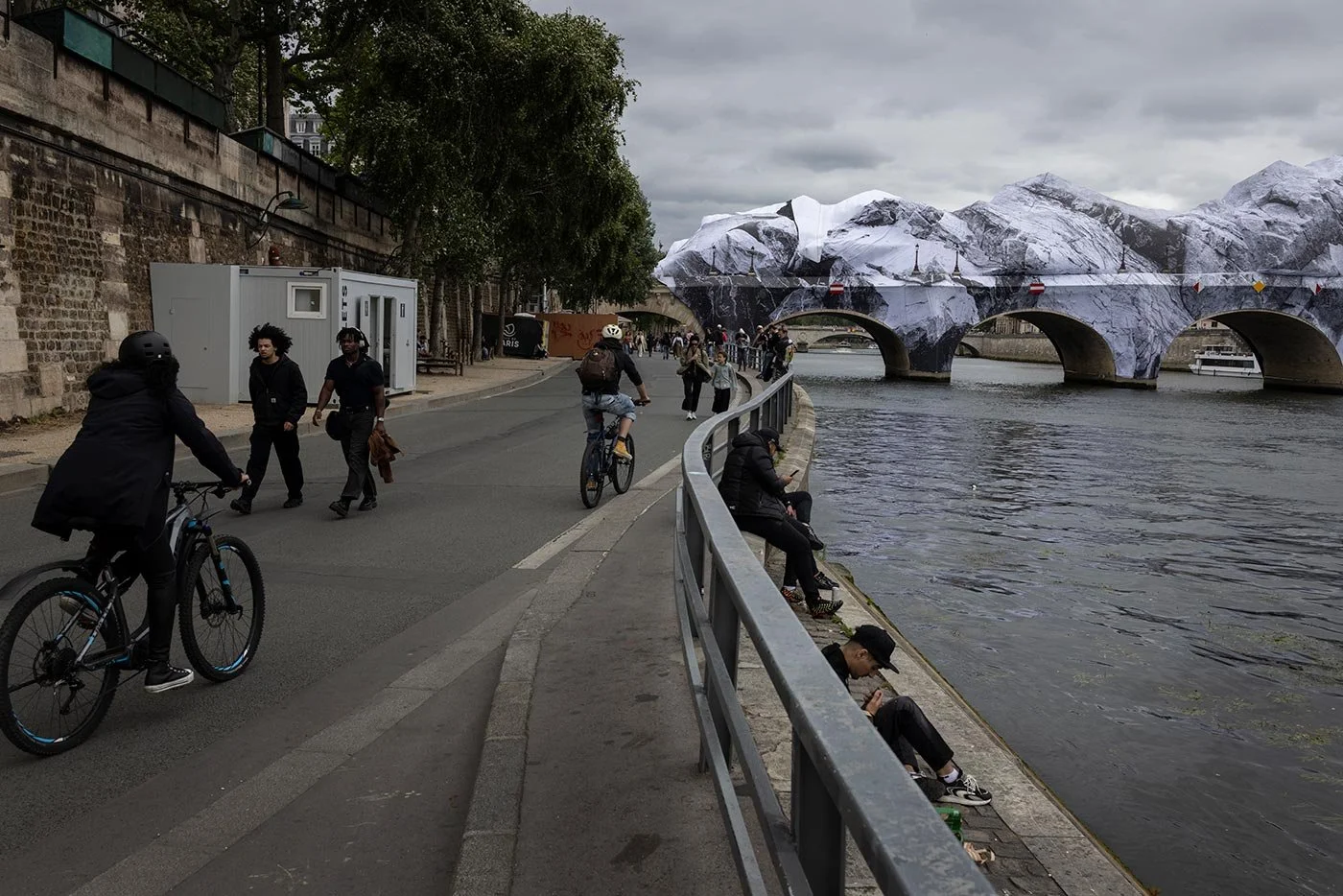
It’s too easy to take one viewpoint, show the city, bridge in the middle, and think you’ve photographed it. But the key is to go the distance, to walk around the subject, to view it from multiple angles, to photograph through various lenses, to visit and spend time at different points of the day, sunrise, sunset, and on different days, watching as the light changes and transforms the scenes around.
The days I spent photographing this bridge weren’t without interesting obstacles to overcome. The weather was windy, and this tore the artwork fabric covering the bridge, leaving gaping white sections spoiling the effect the artist intended. But even this was to my favour, making me work harder to find angles that worked to not show the damage, but also to photograph the malfunction of the material as a news image.
The weather was dull, cloudy and on occasion rainy, but again, you make it work in your favour, you use it.
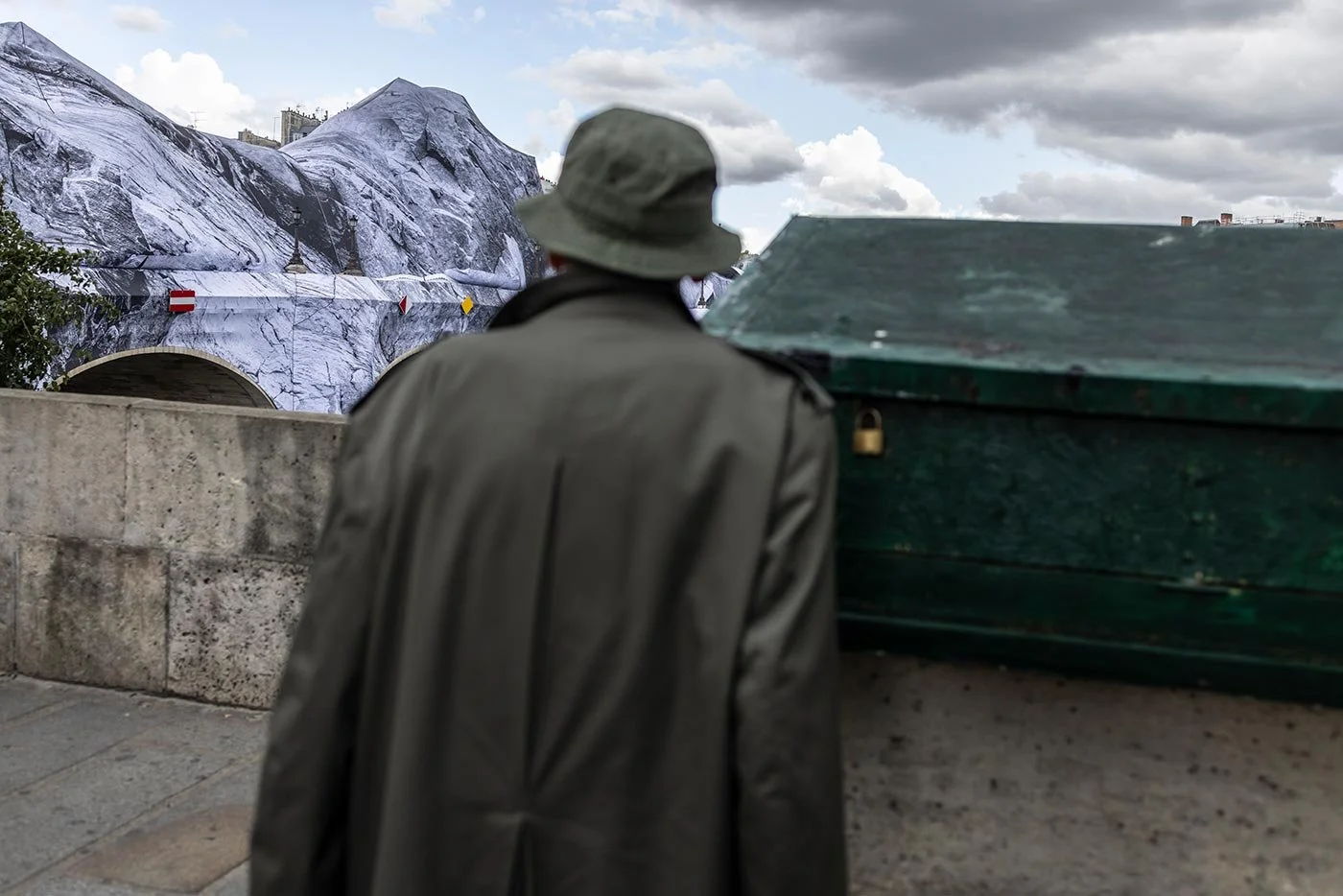
It’s a great exercise to interrogate a subject, bringing different elements to the fore, be it wide shots, details, people looking or abstract images. It’s a great exercise in making you look, and importantly, making you see. And appreciate.
La Caverne du Pont Neuf, by French artist JR. All images ©Jeremy Sutton-Hibbert 2026, all rights reserved.