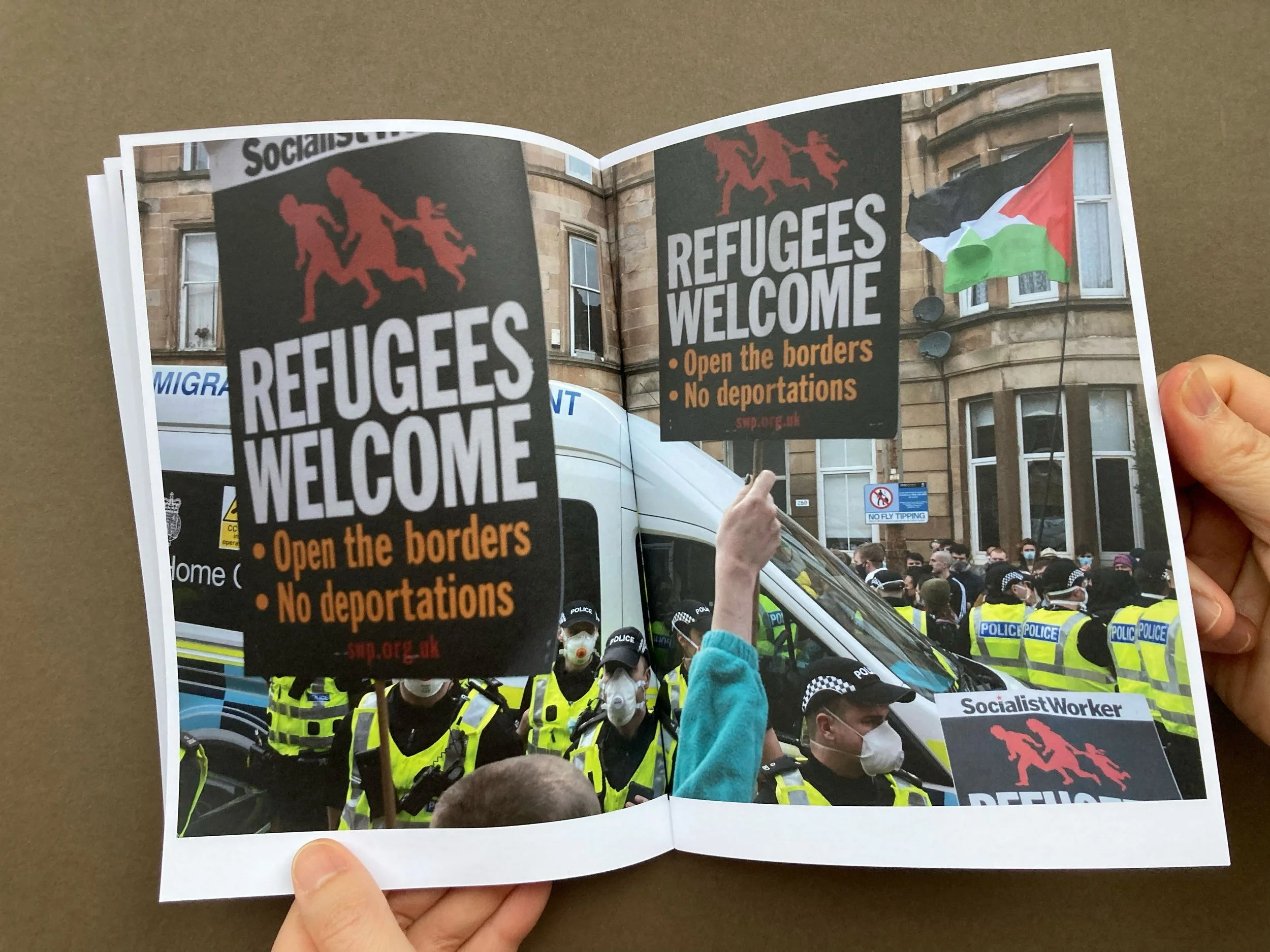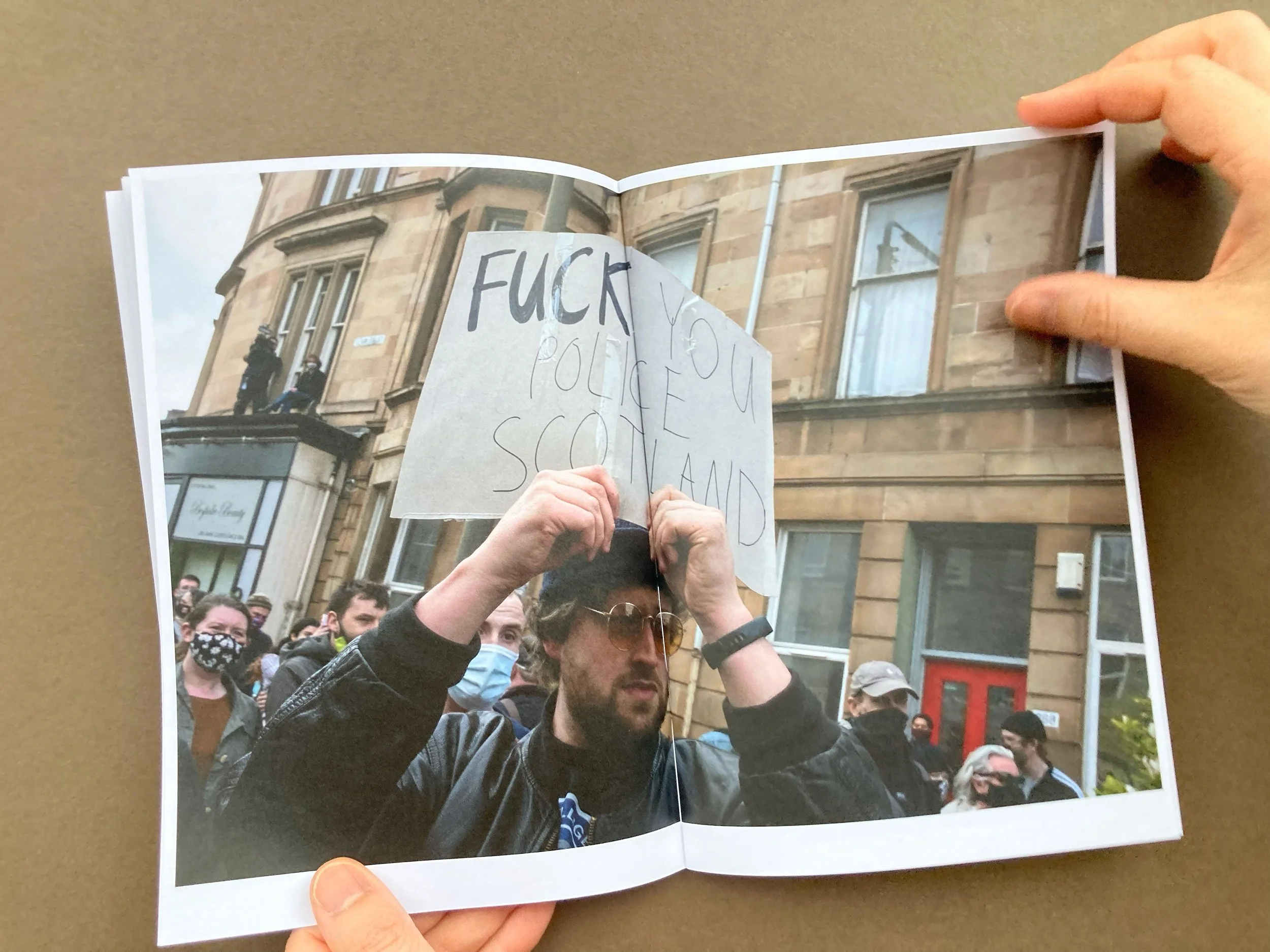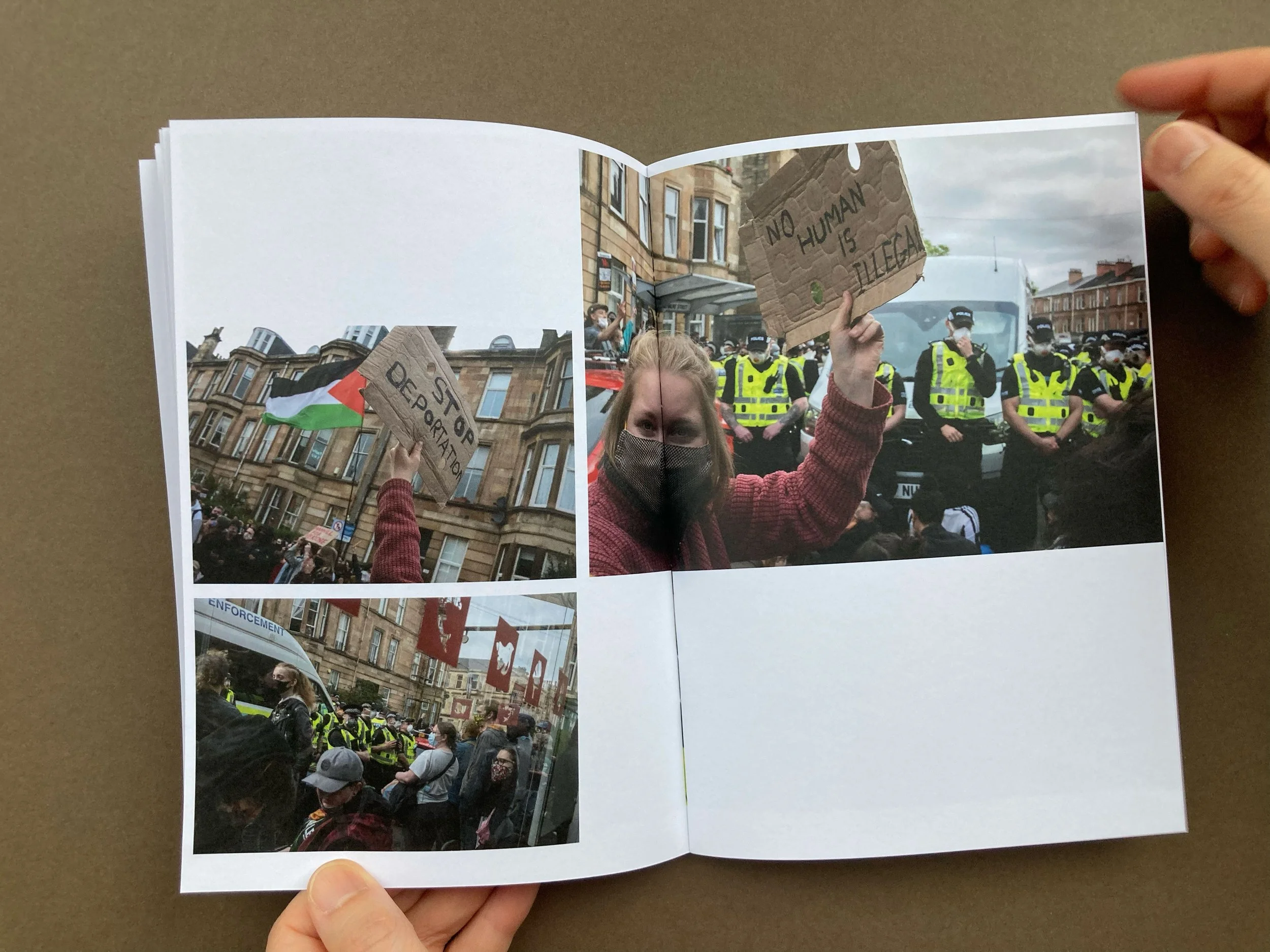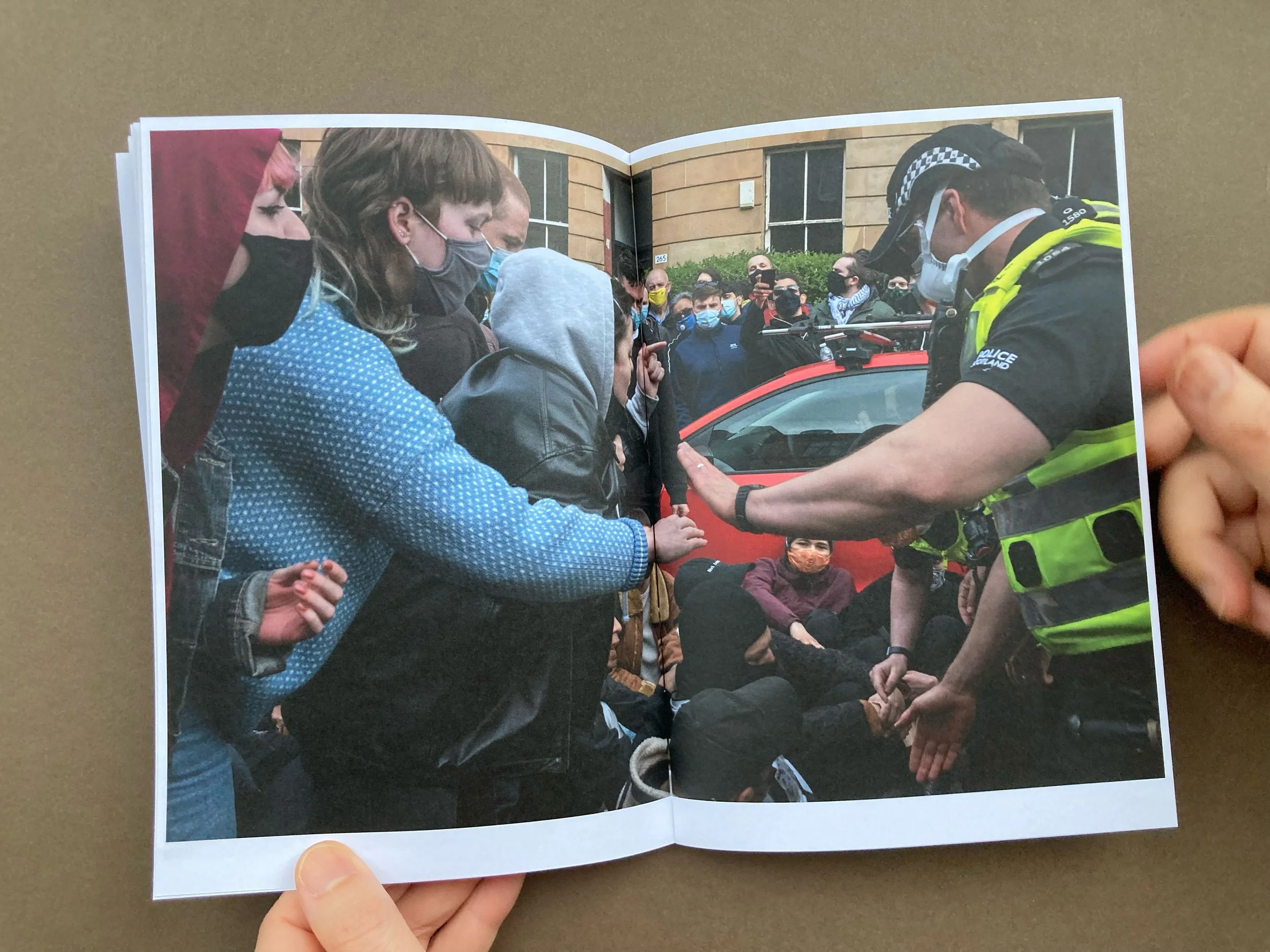
Image 1 of 22
Image 2 of 22
Image 3 of 22
Image 4 of 22
Image 5 of 22
Image 6 of 22
Image 7 of 22
Image 8 of 22
Image 9 of 22
Image 10 of 22
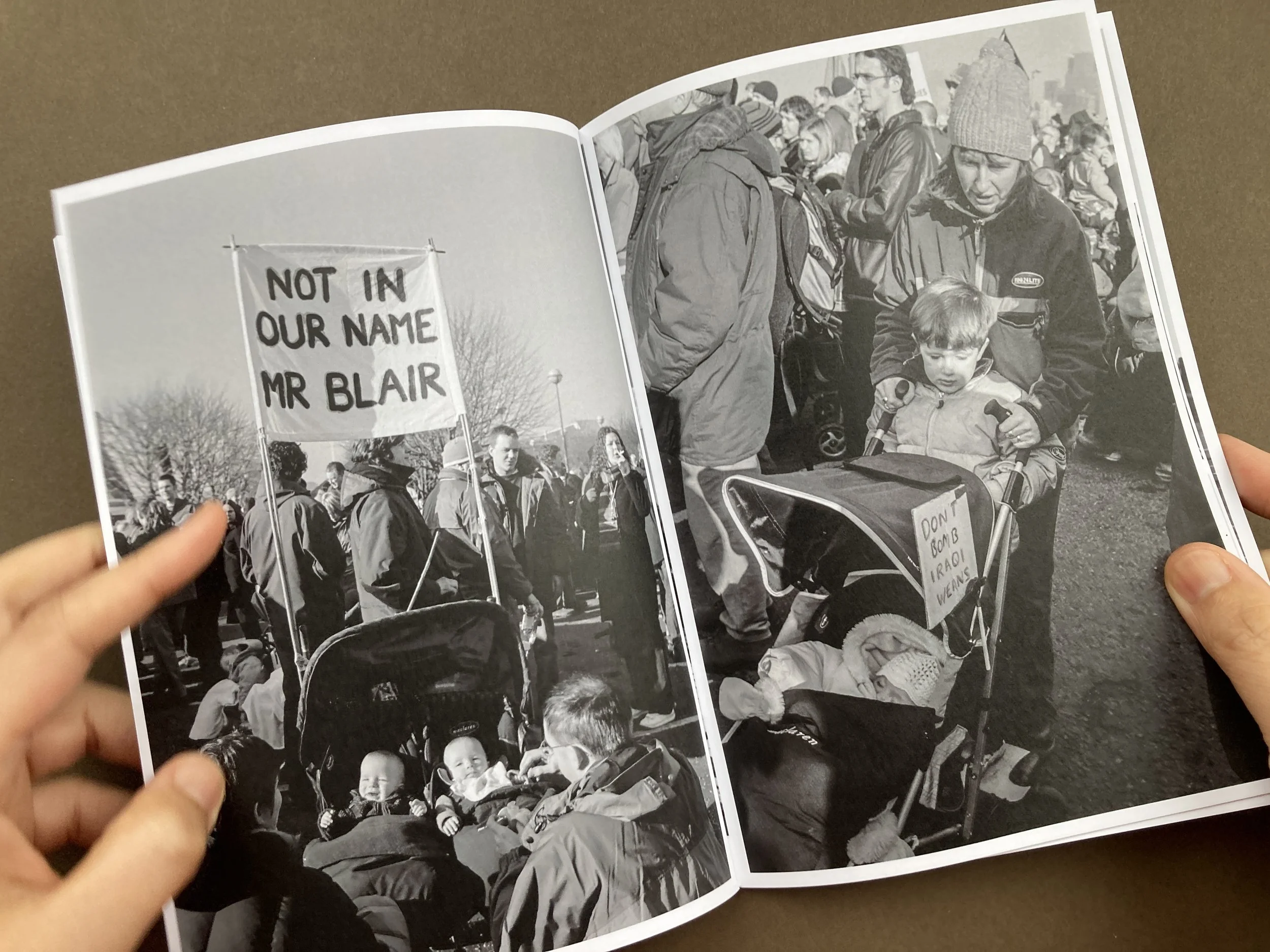
Image 11 of 22
Image 12 of 22
Image 13 of 22
Image 14 of 22
Image 15 of 22
Image 16 of 22
Image 17 of 22
Image 18 of 22
Image 19 of 22
Image 20 of 22
Image 21 of 22
Image 22 of 22
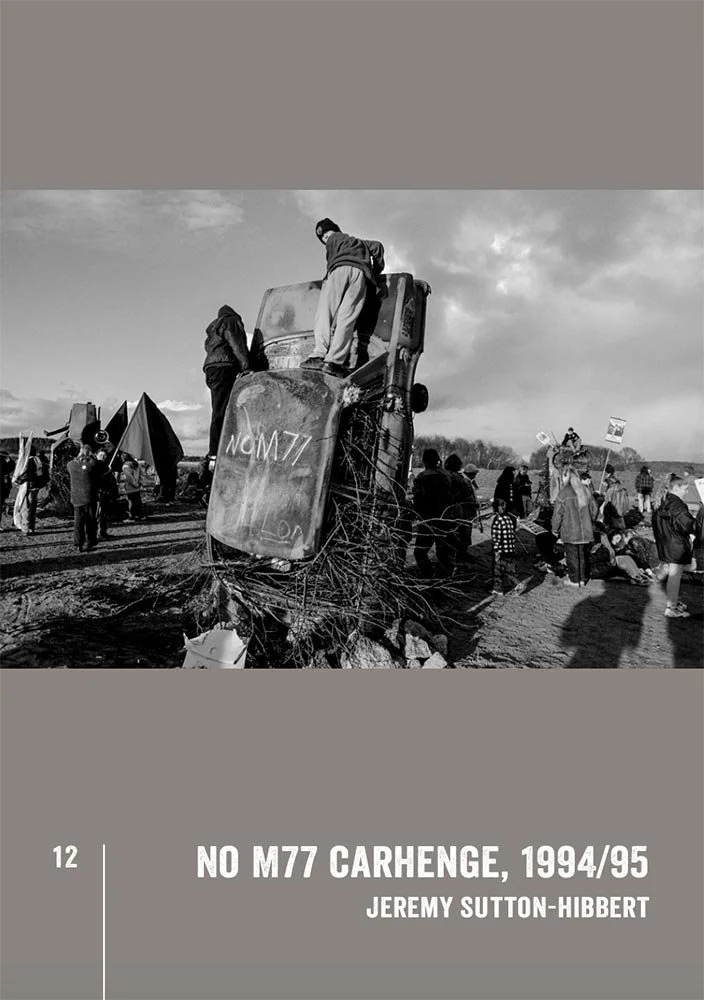
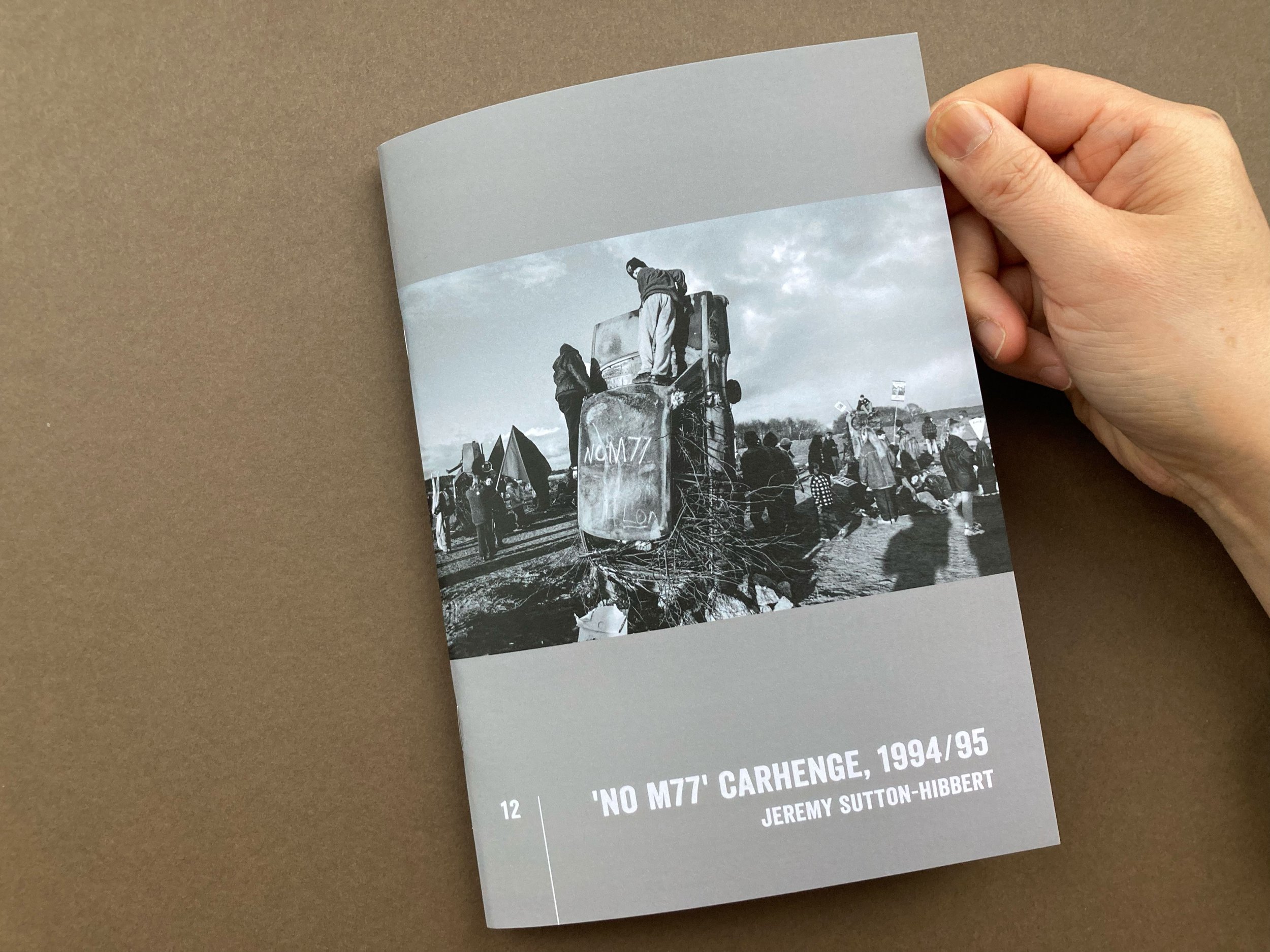
‘No M77' CarHenge, 1994/95.
‘No M77’ CarHenge, Glasgow, 1994/95.
A5
40 Pages
27 Photographs
With a foreword by Rosie Kane, activist at Pollok Free State, and former Member of Scottish Parliament.
‘No M77’ Carhenge, Pollok Estate, Glasgow, 1994/95.
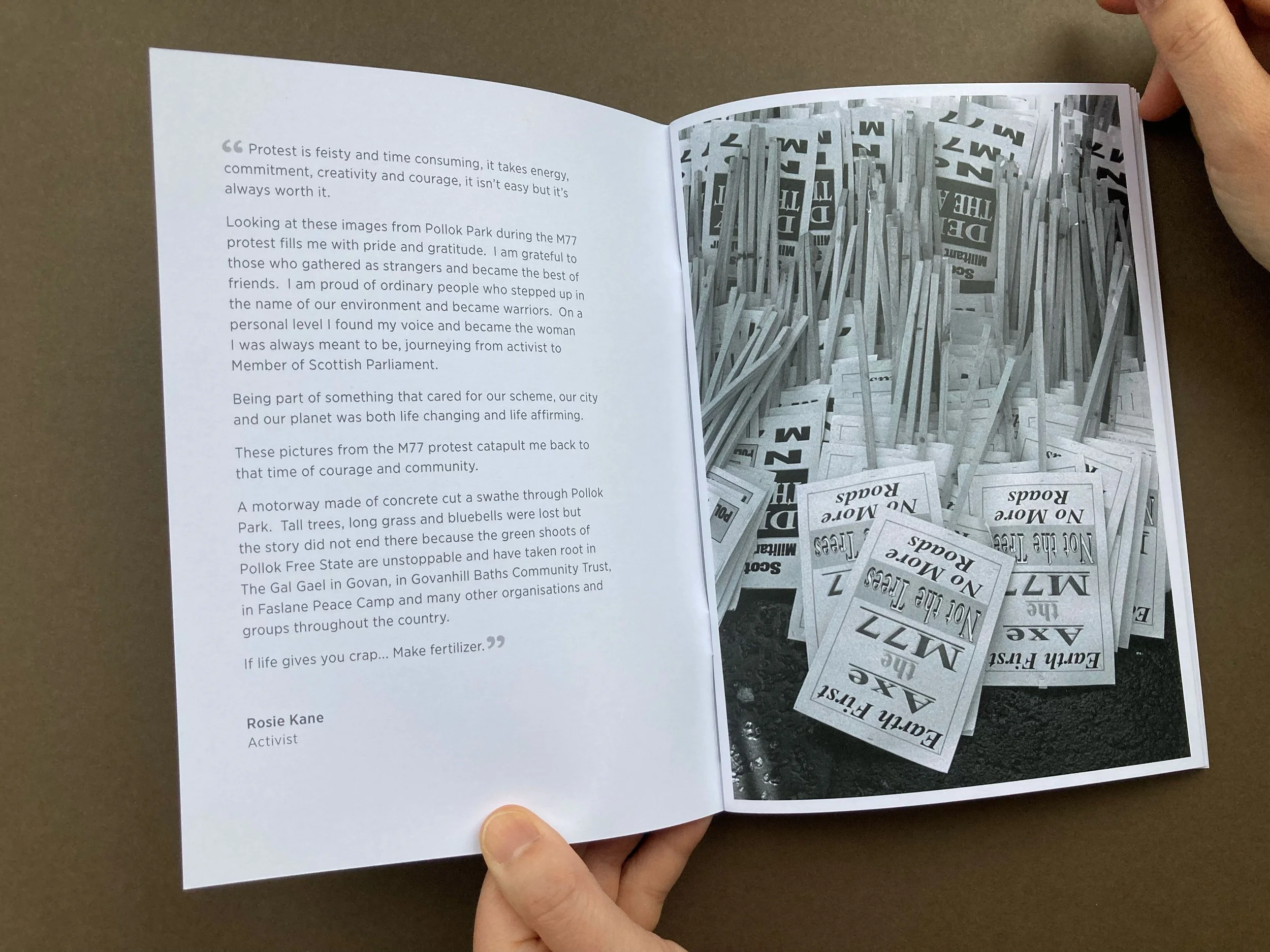
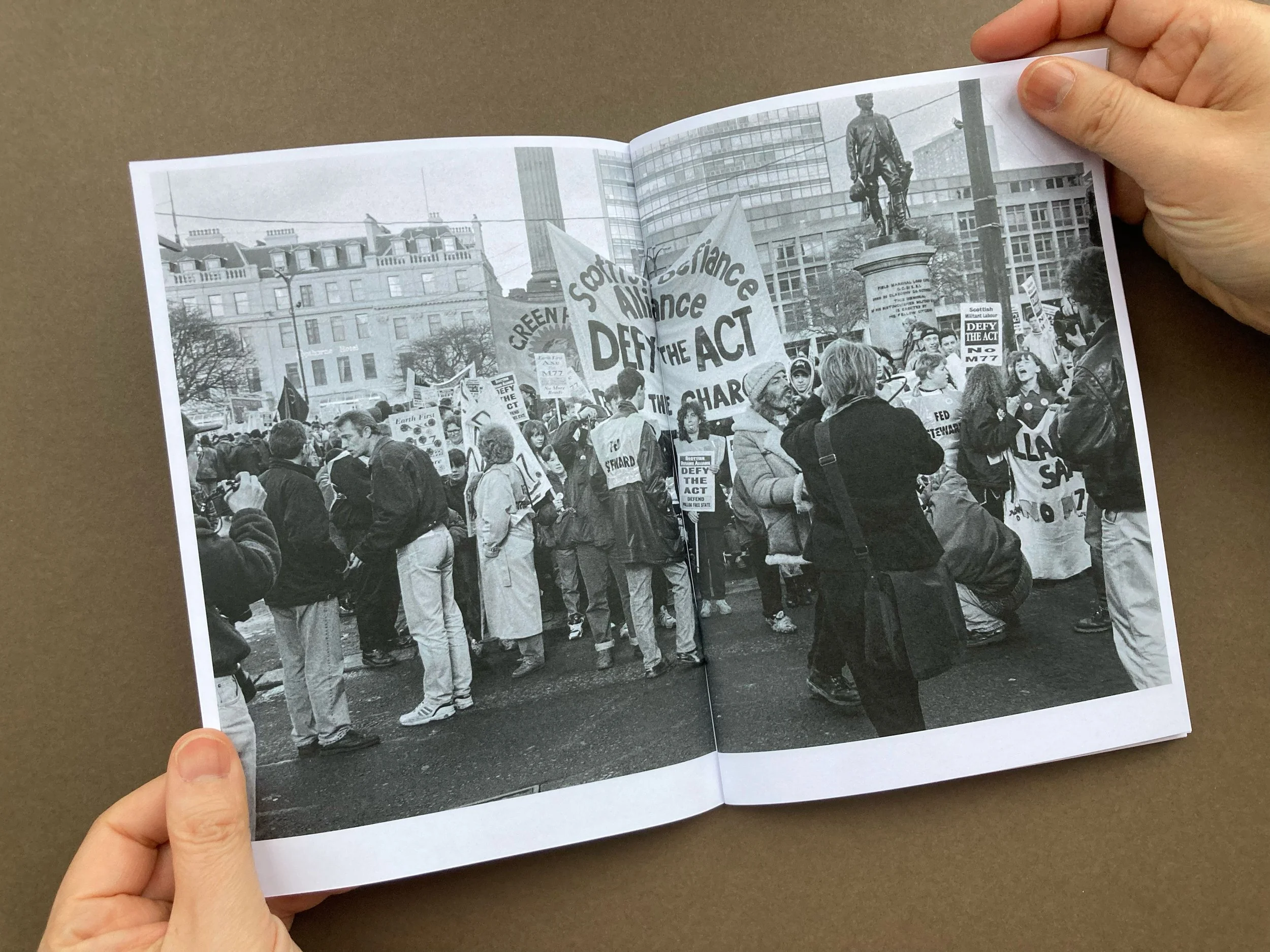
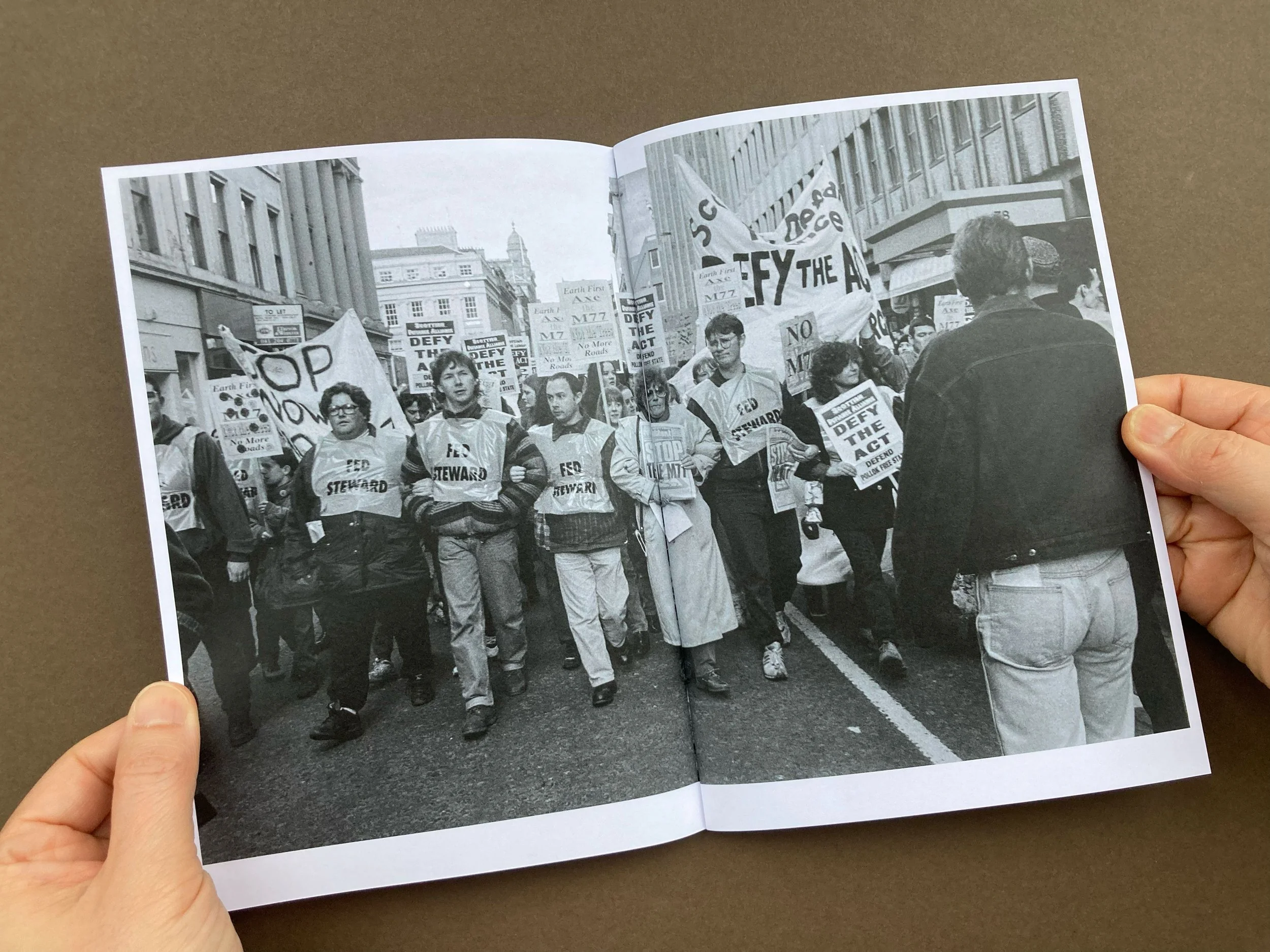
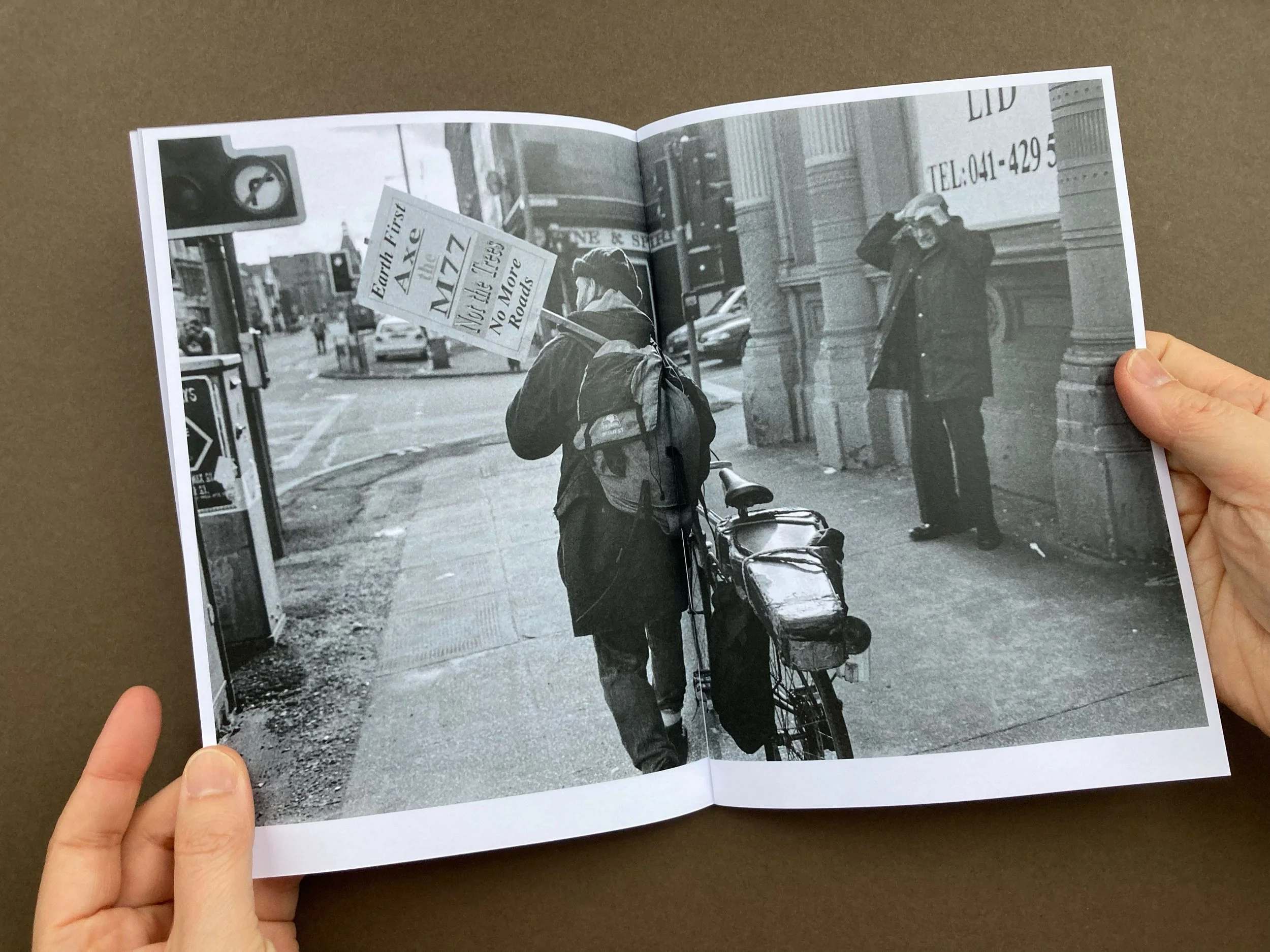
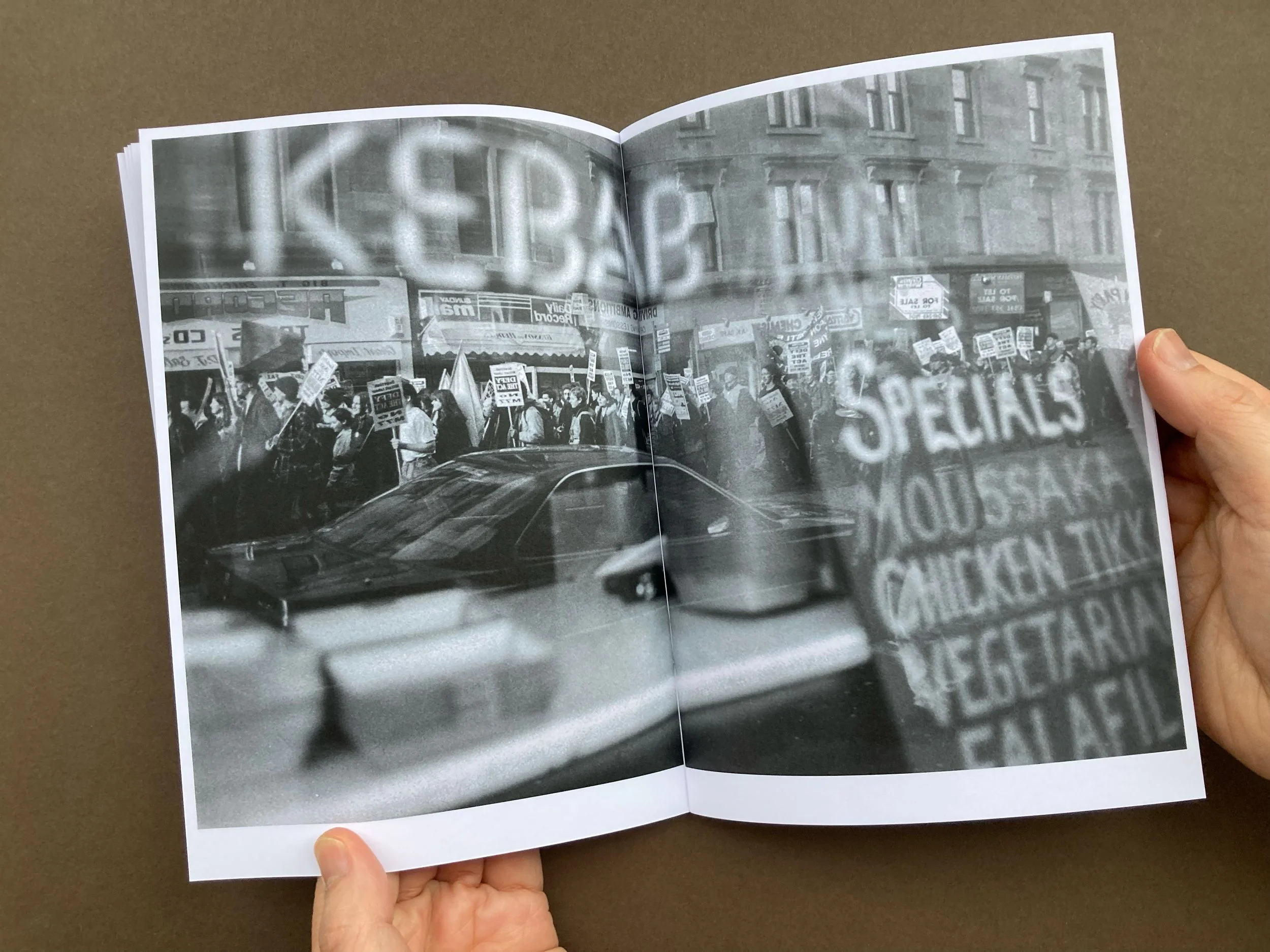
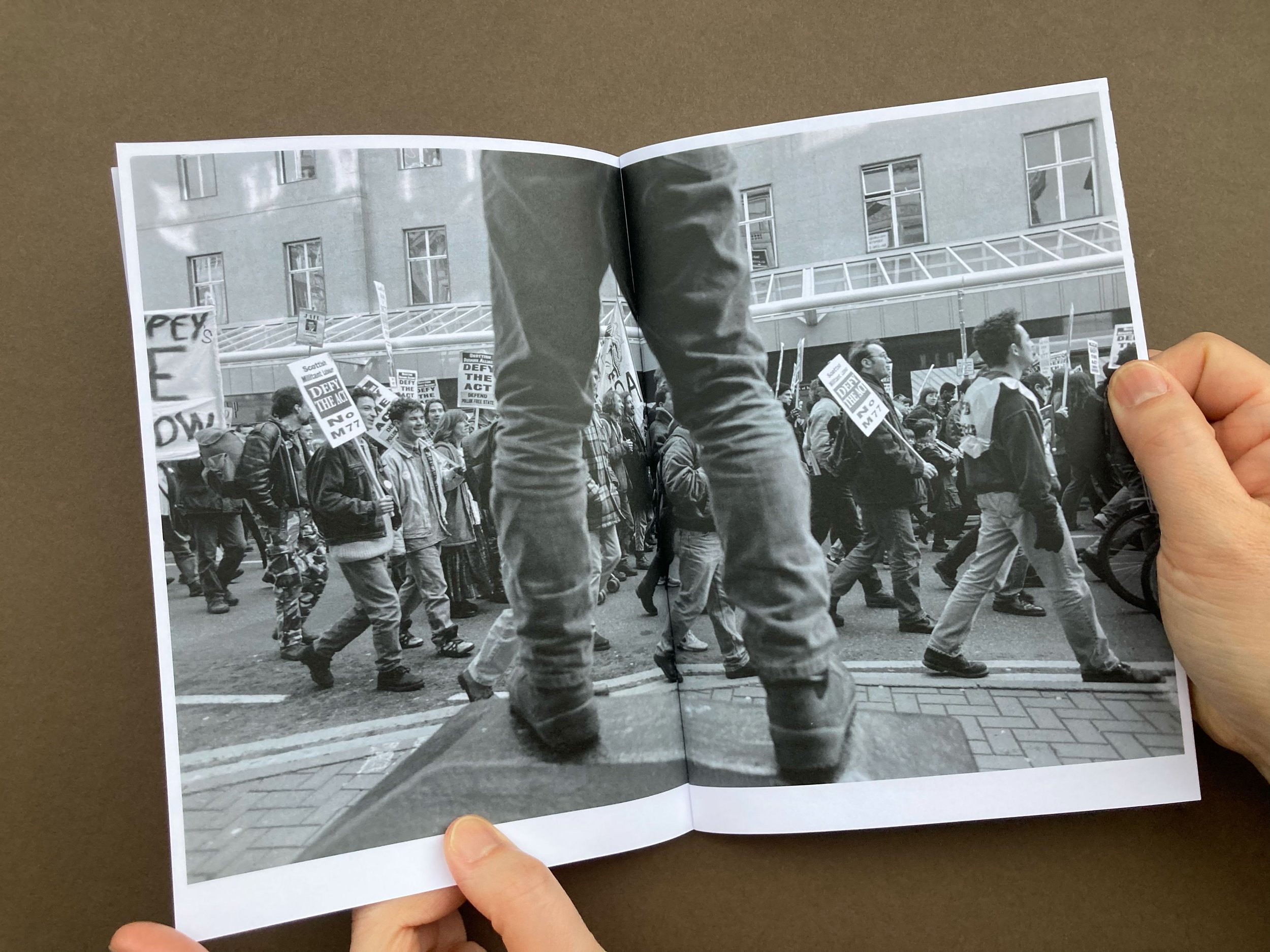
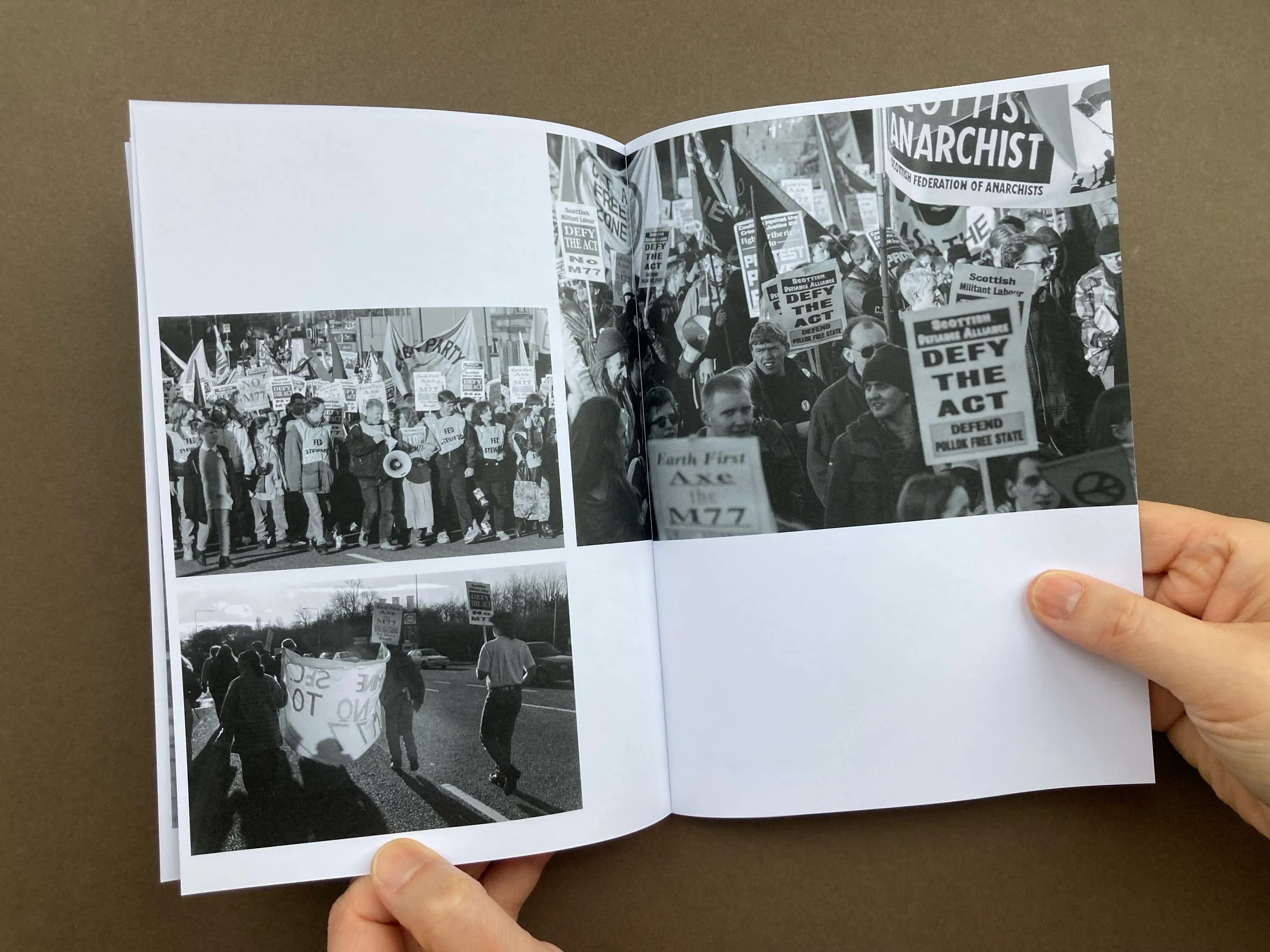
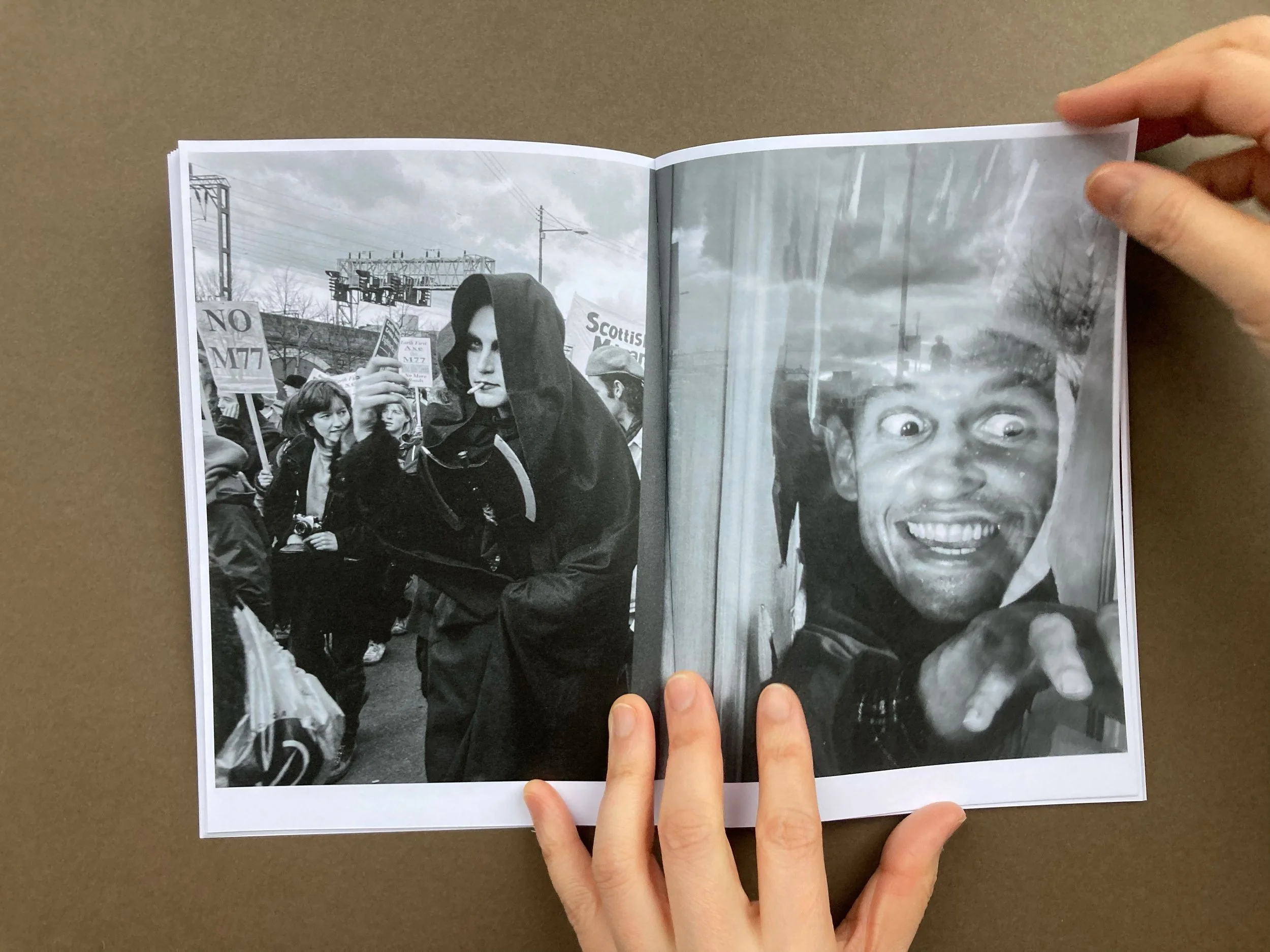
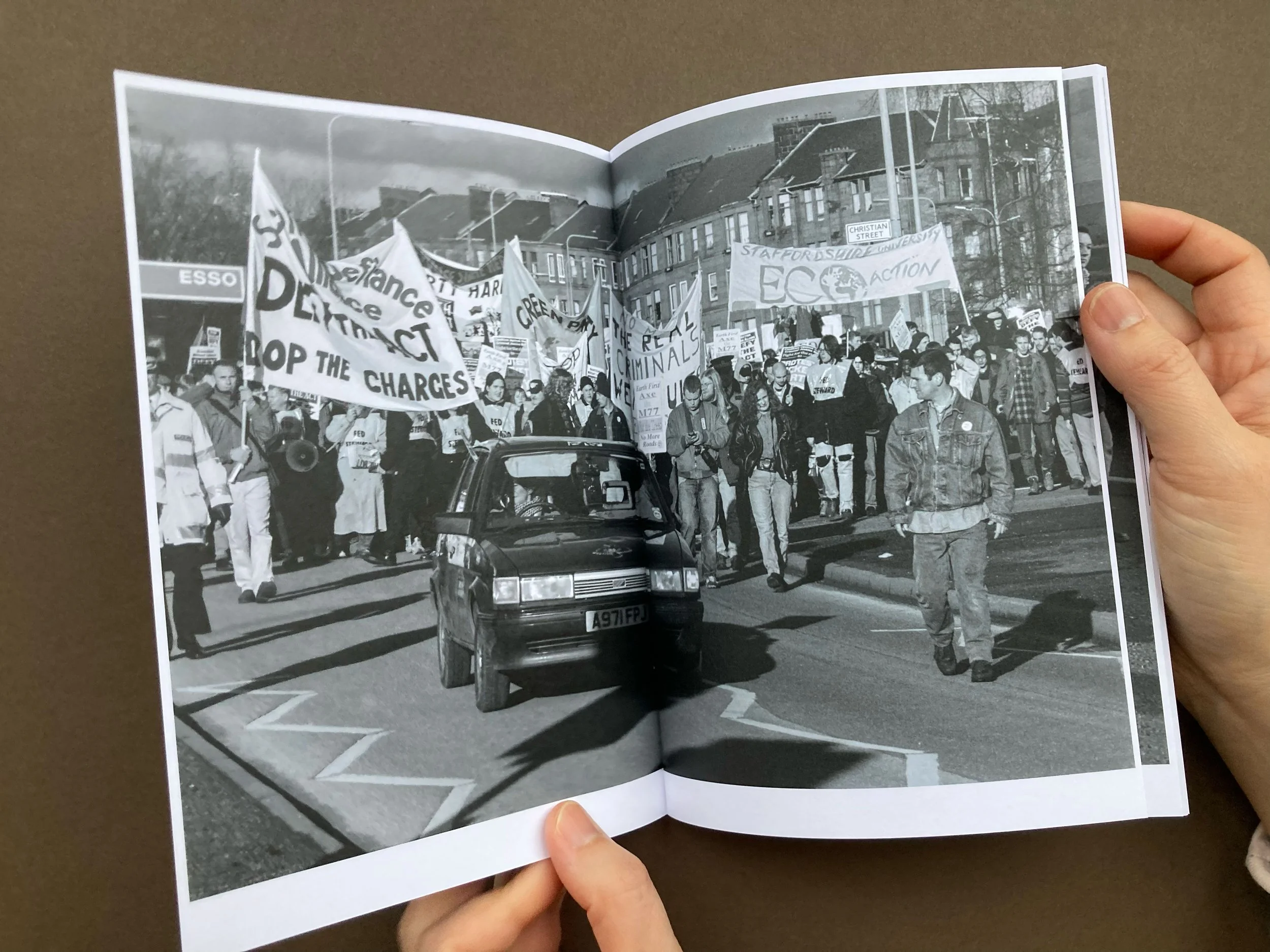
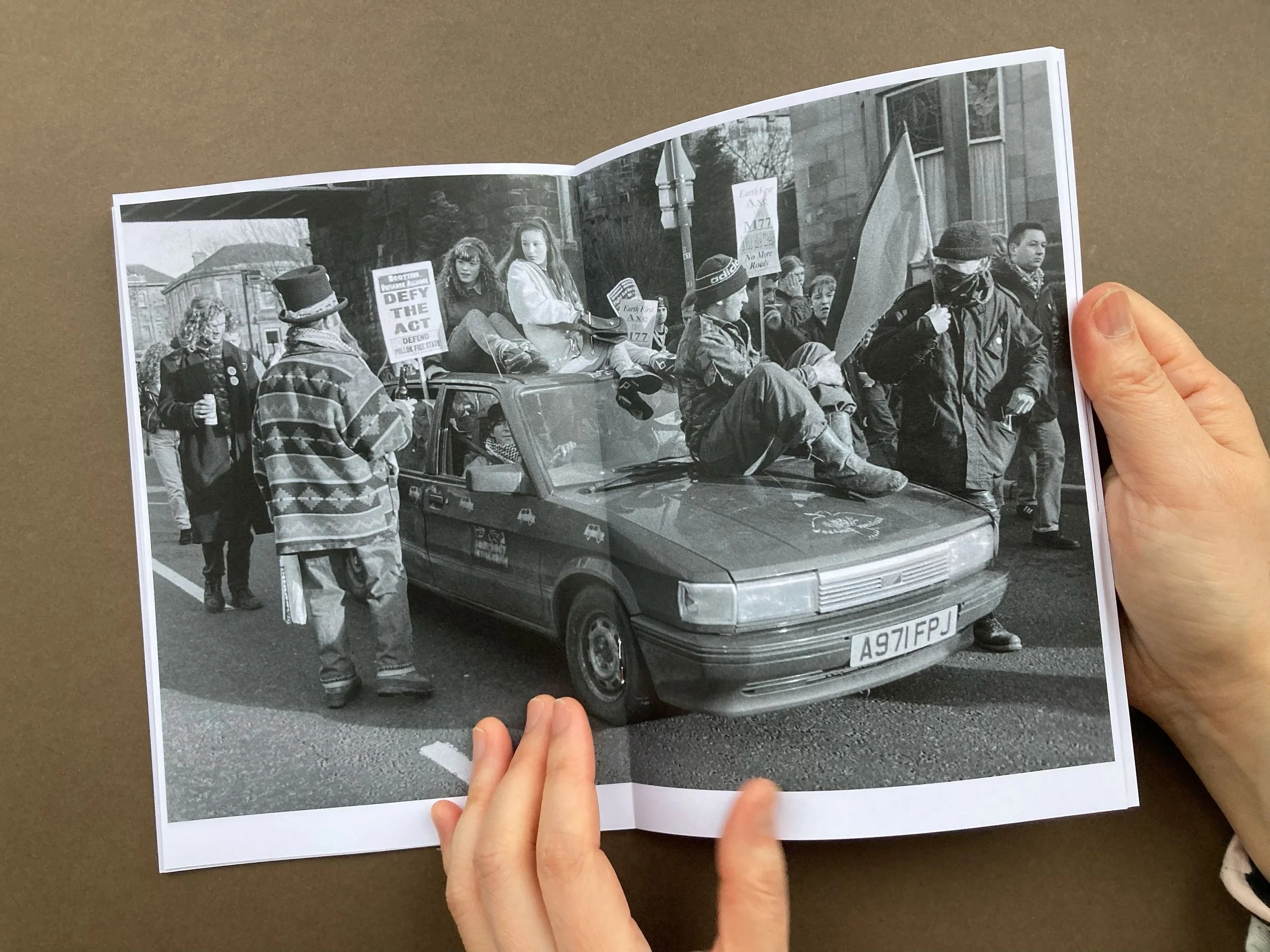
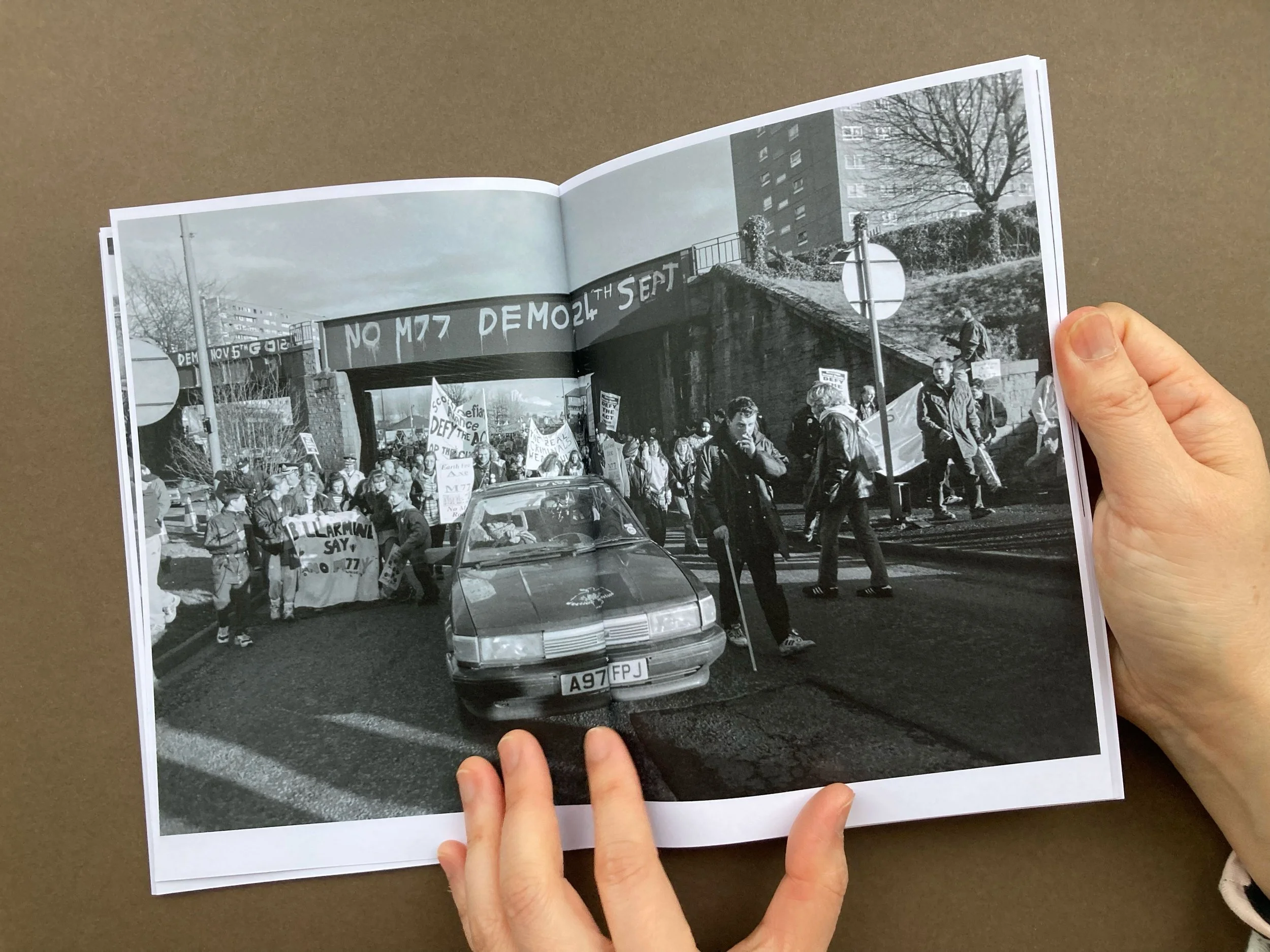
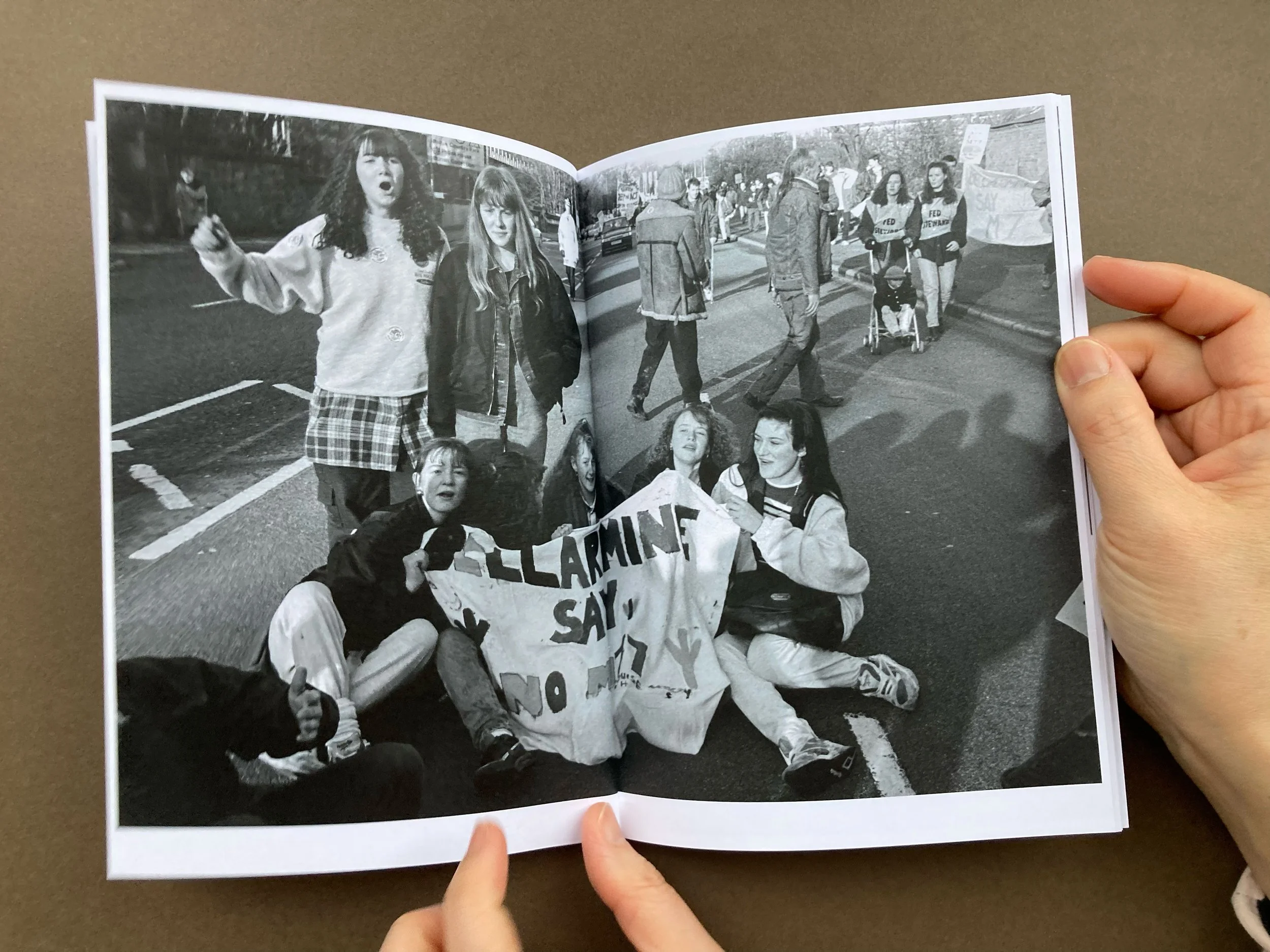
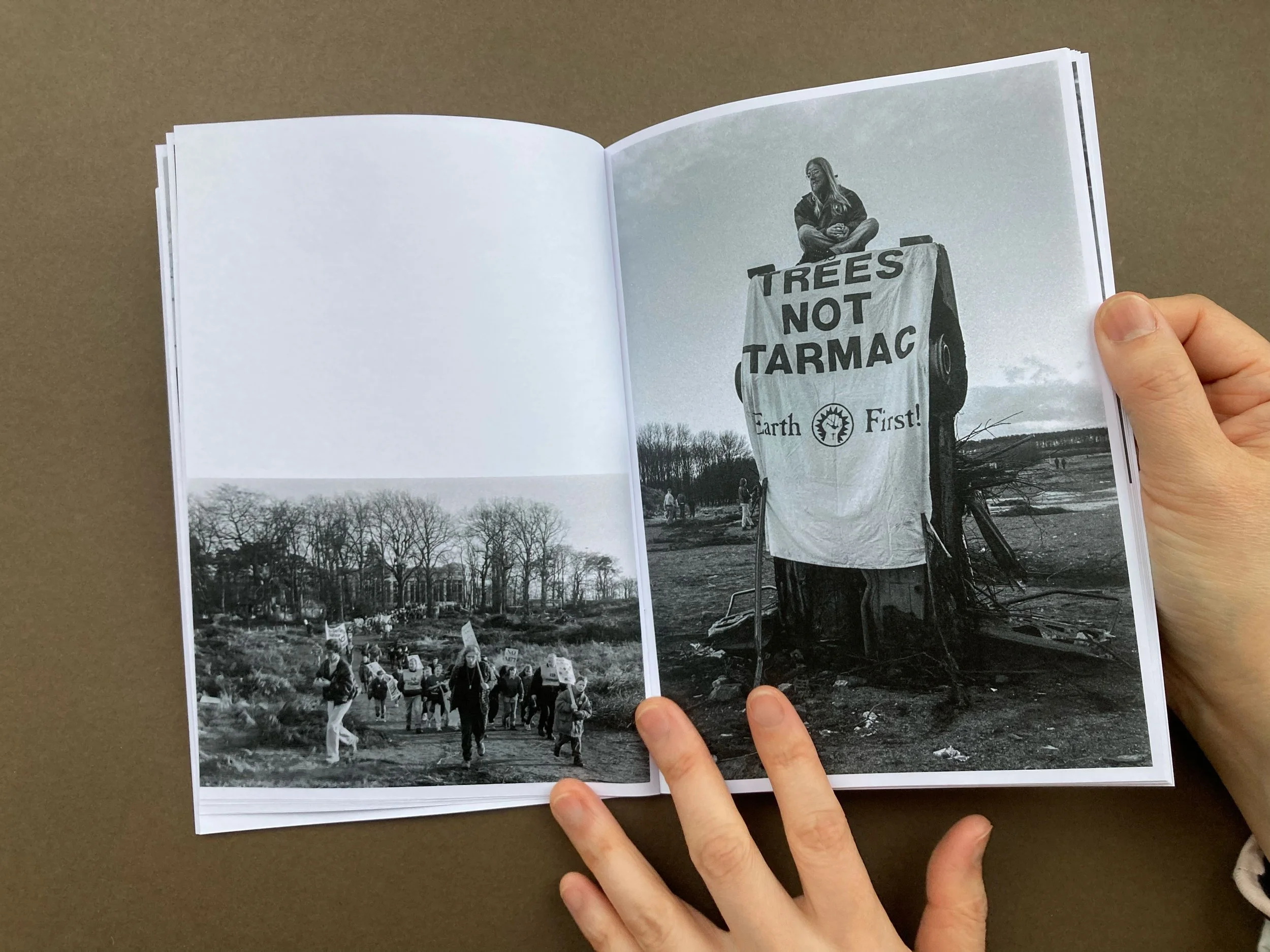
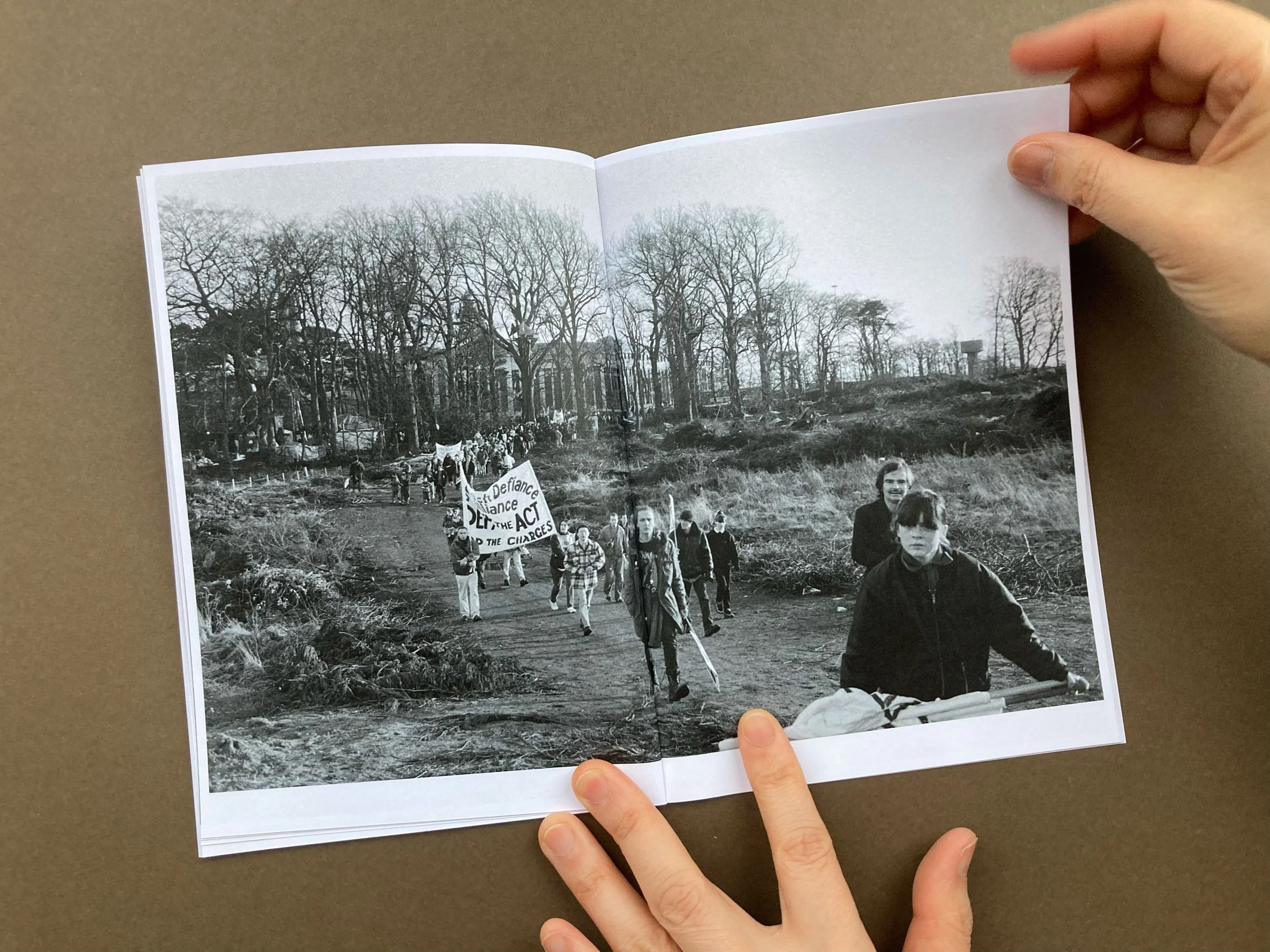
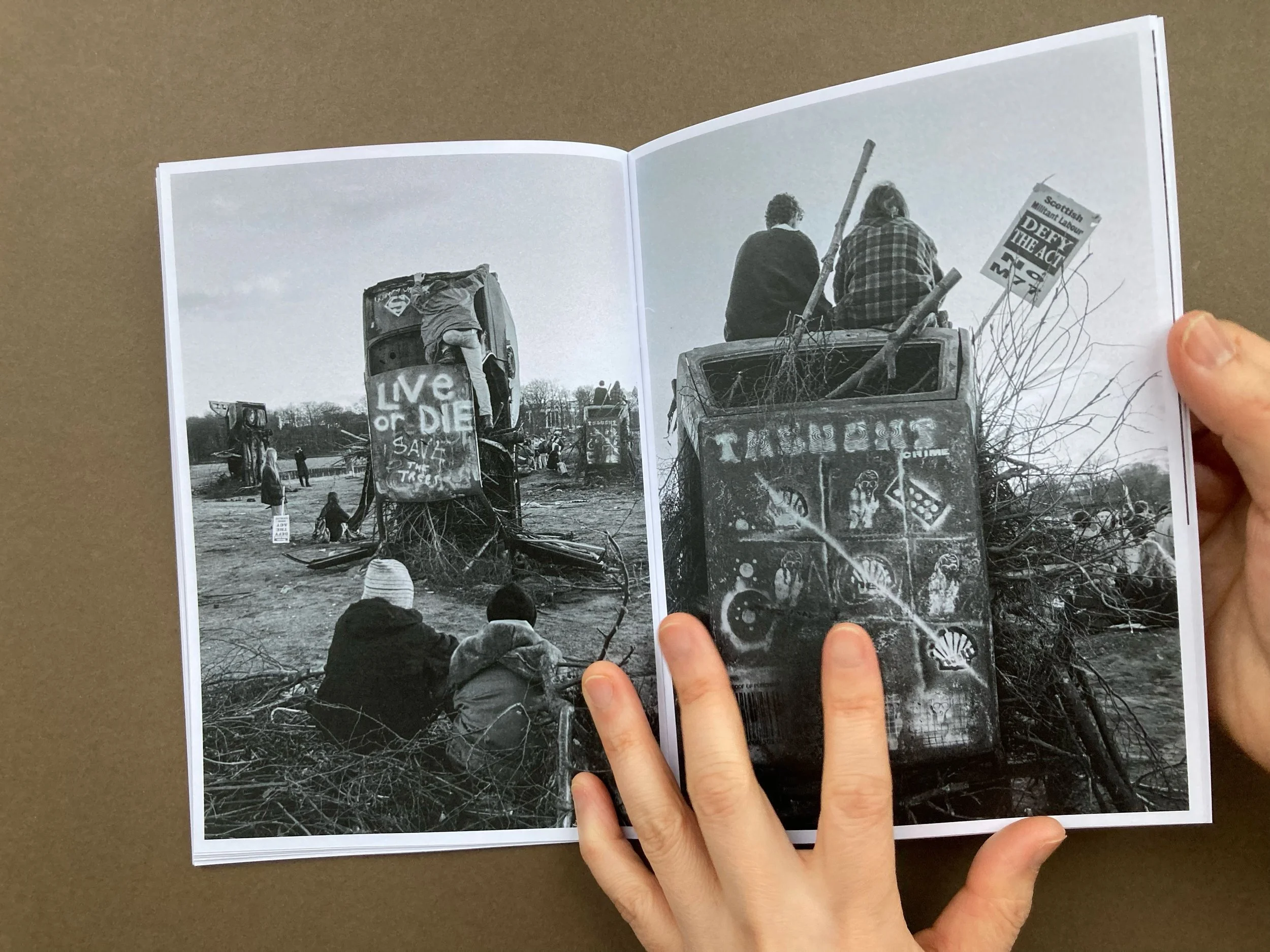
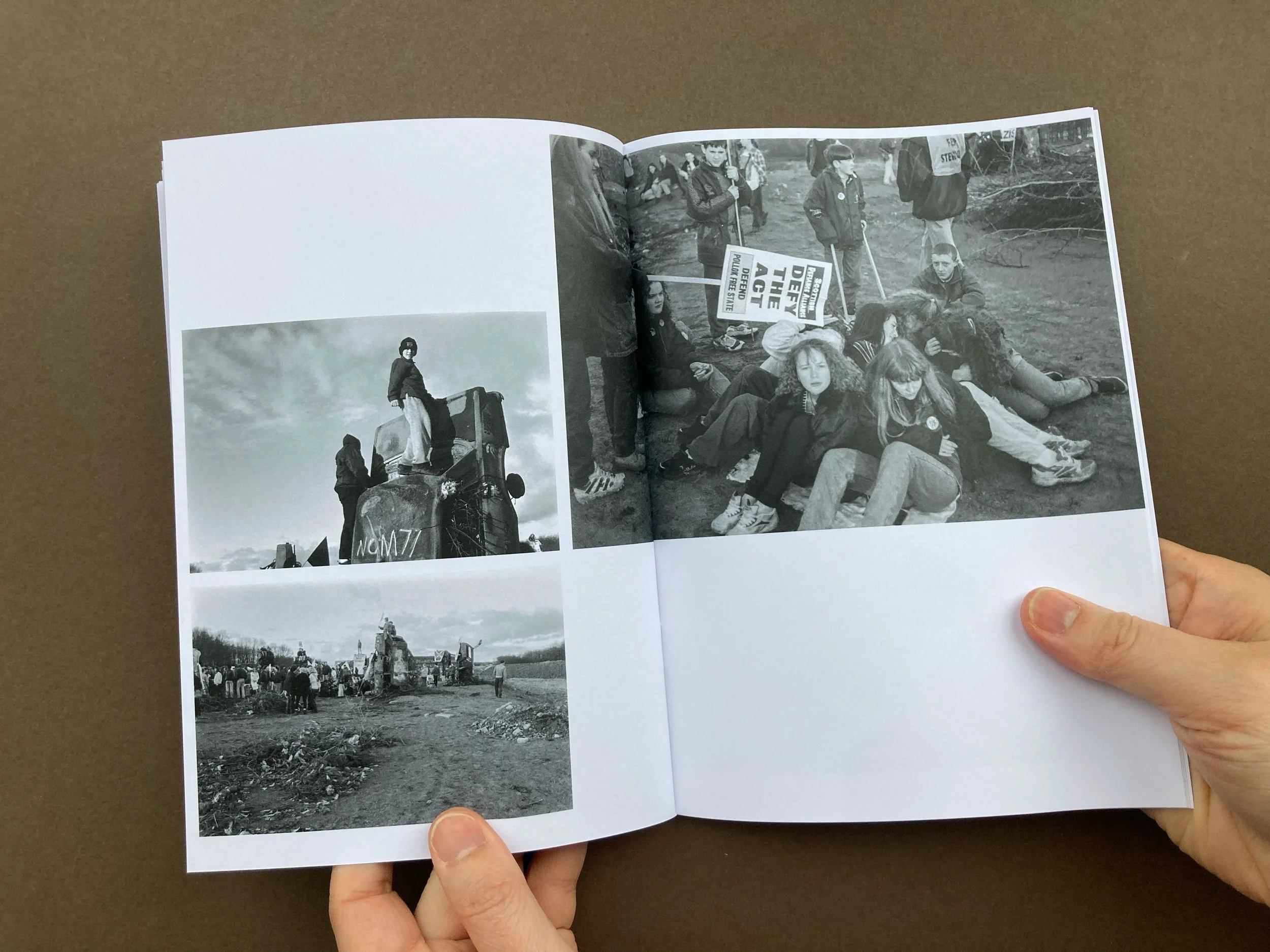
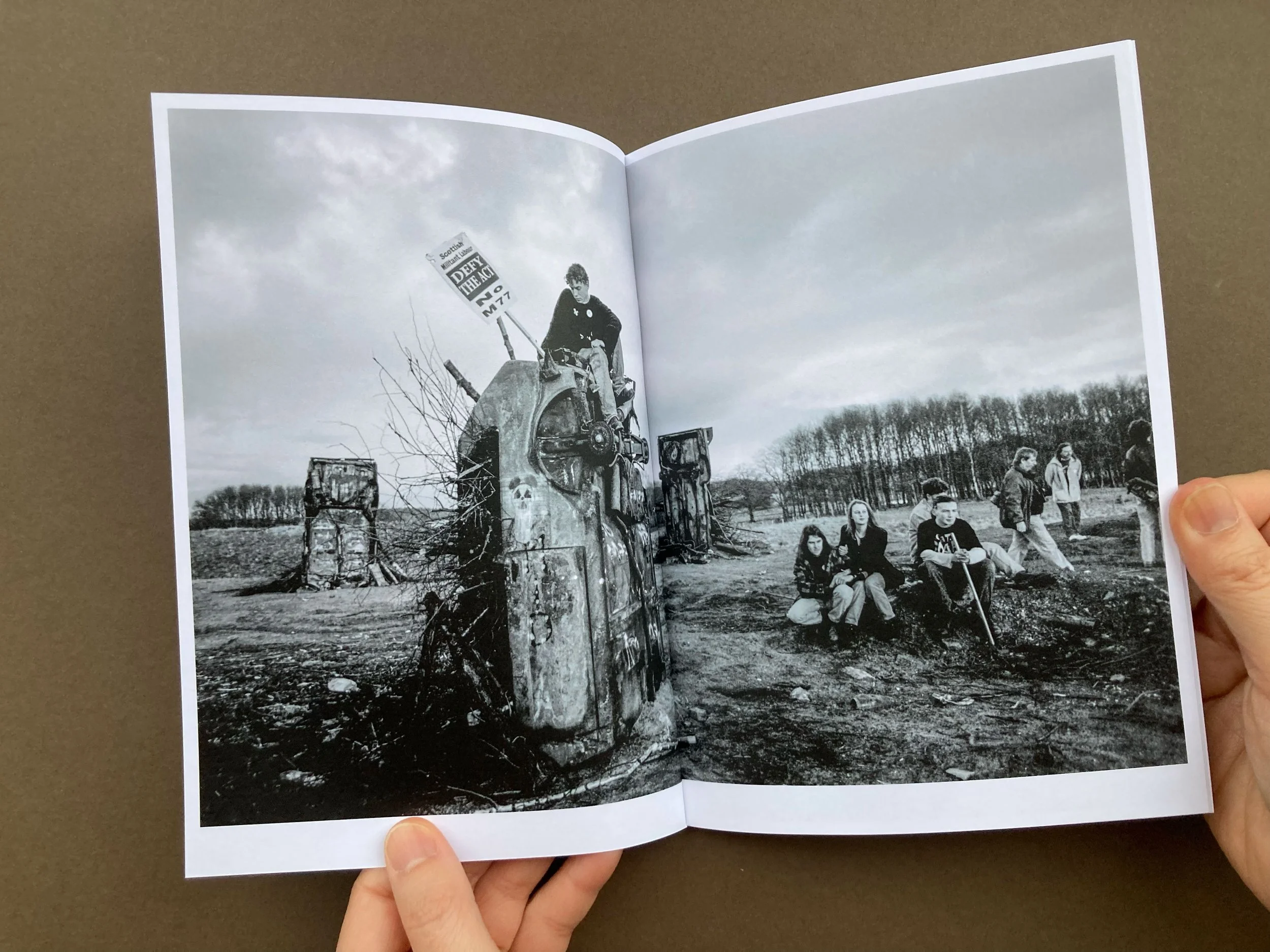
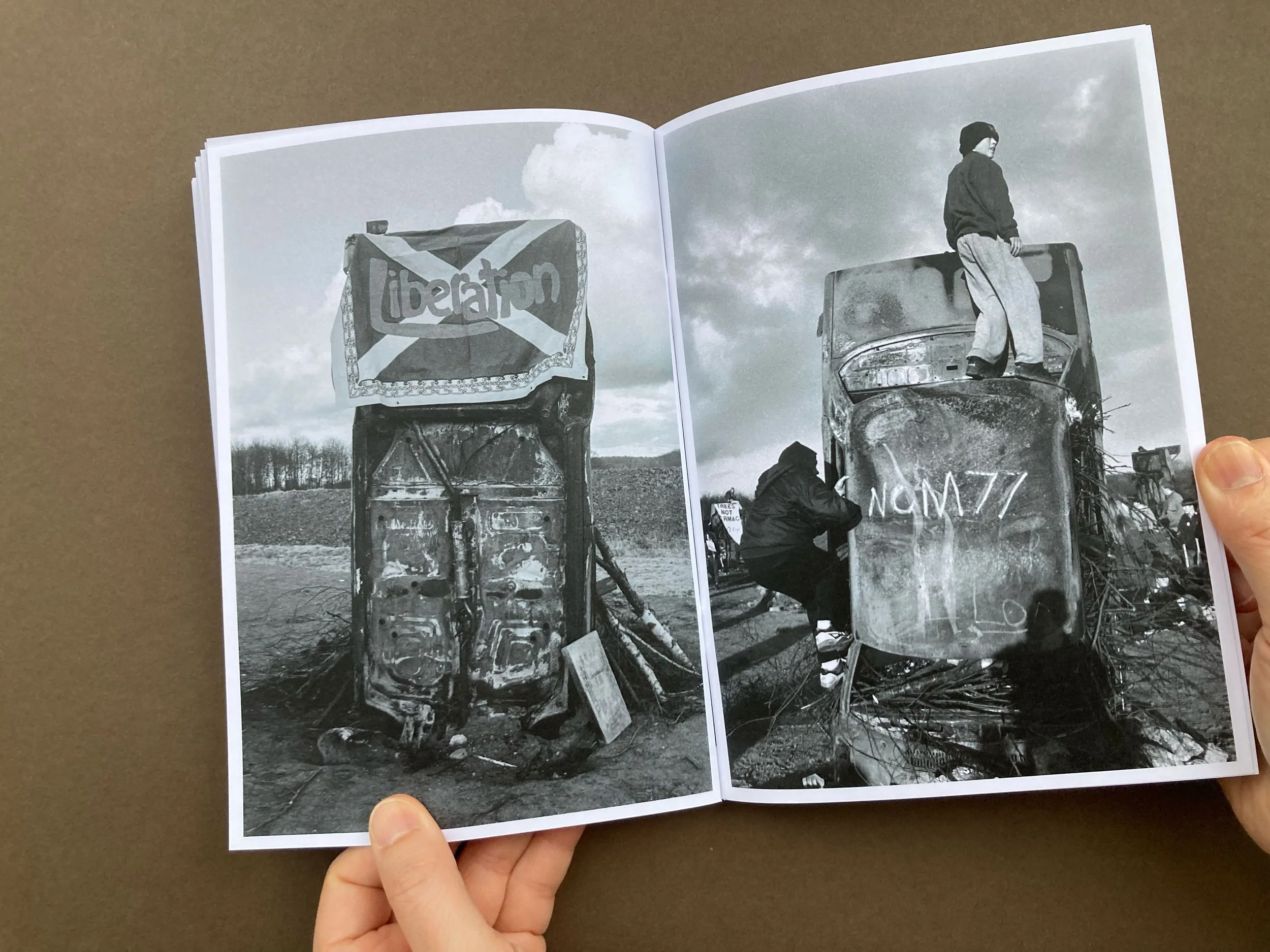
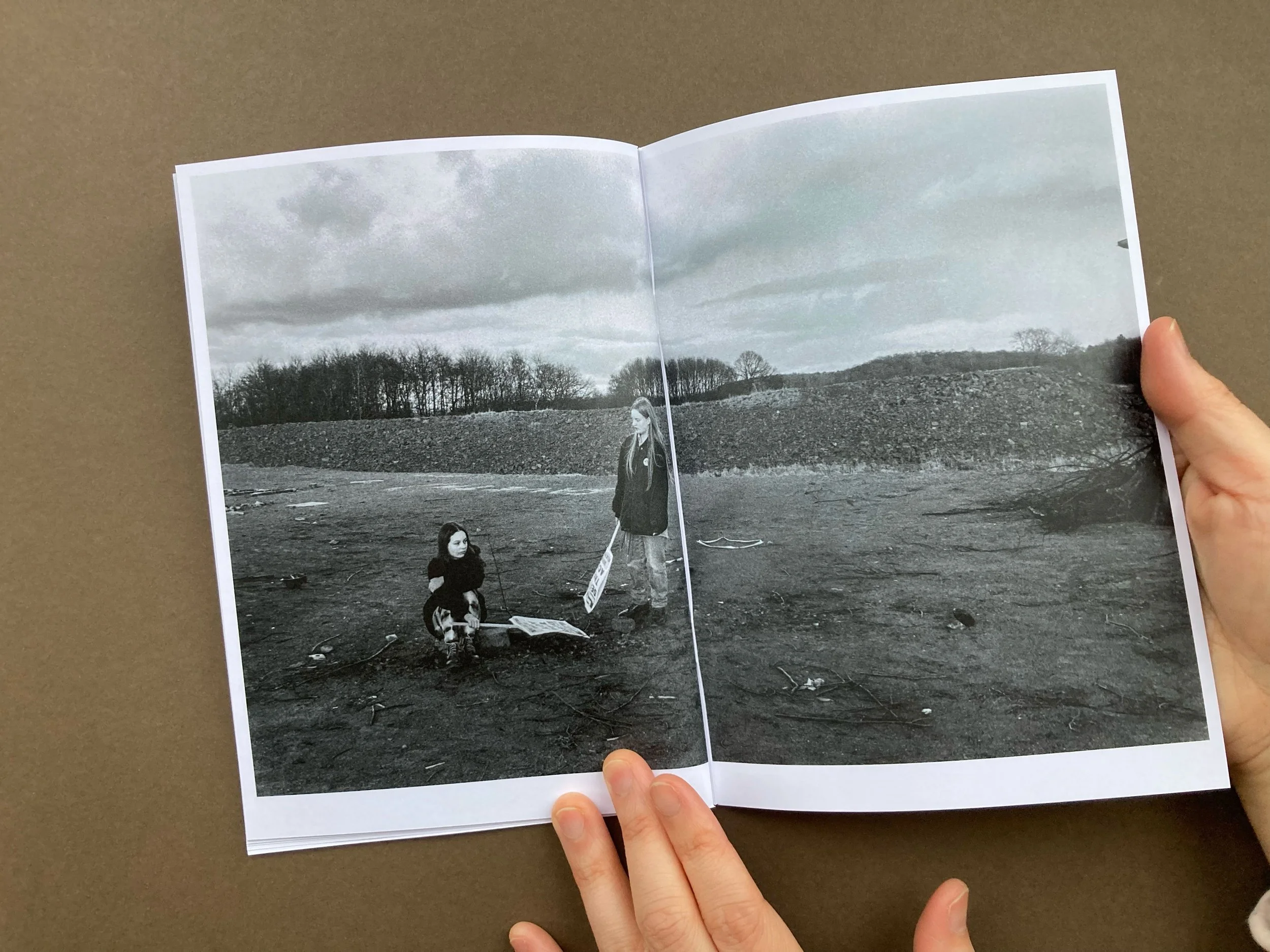
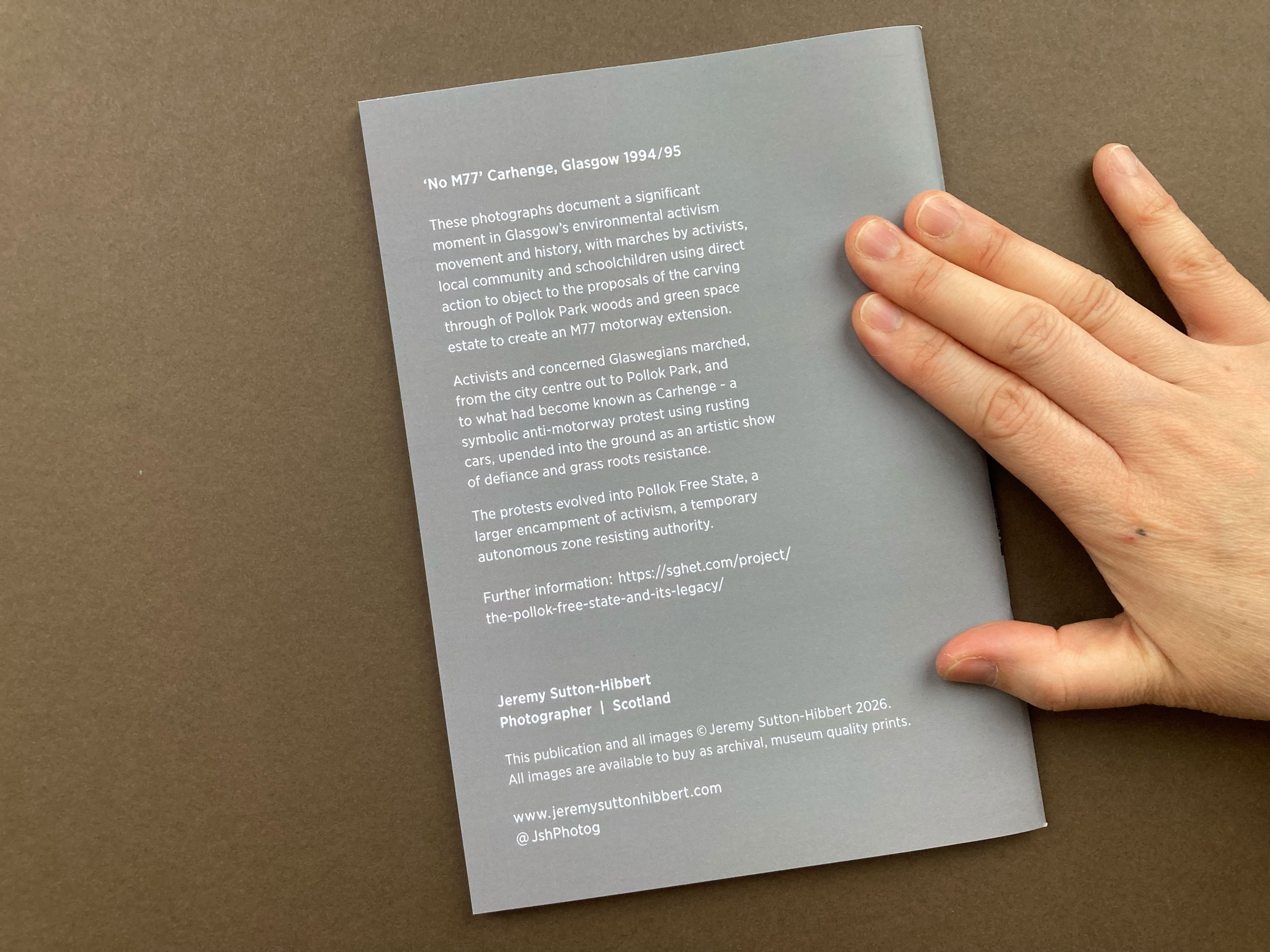
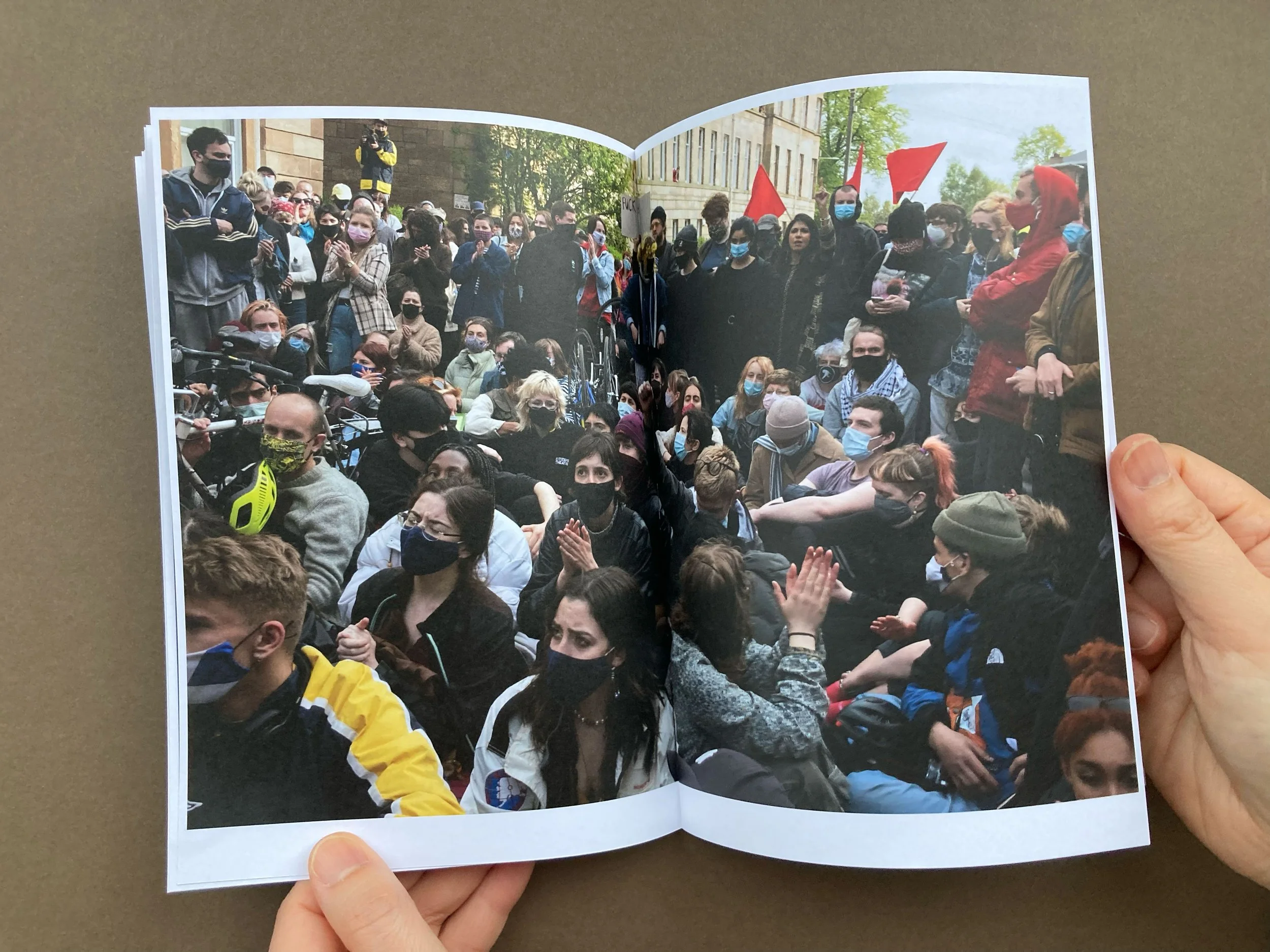
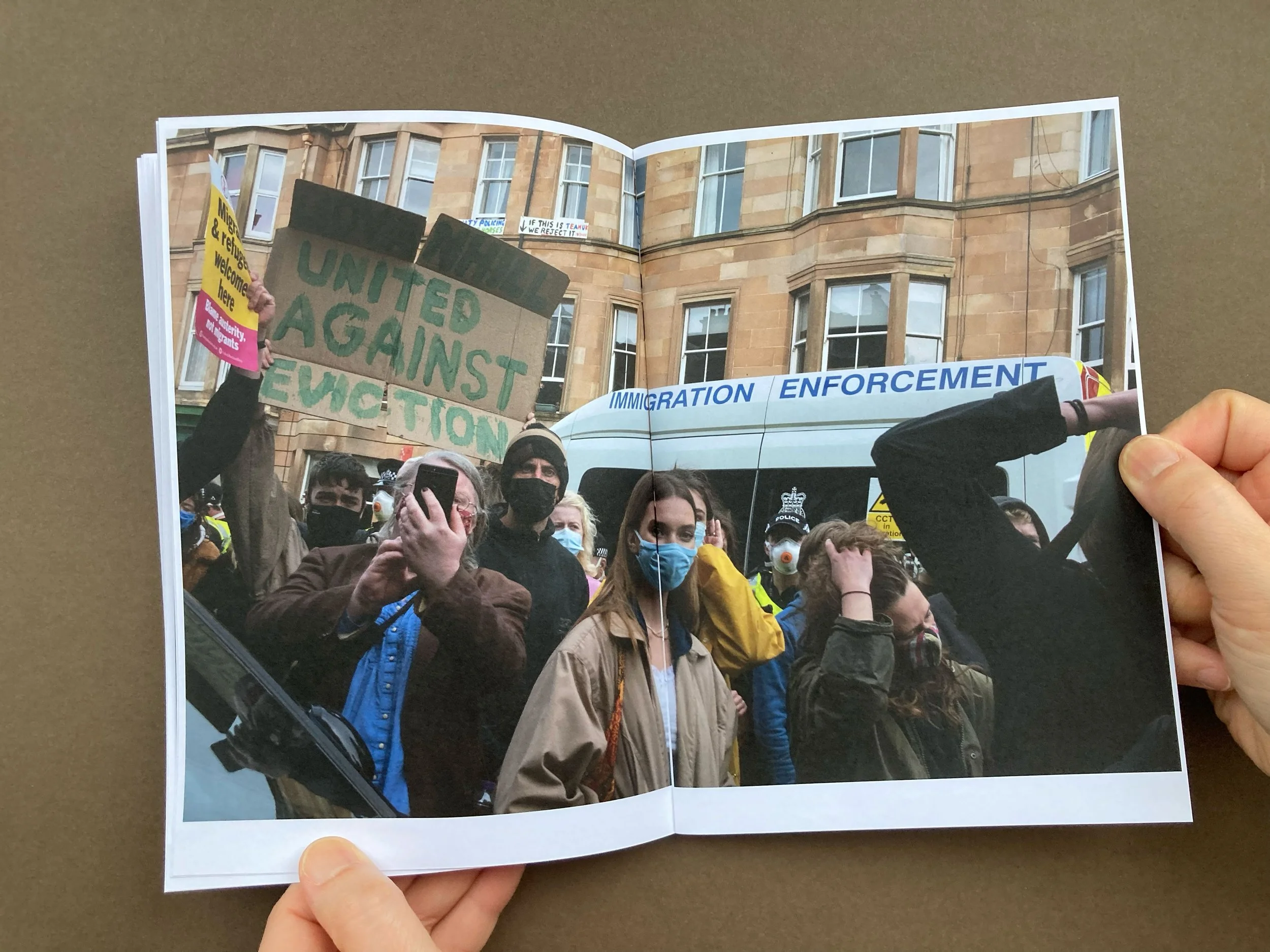
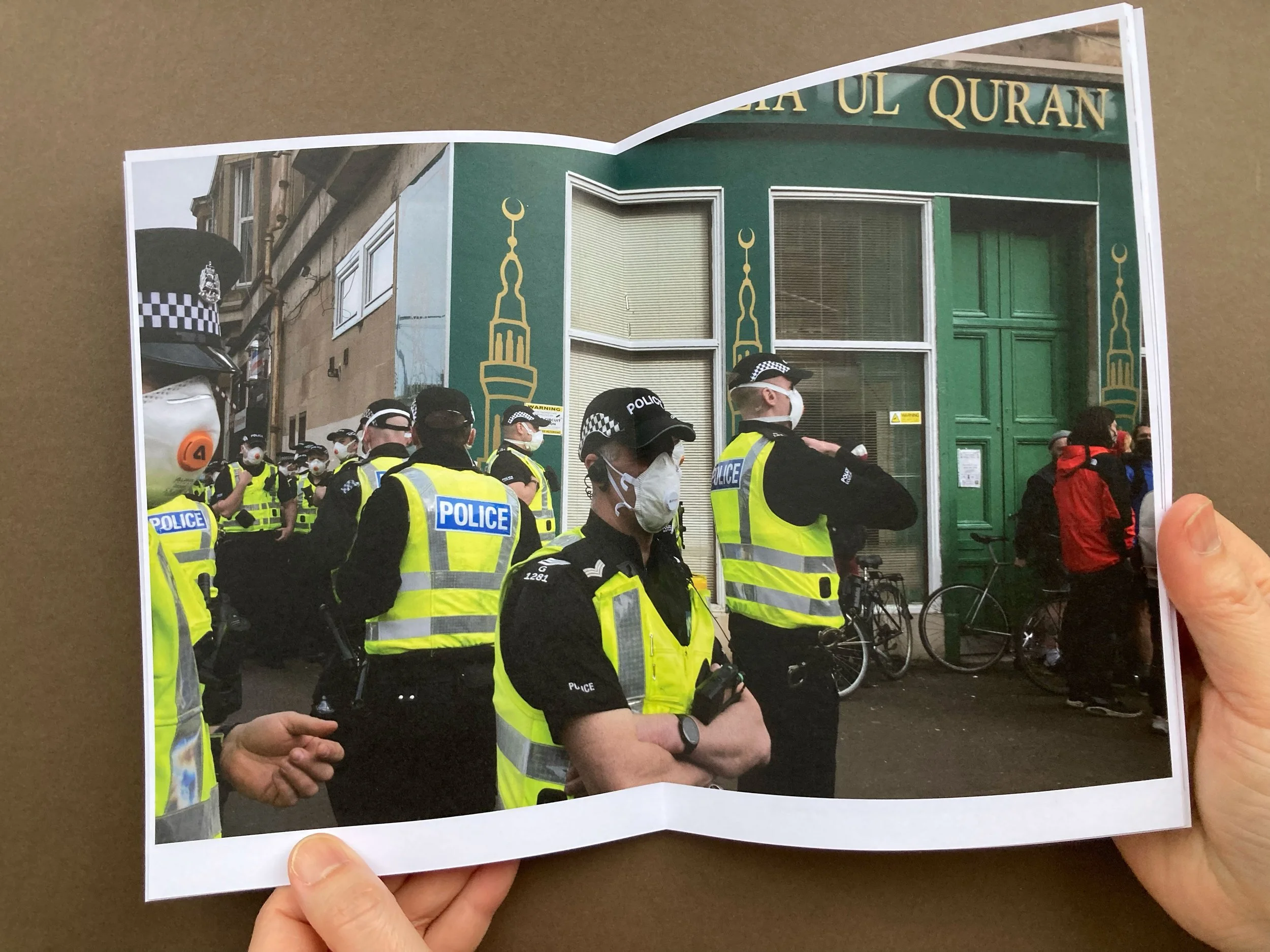
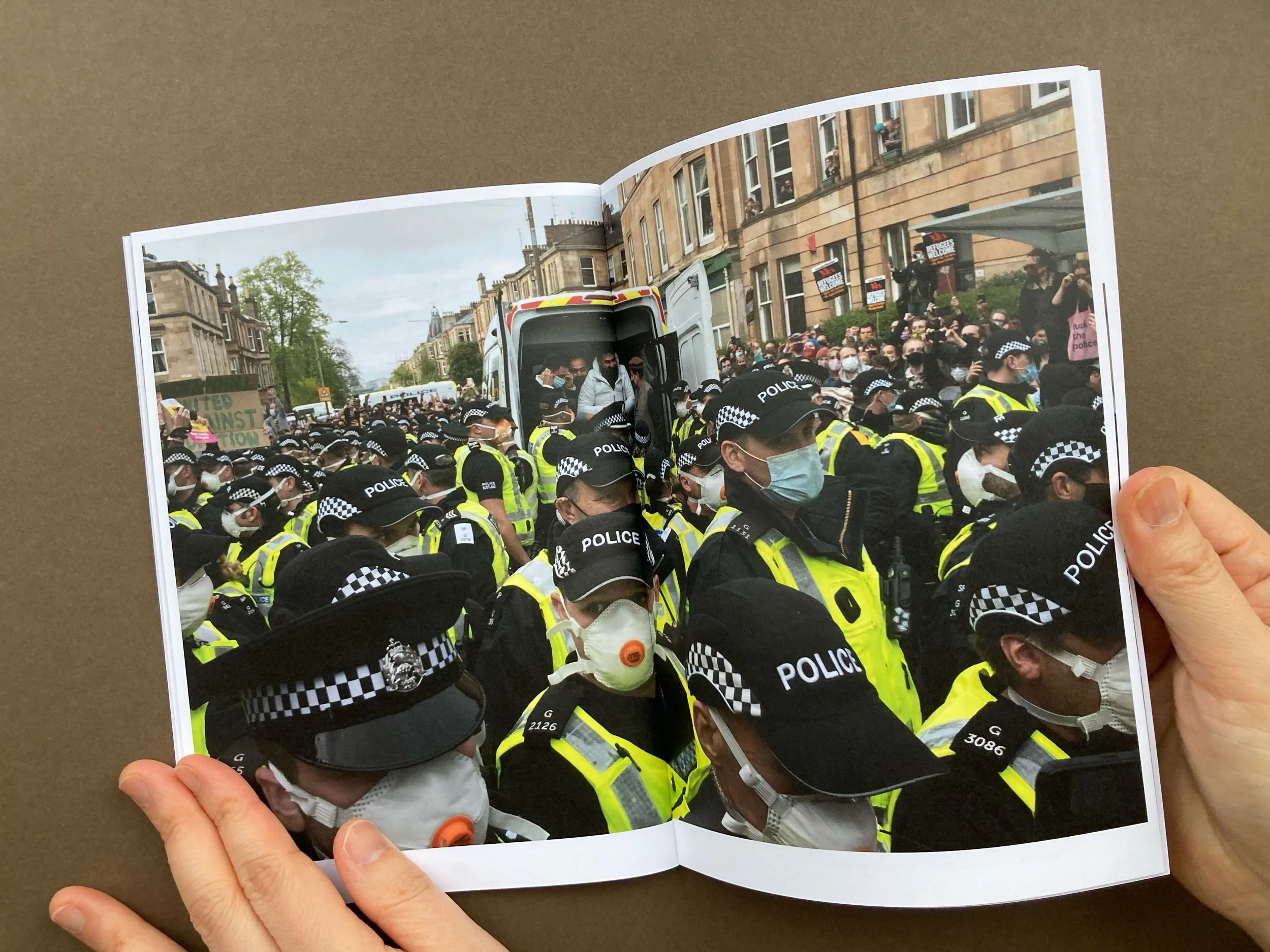
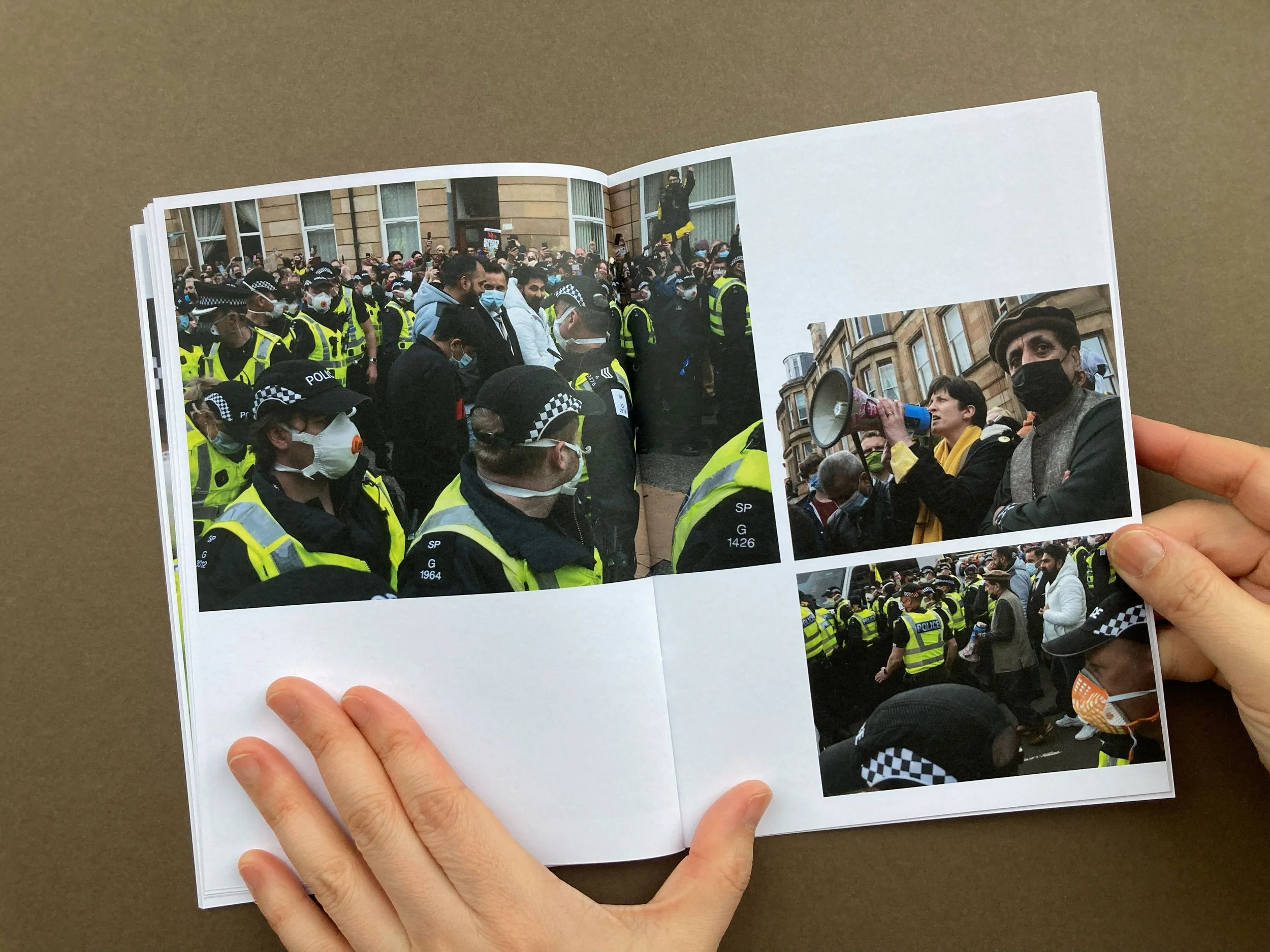
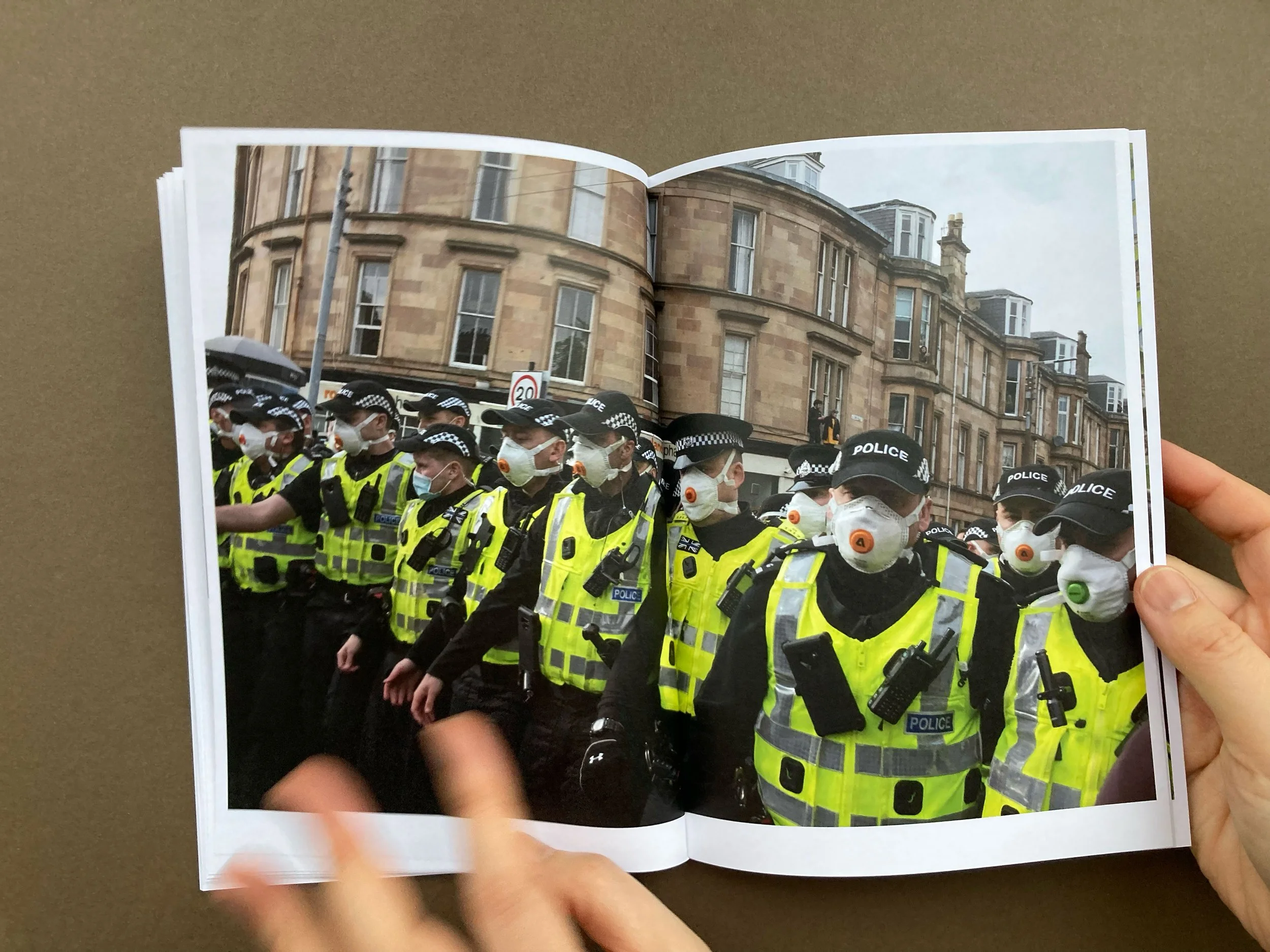
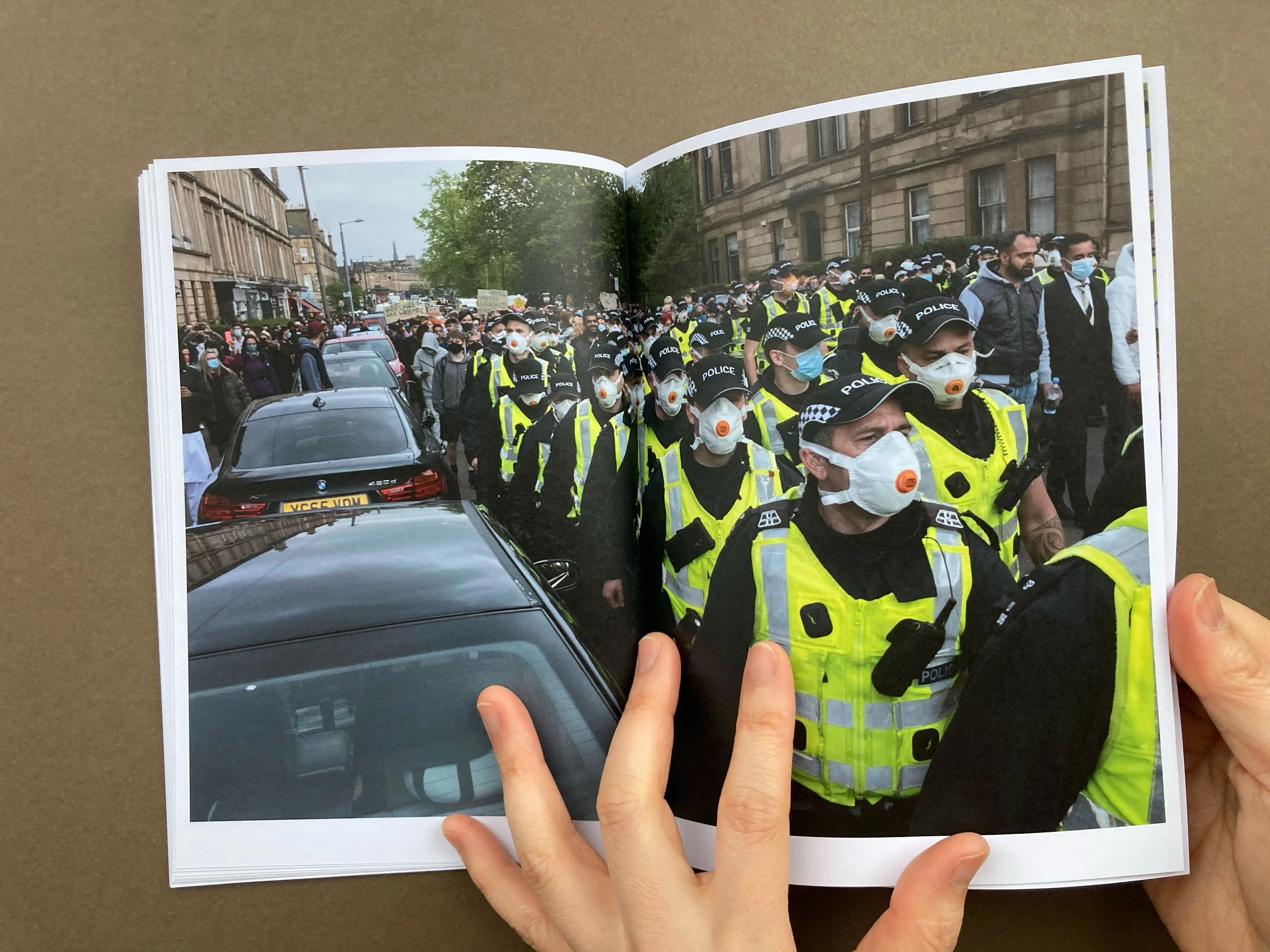
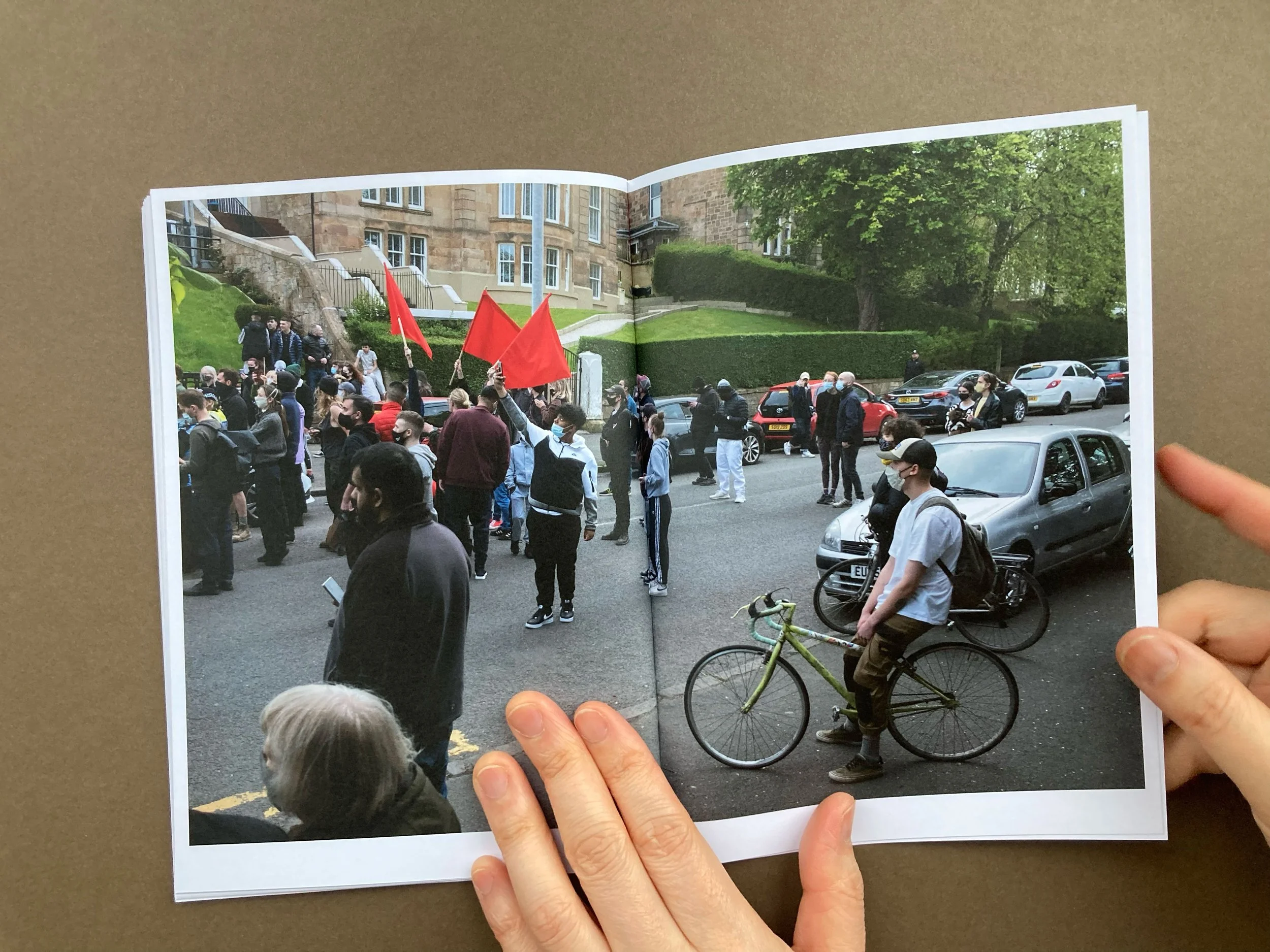
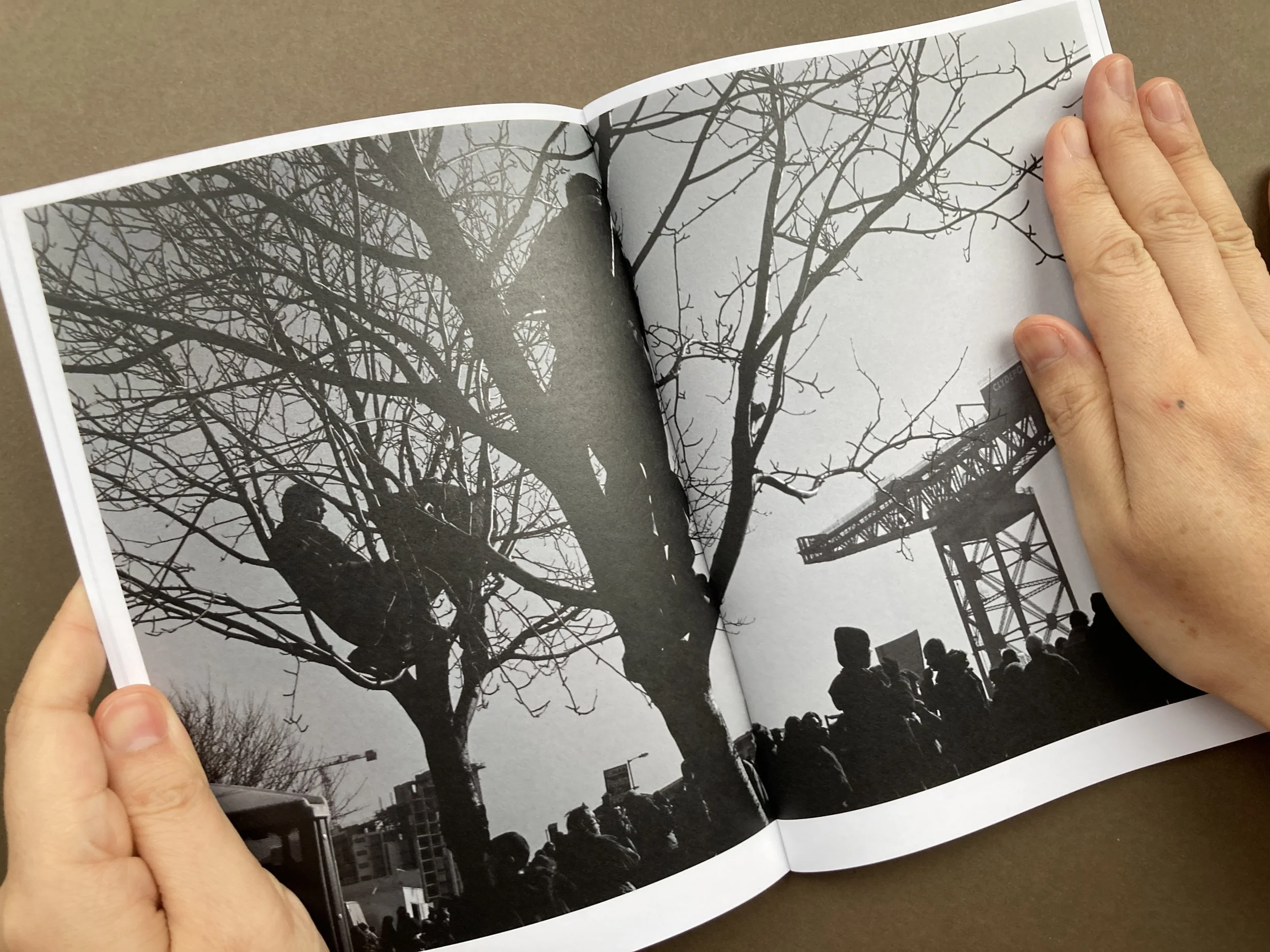
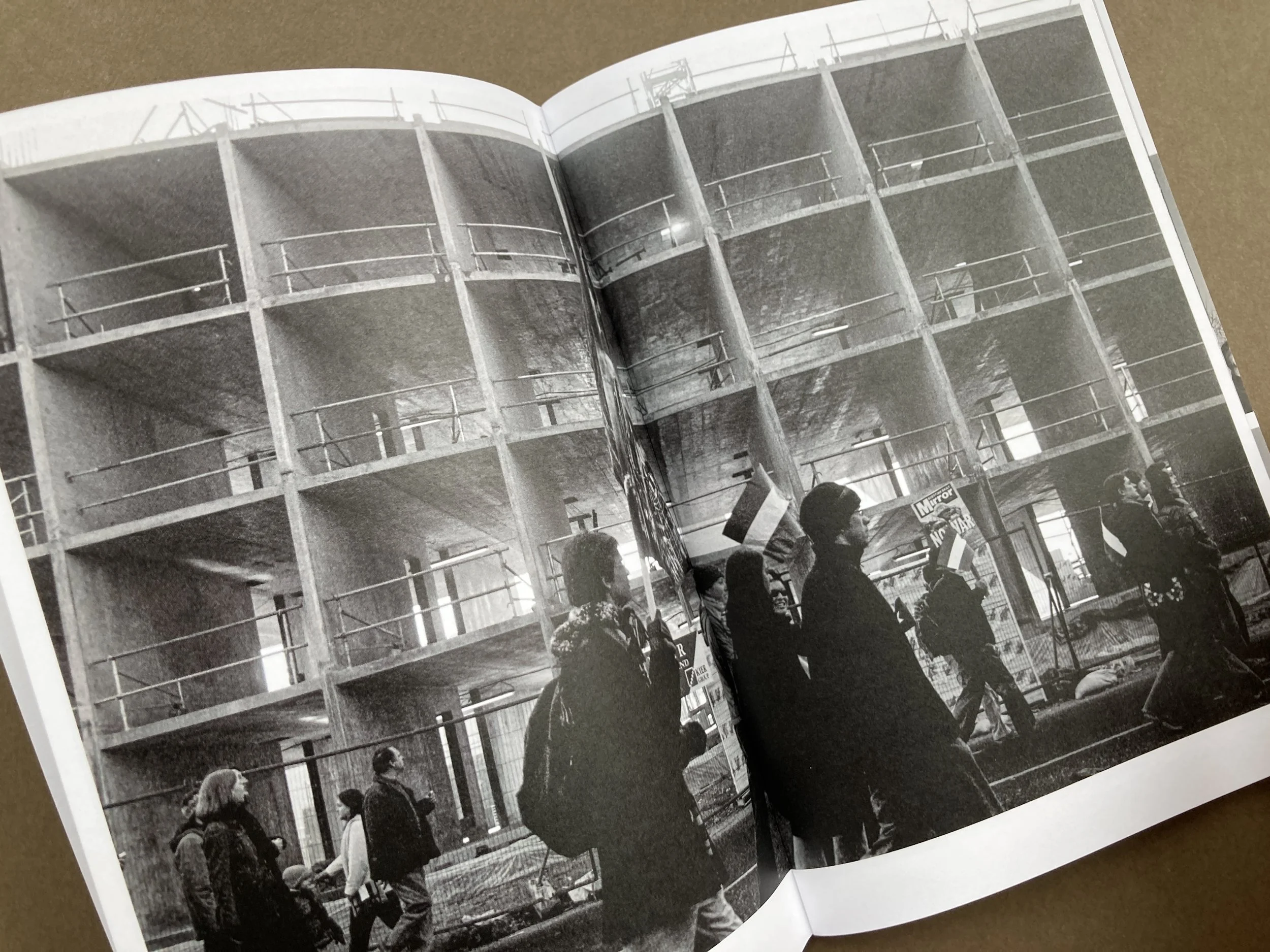
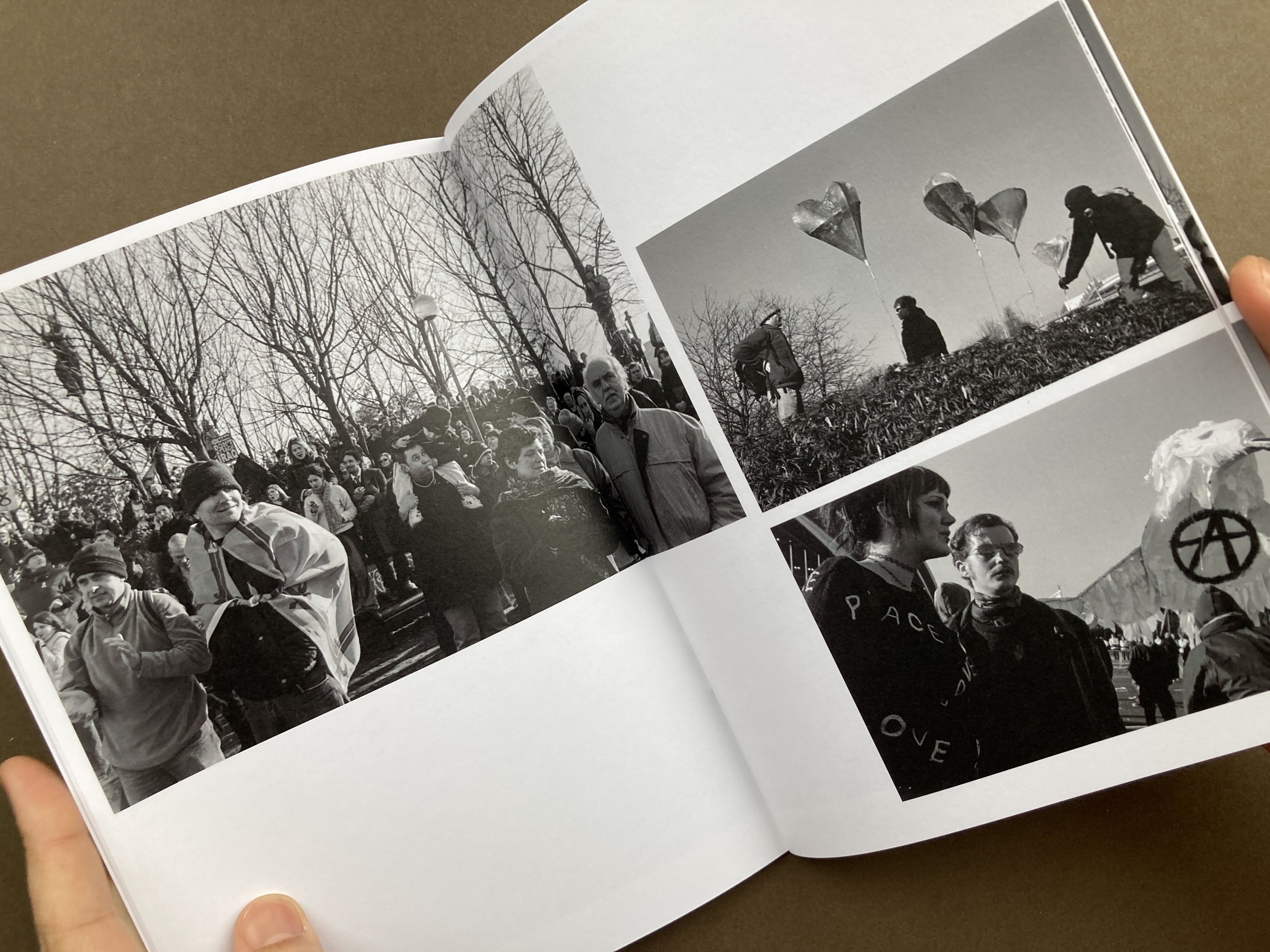
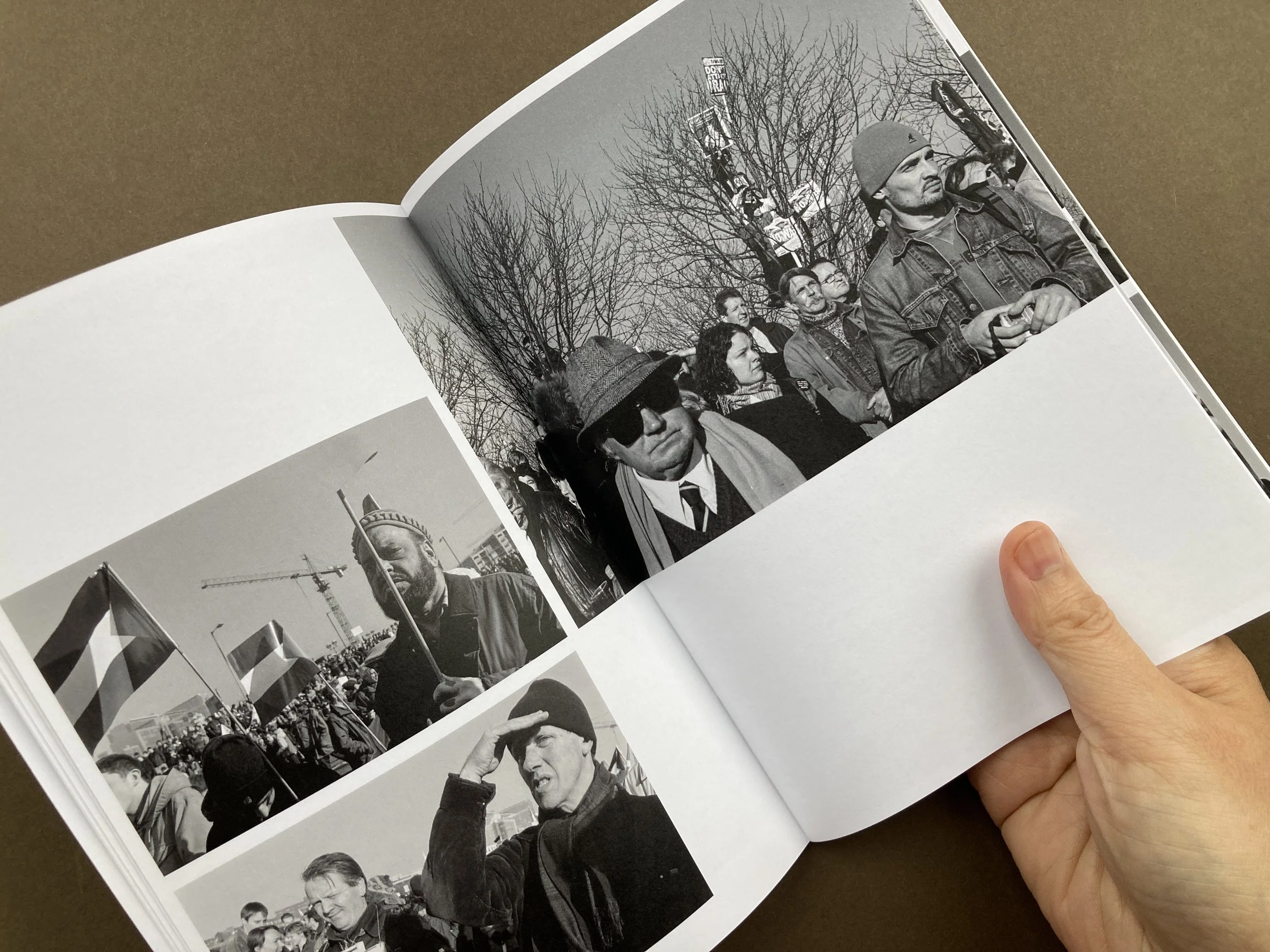
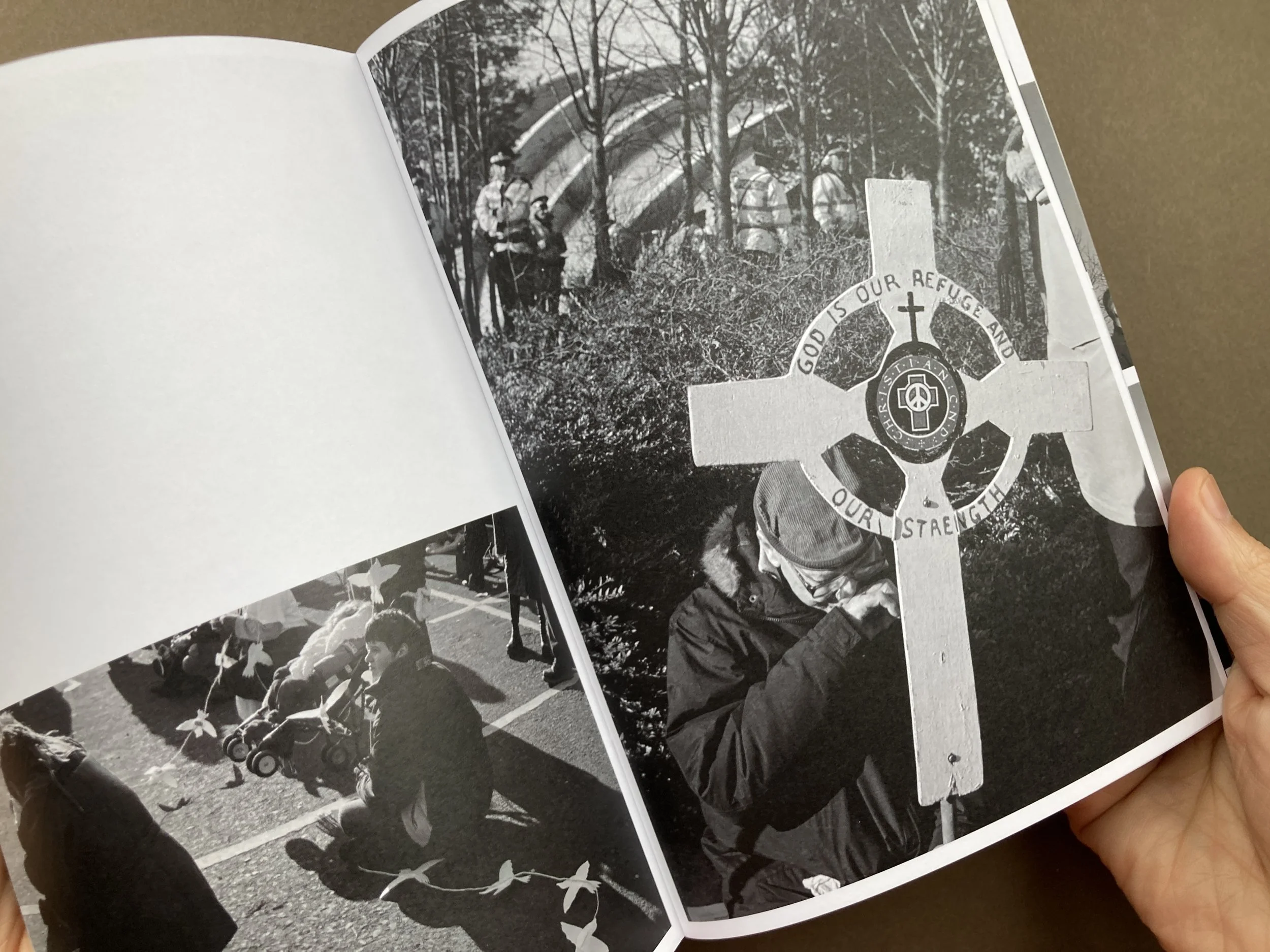
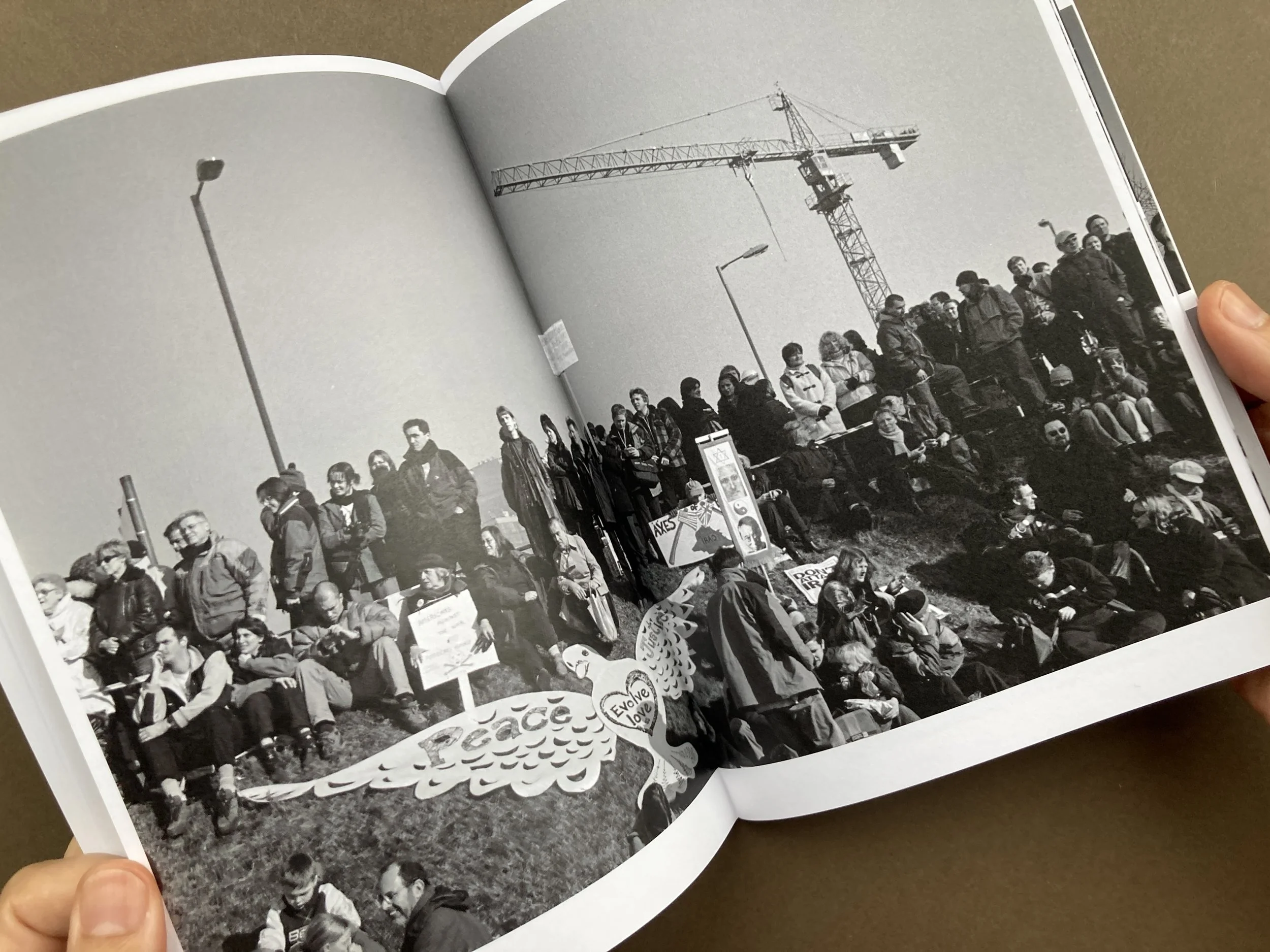
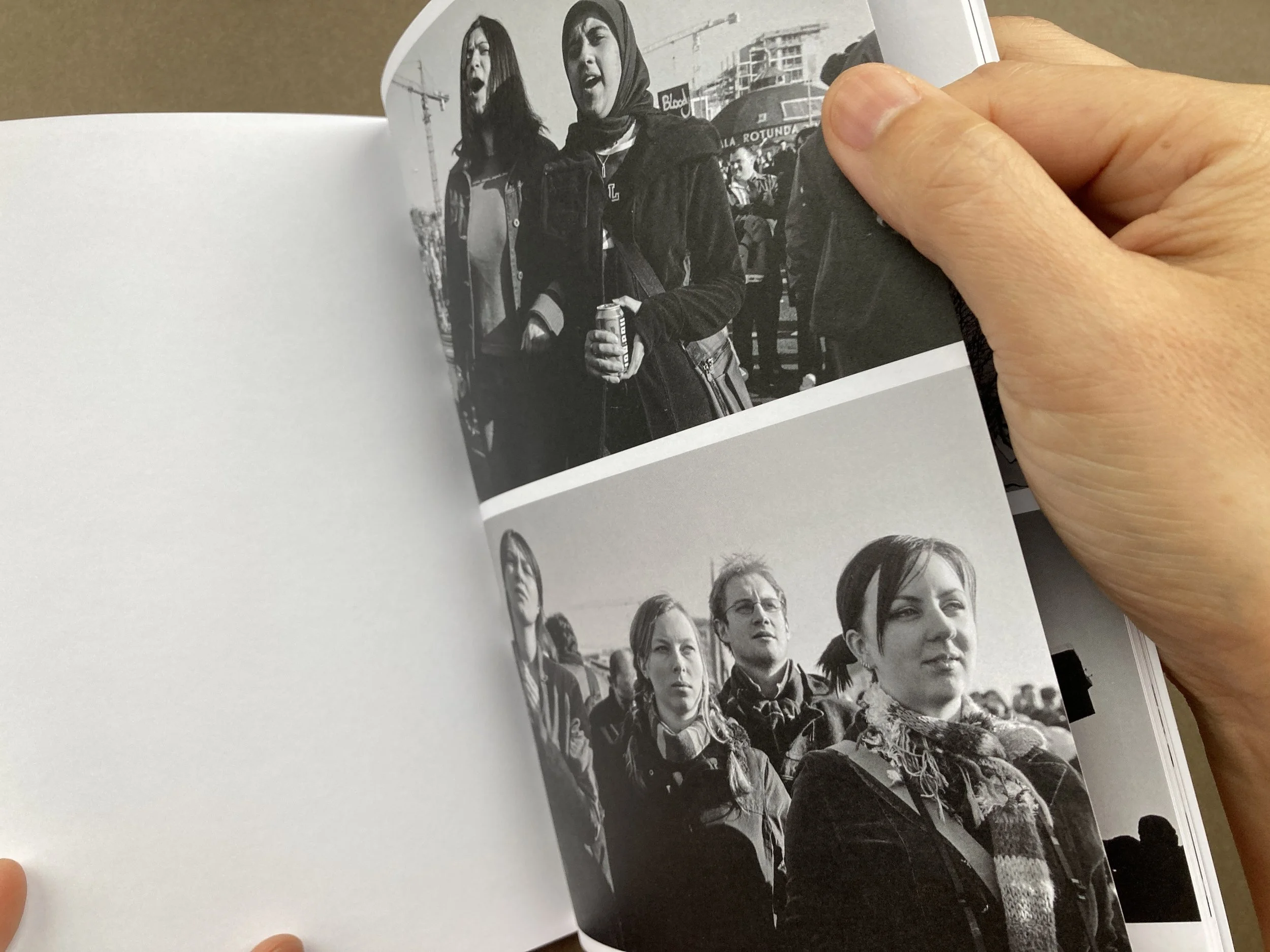
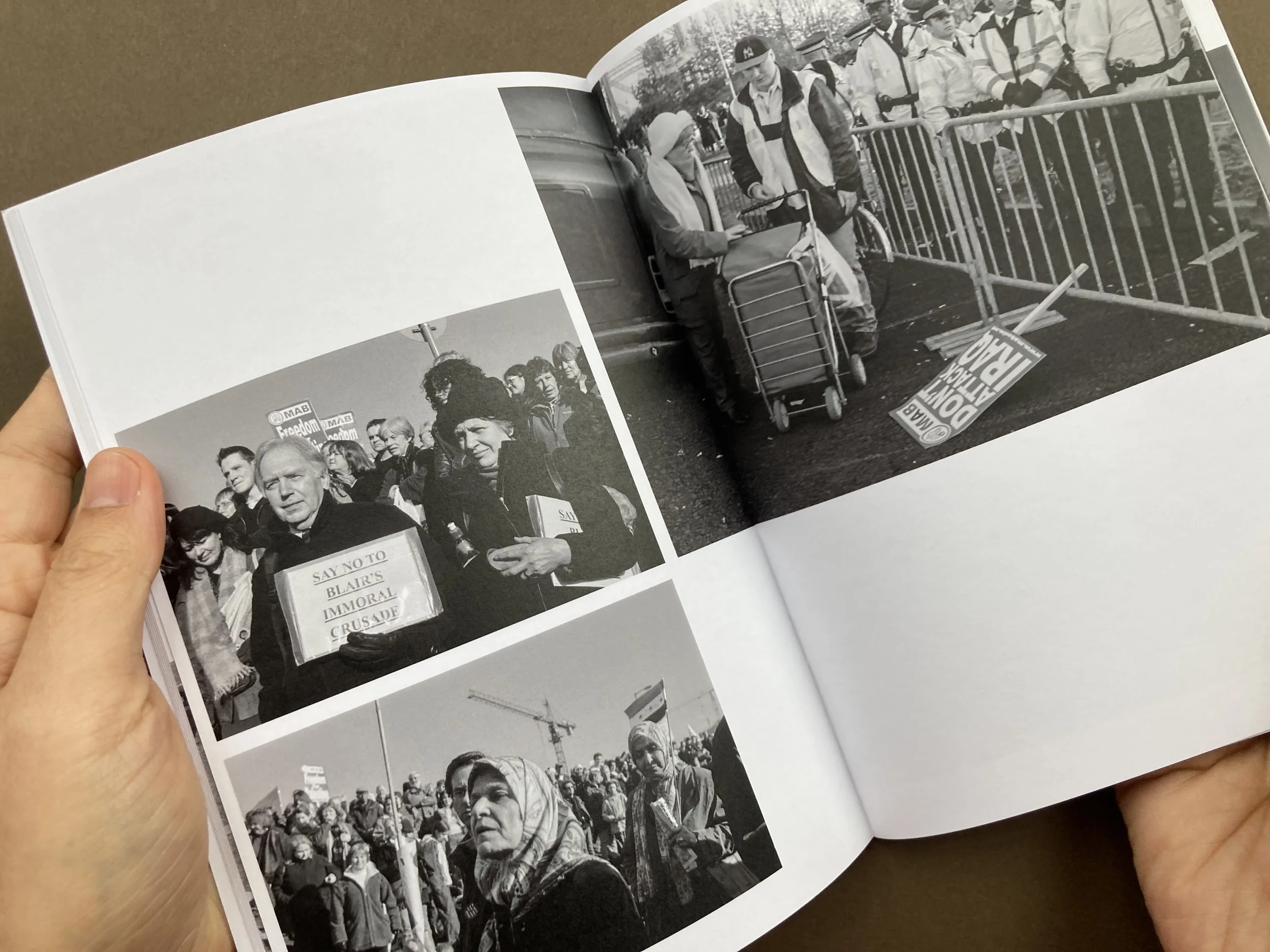
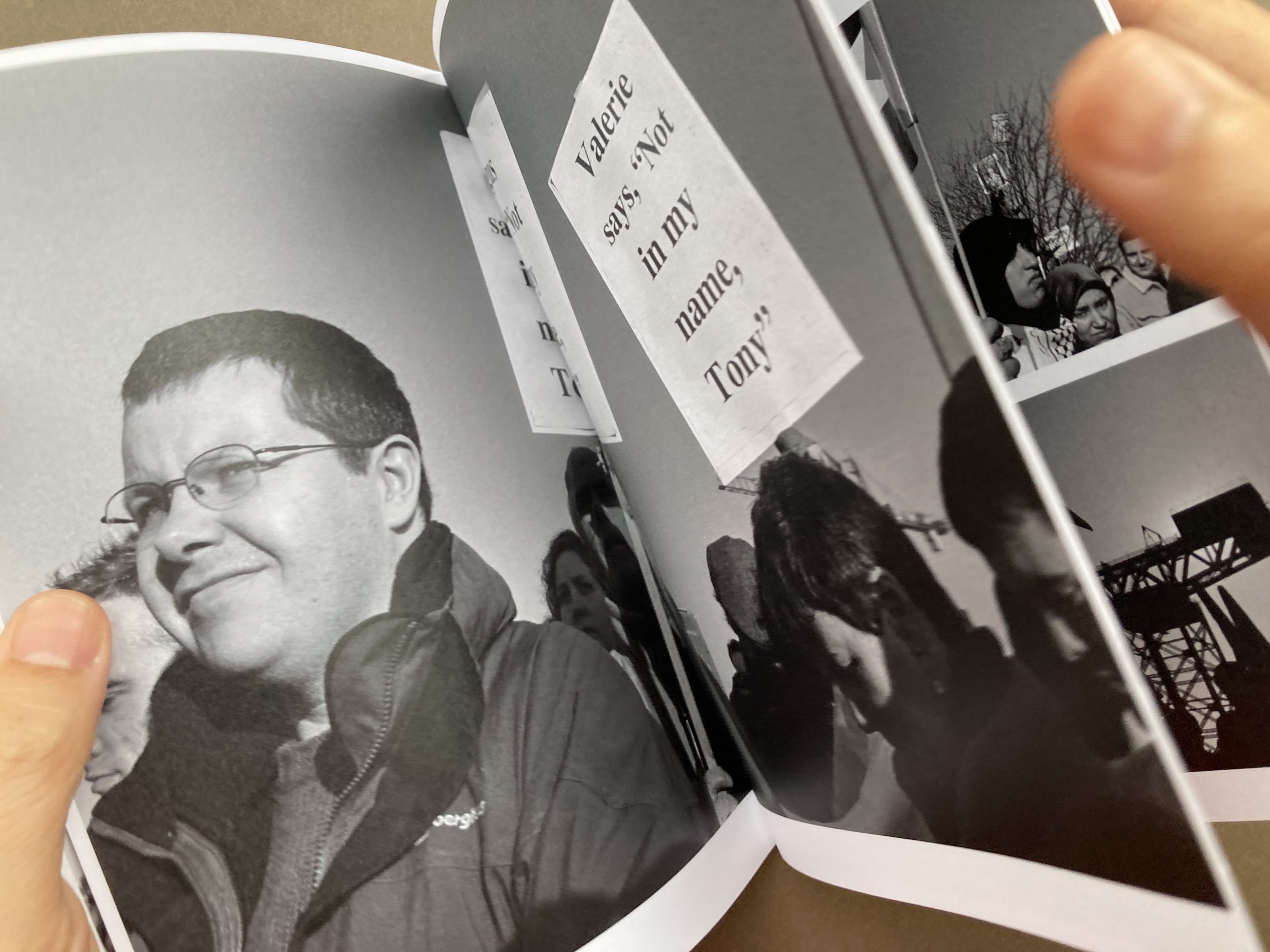
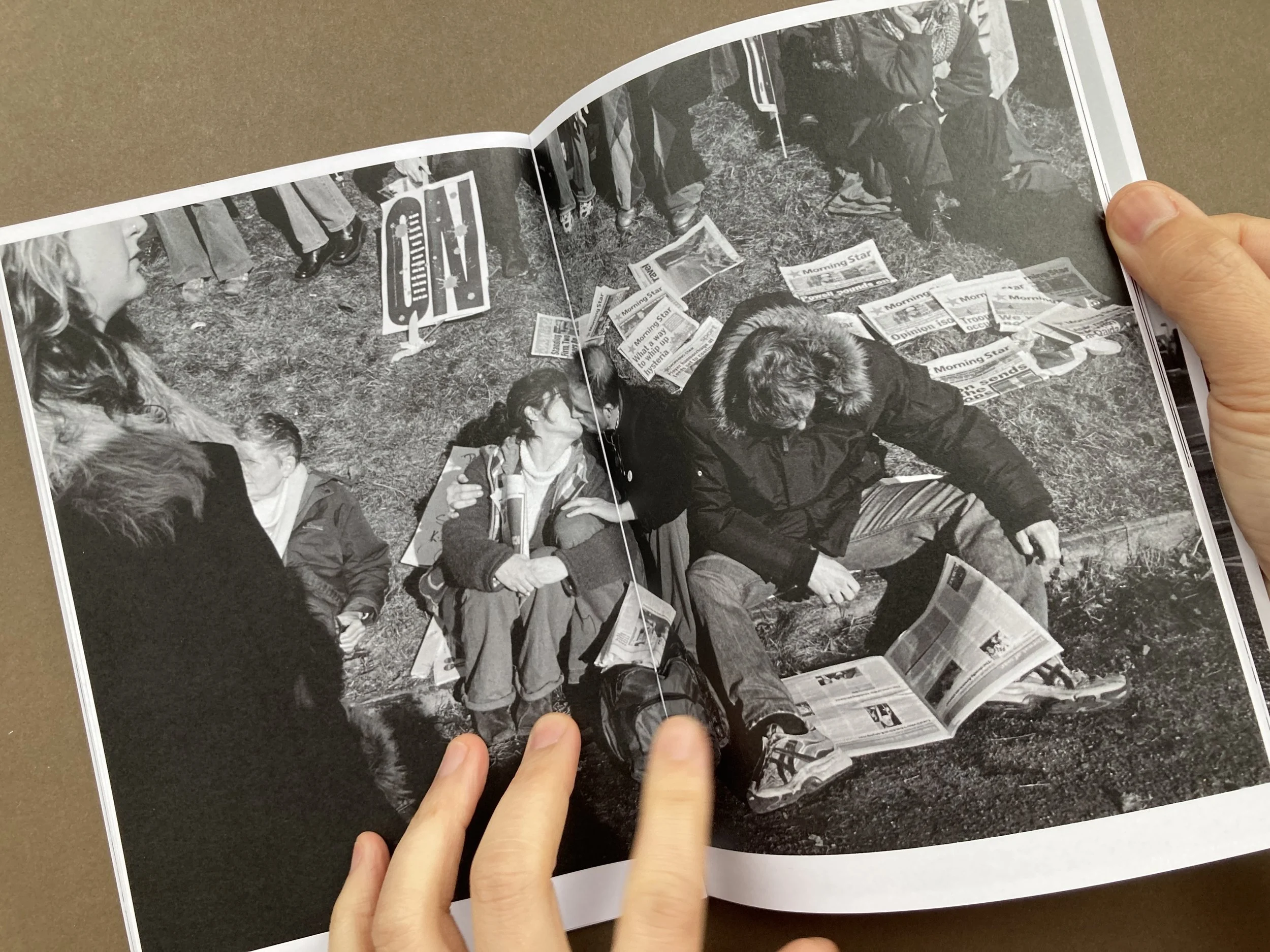
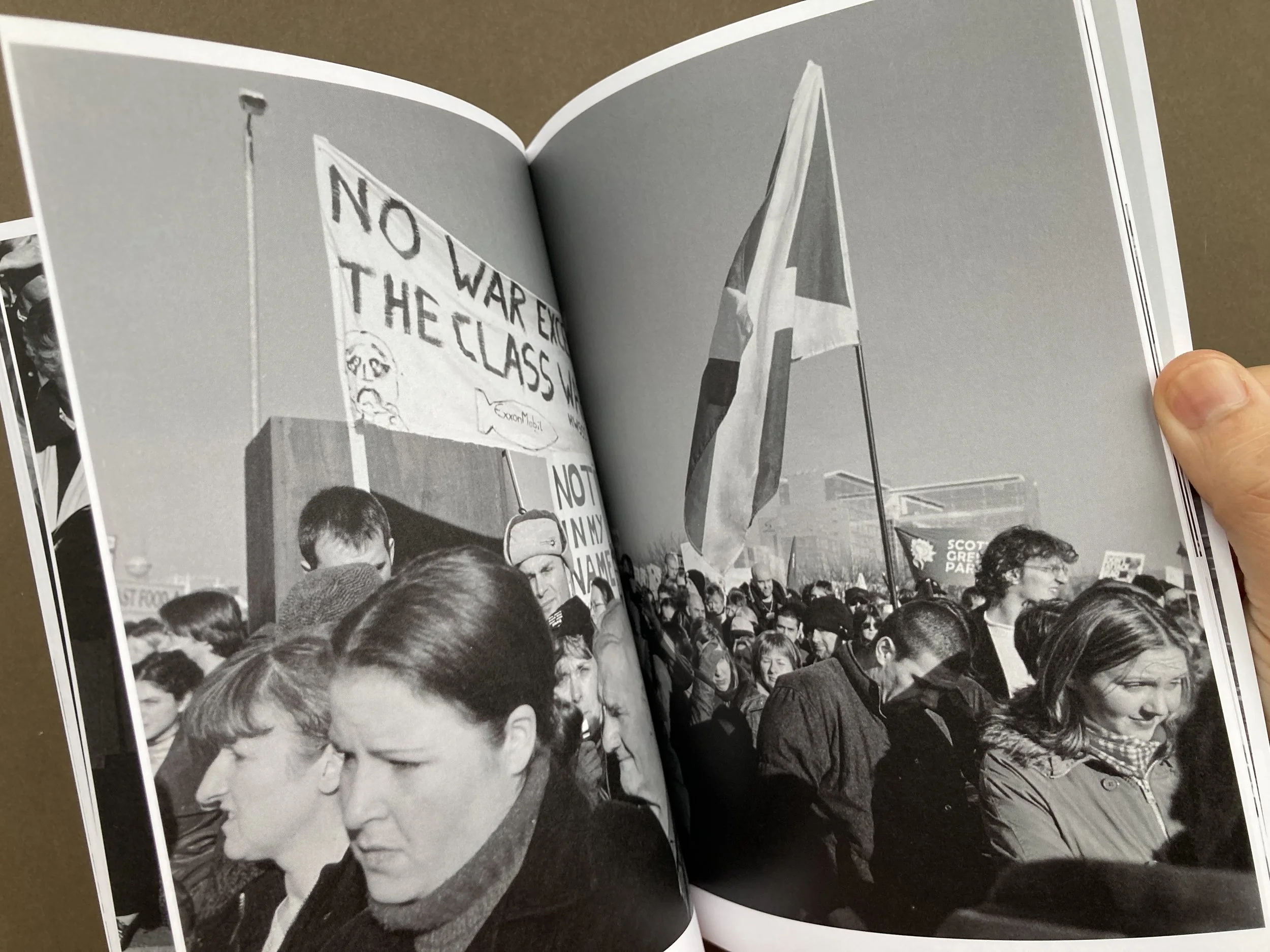
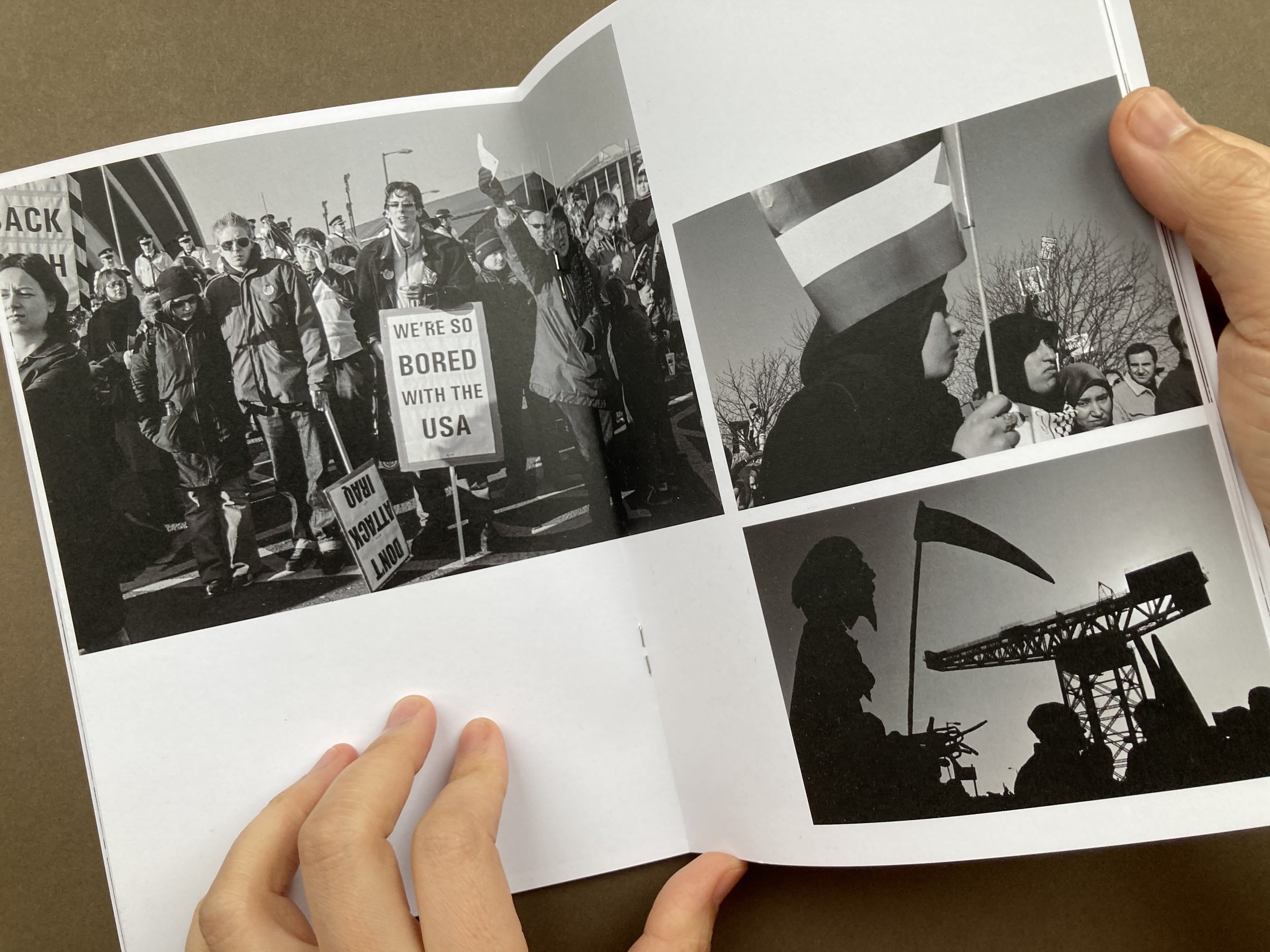
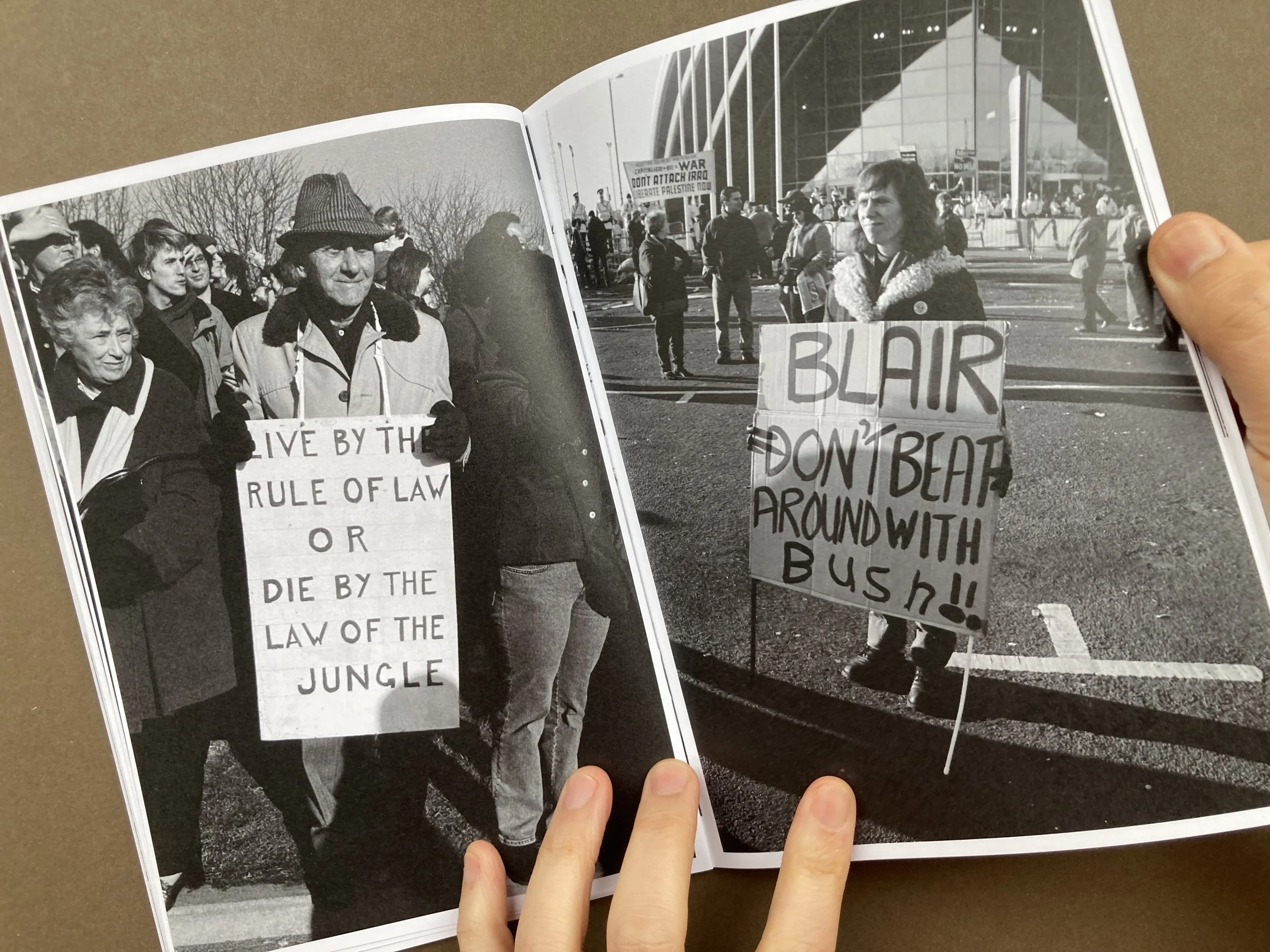
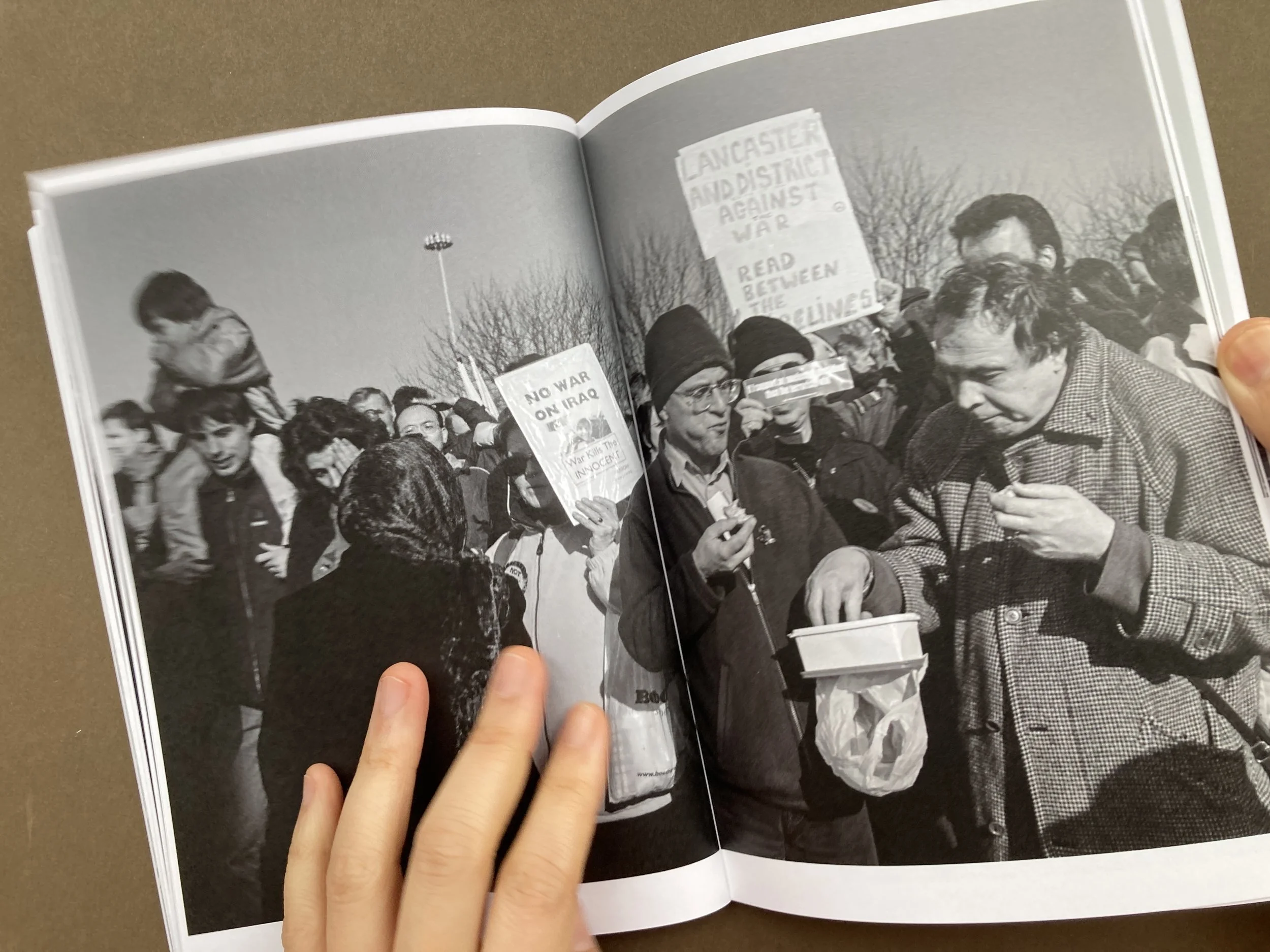
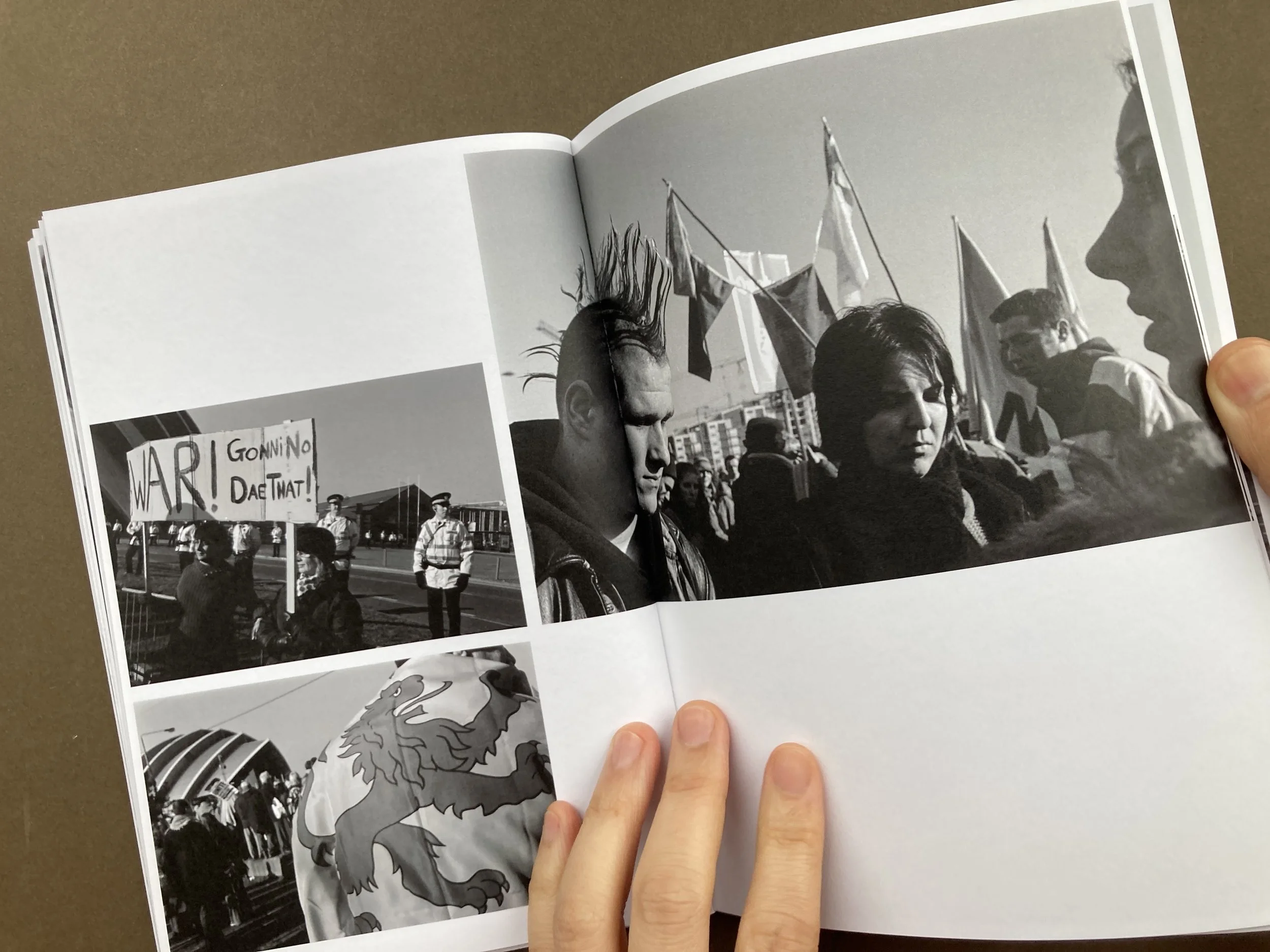
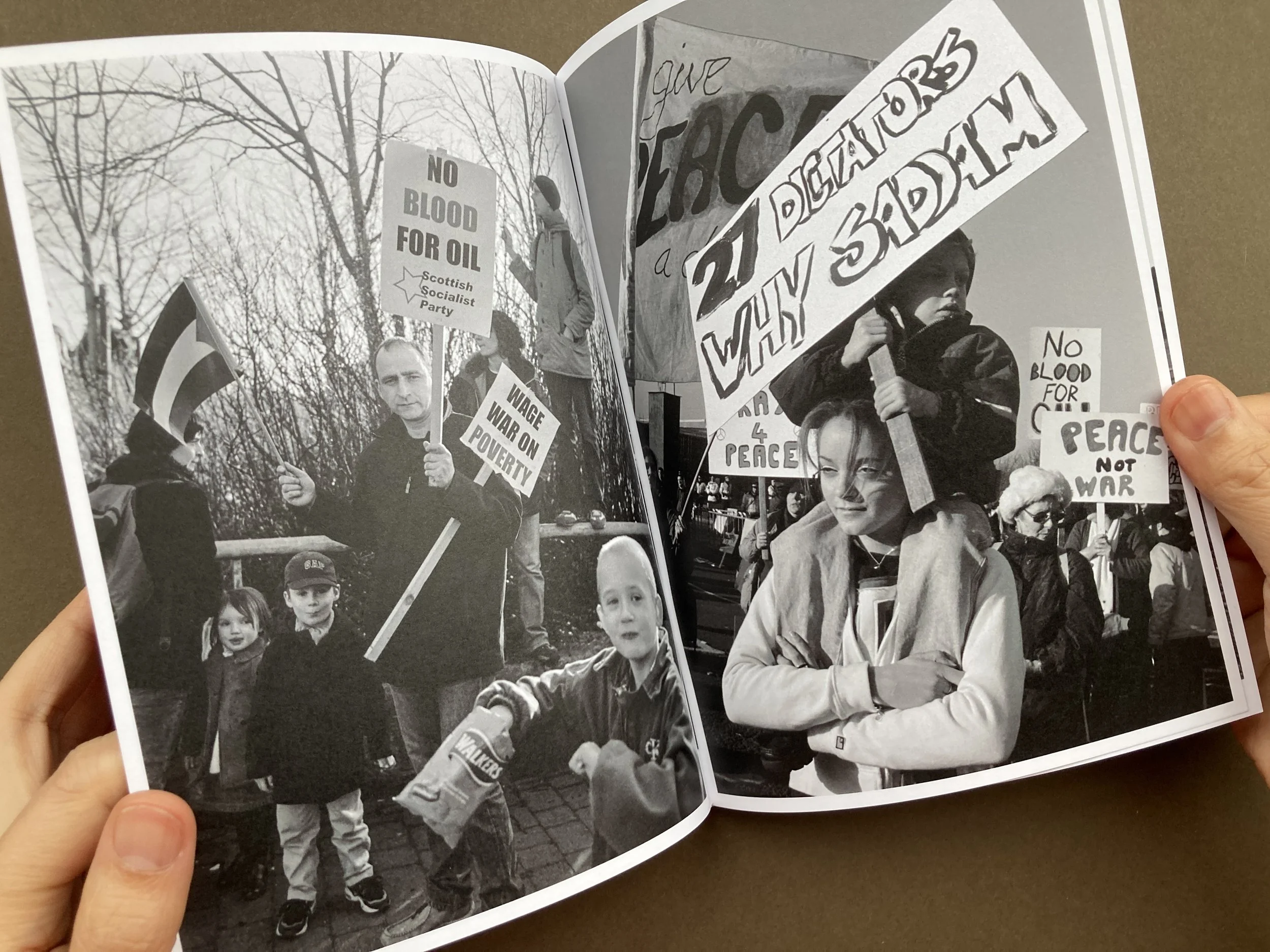
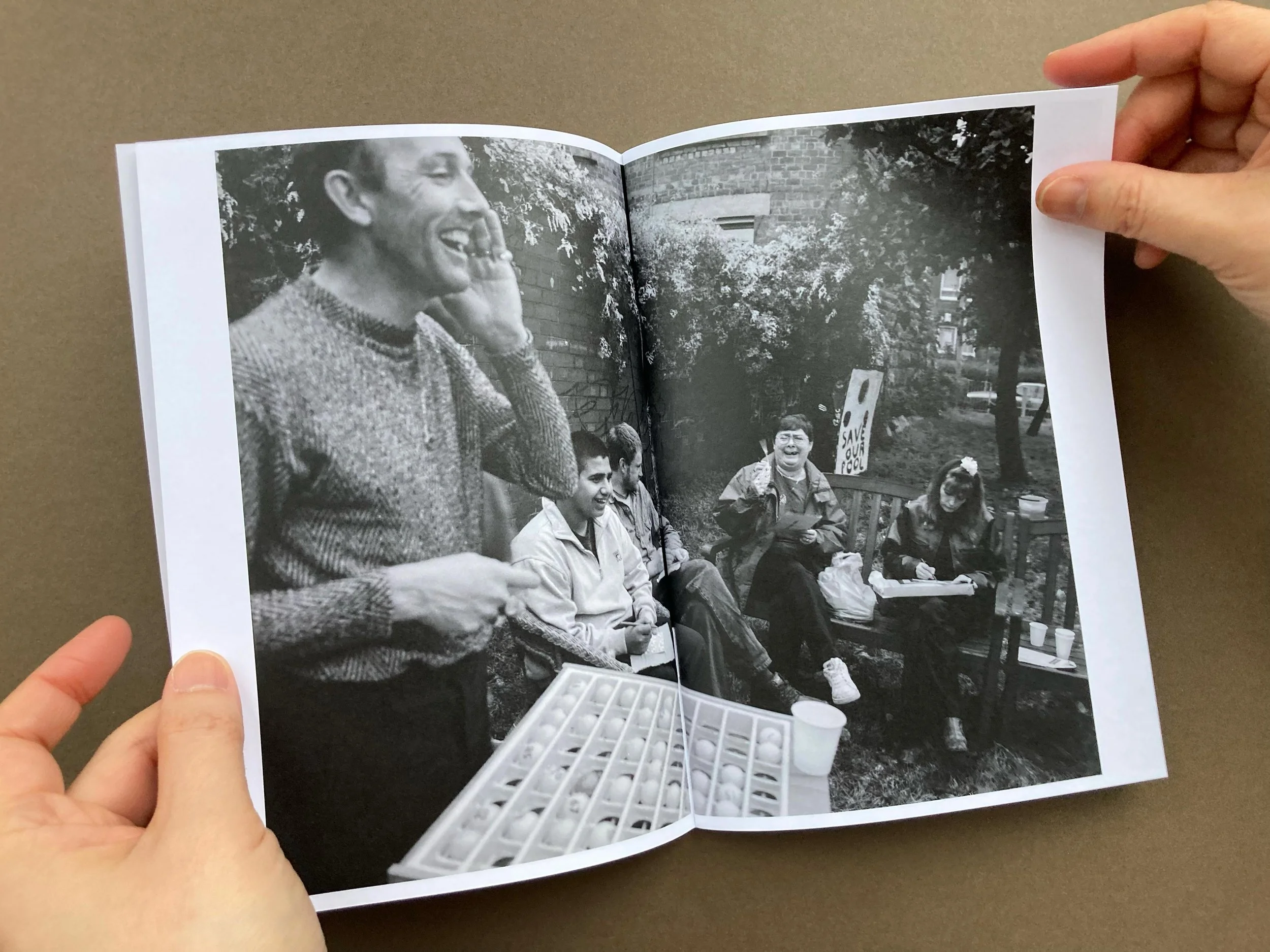
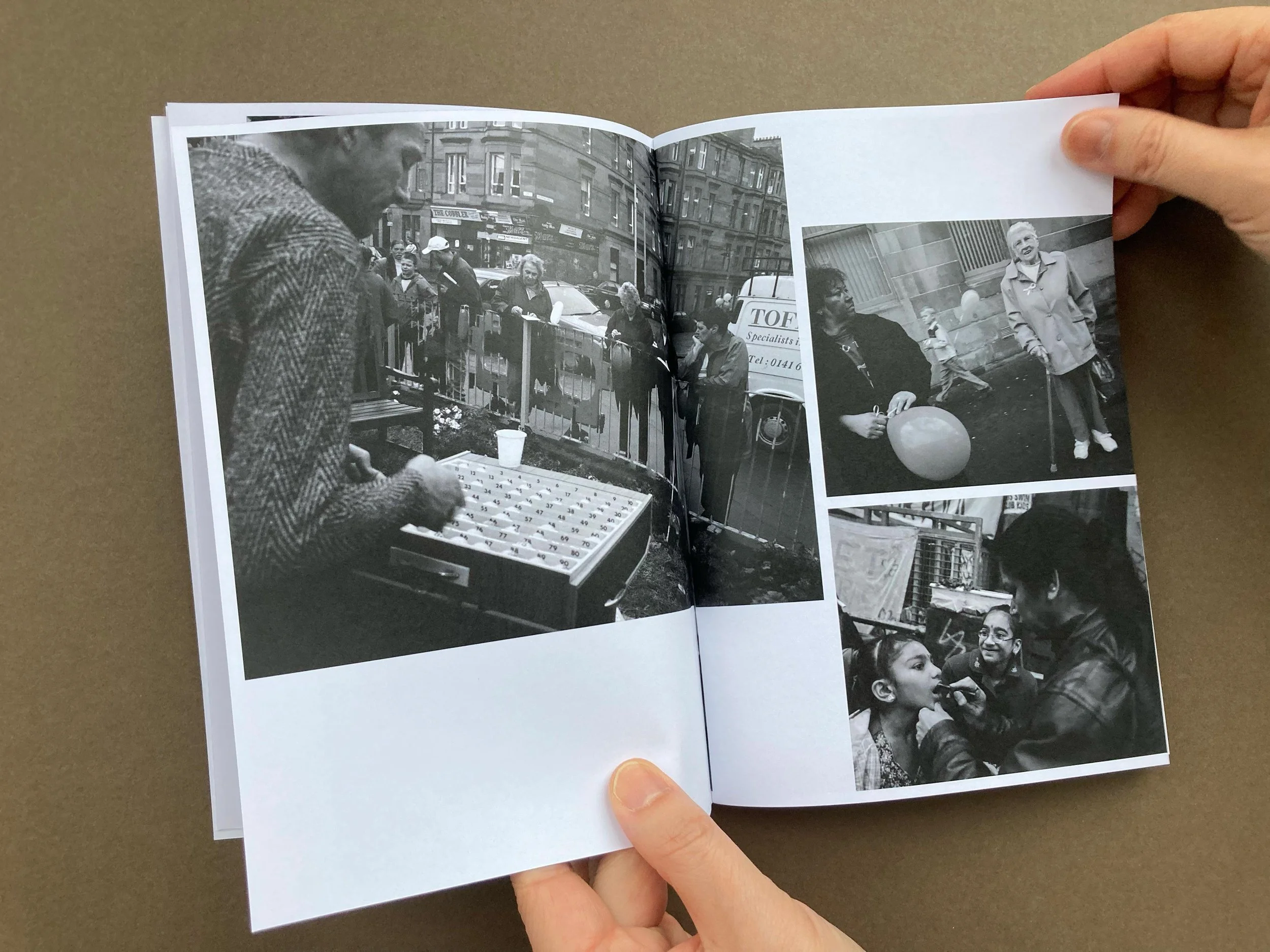
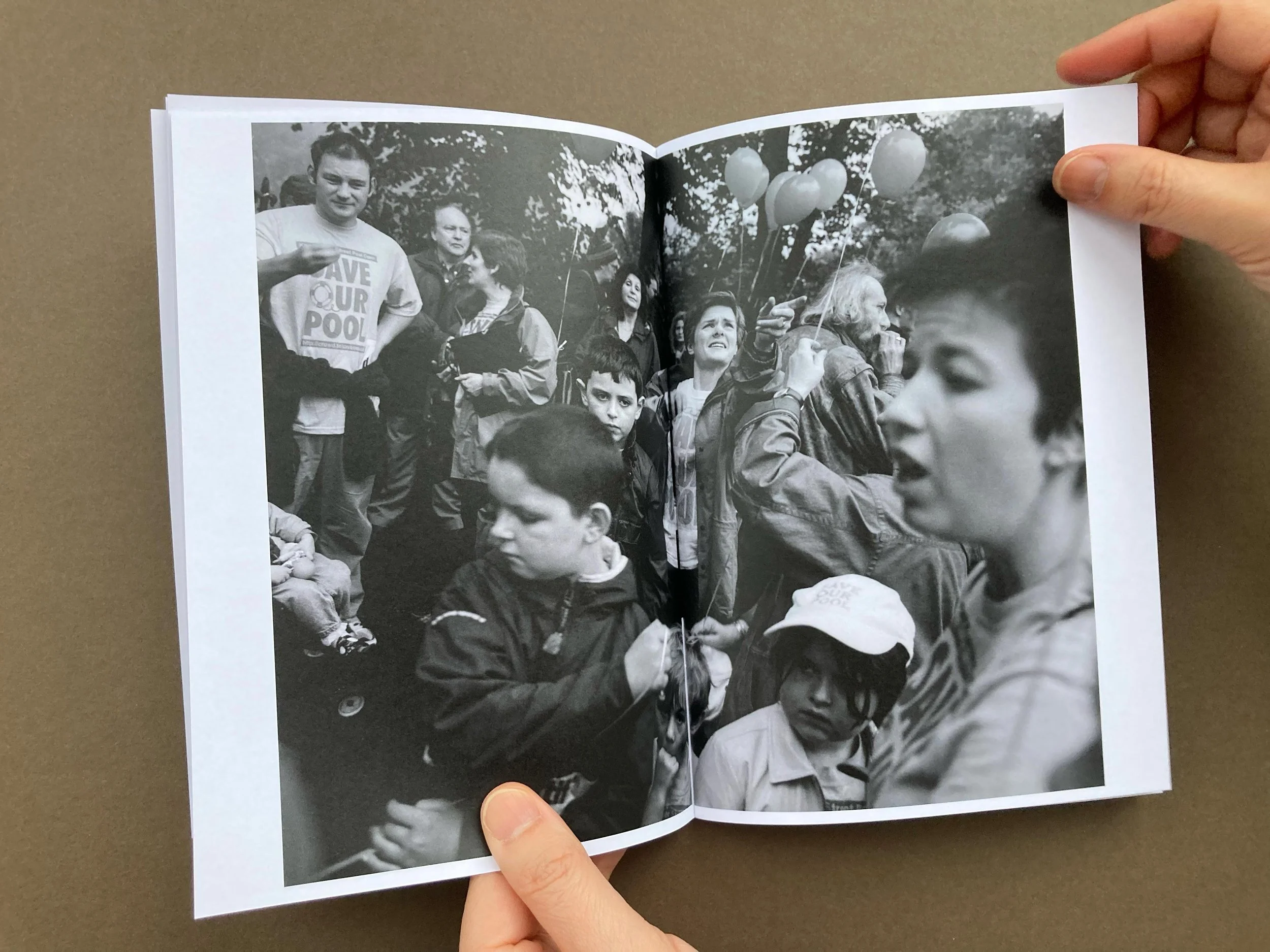
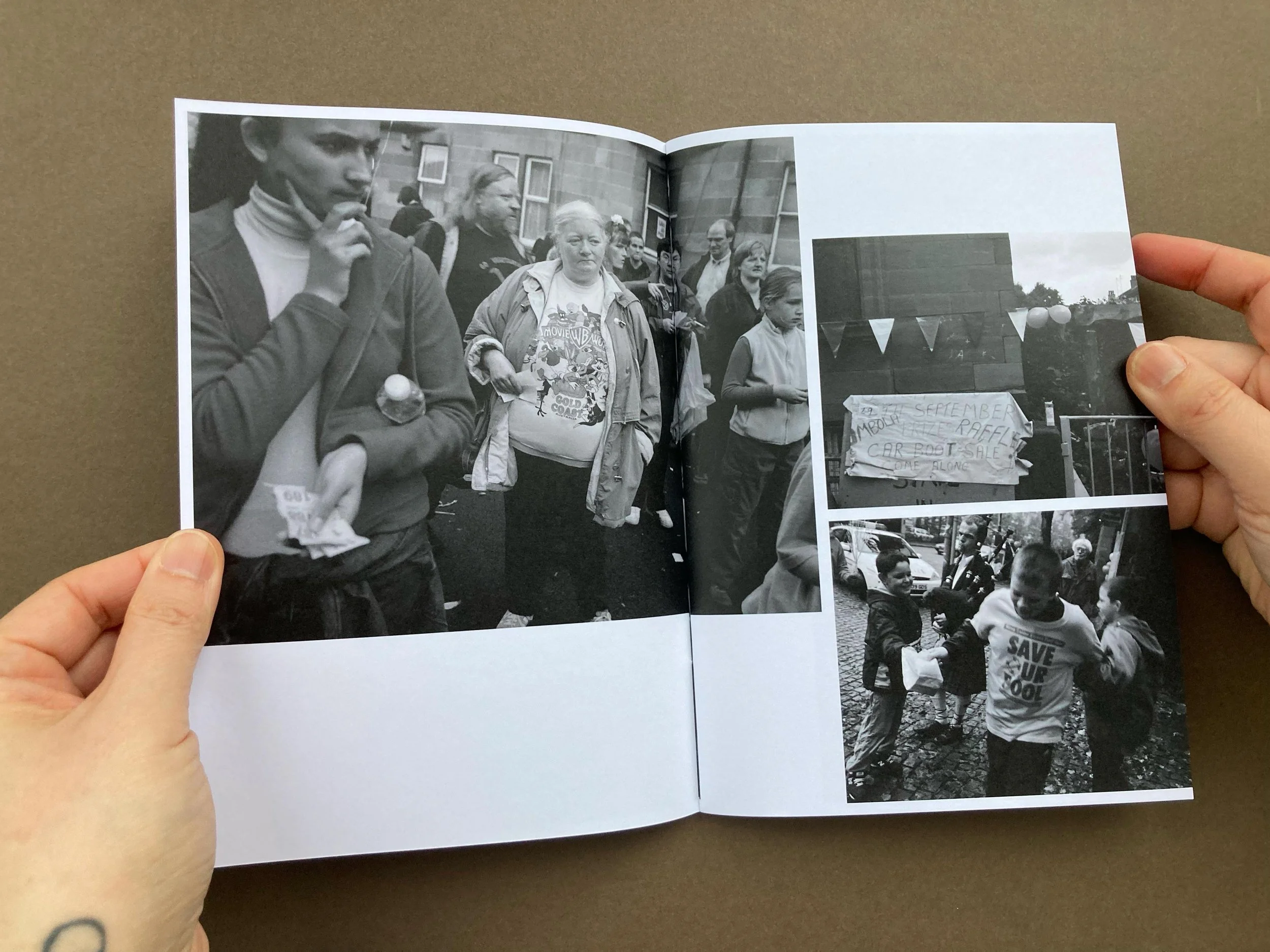
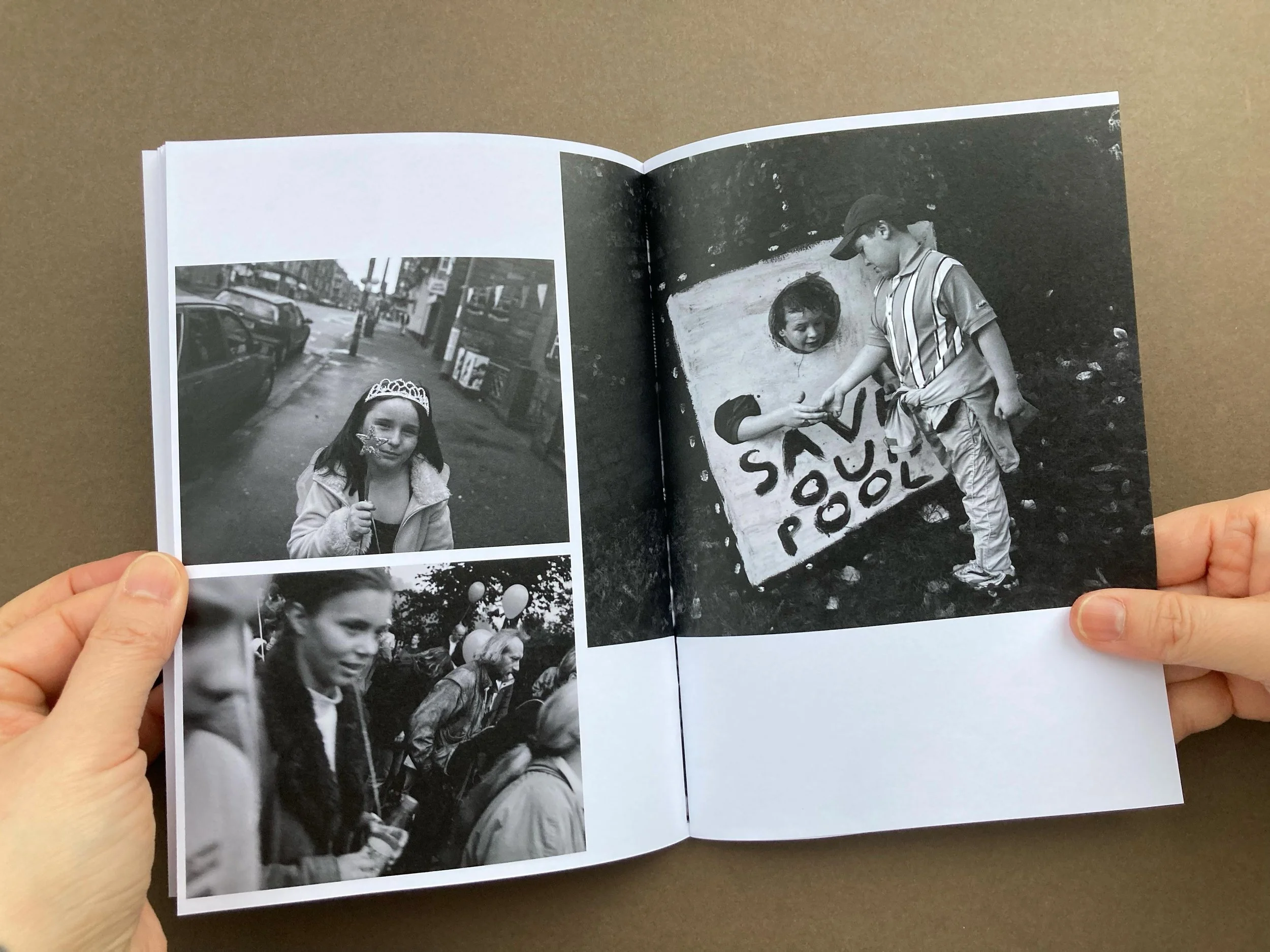
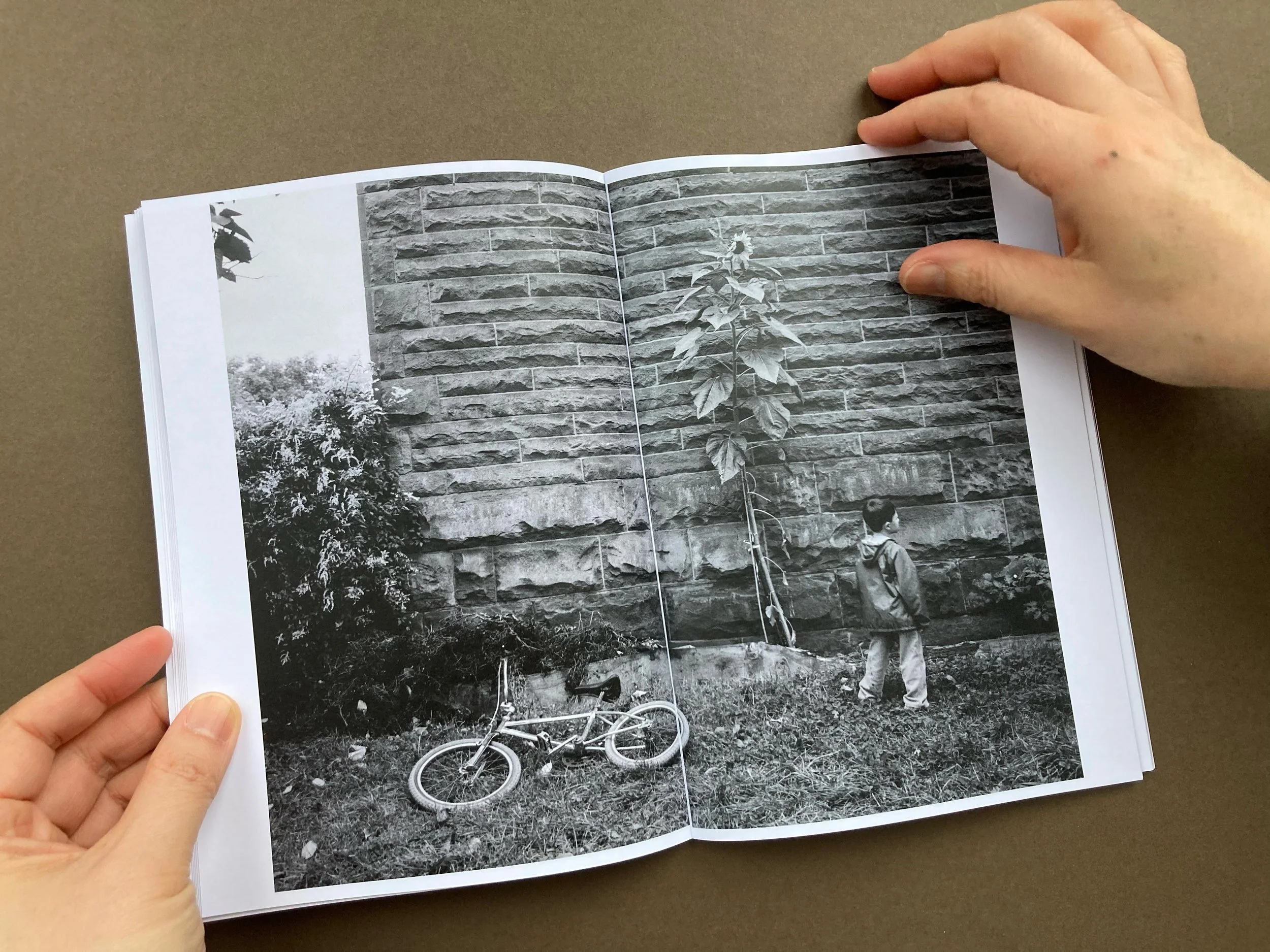
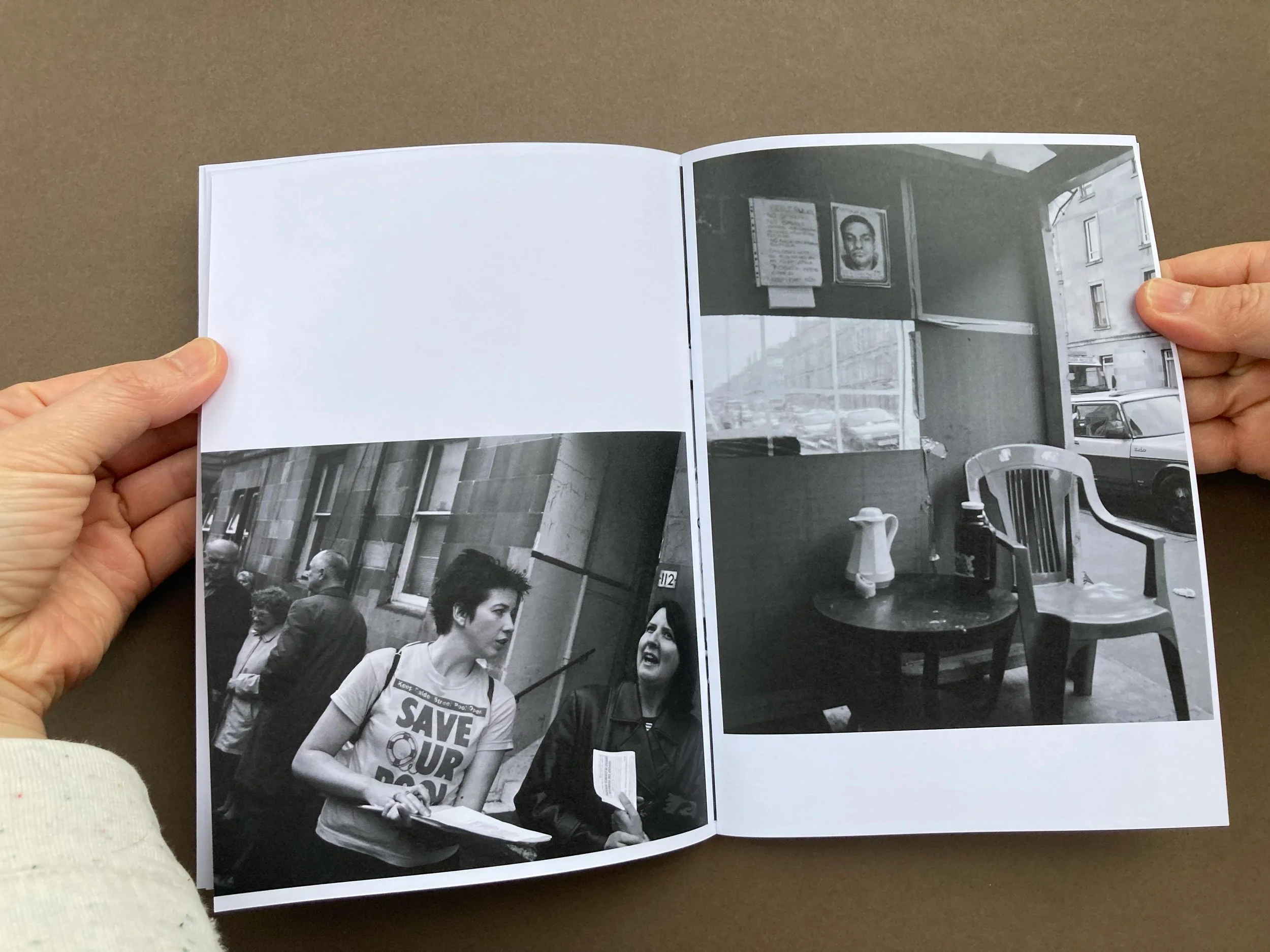
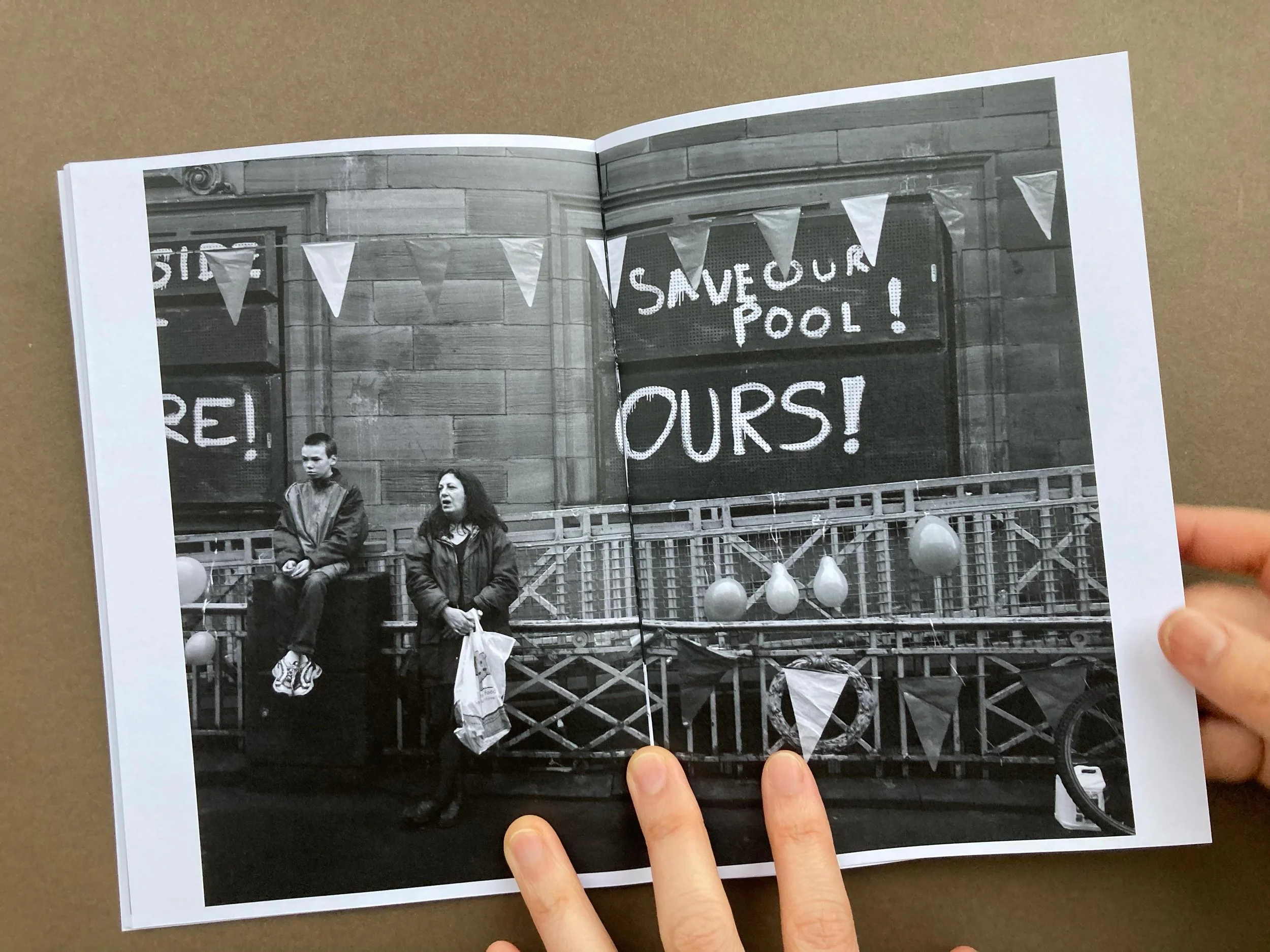
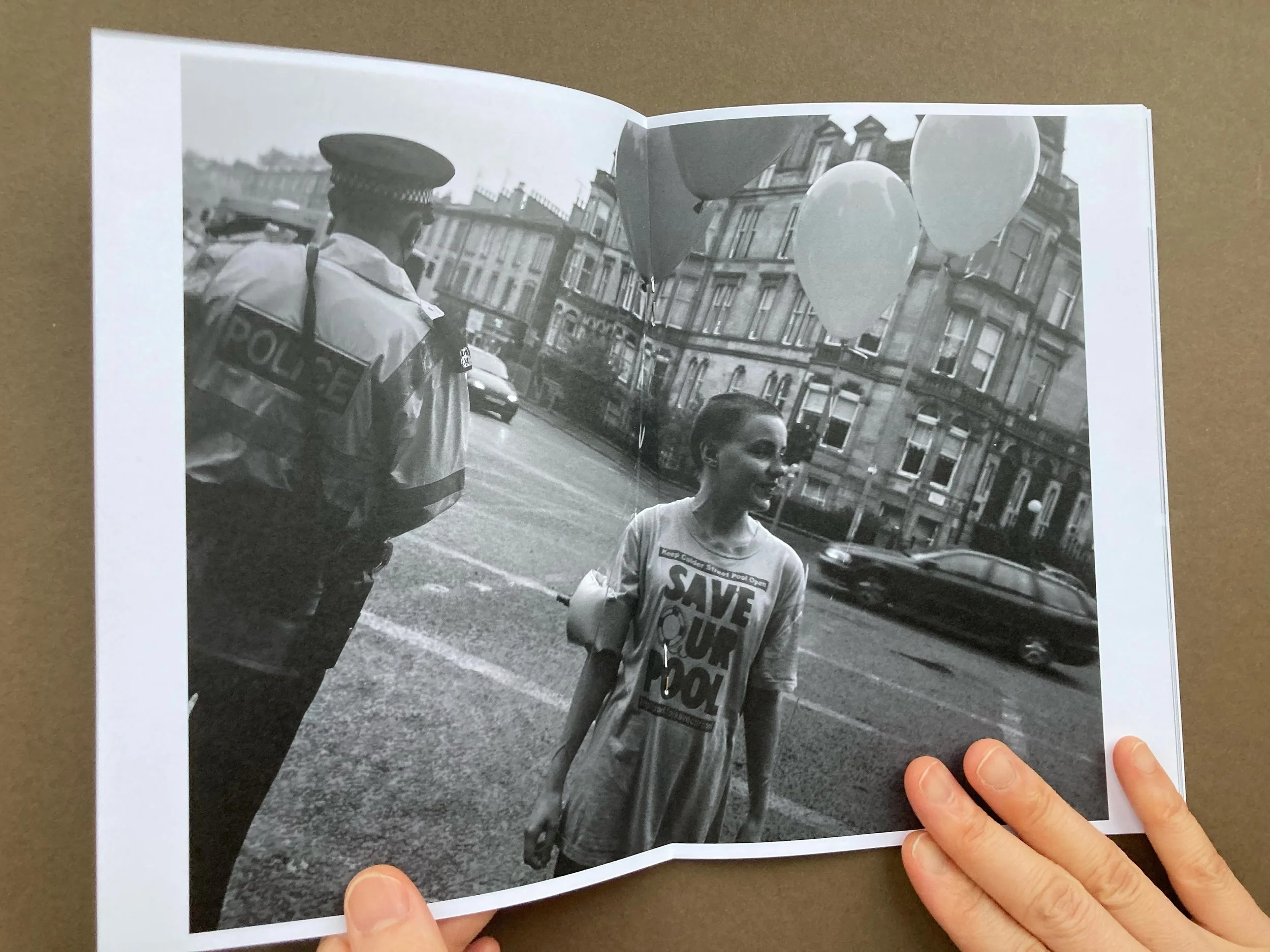
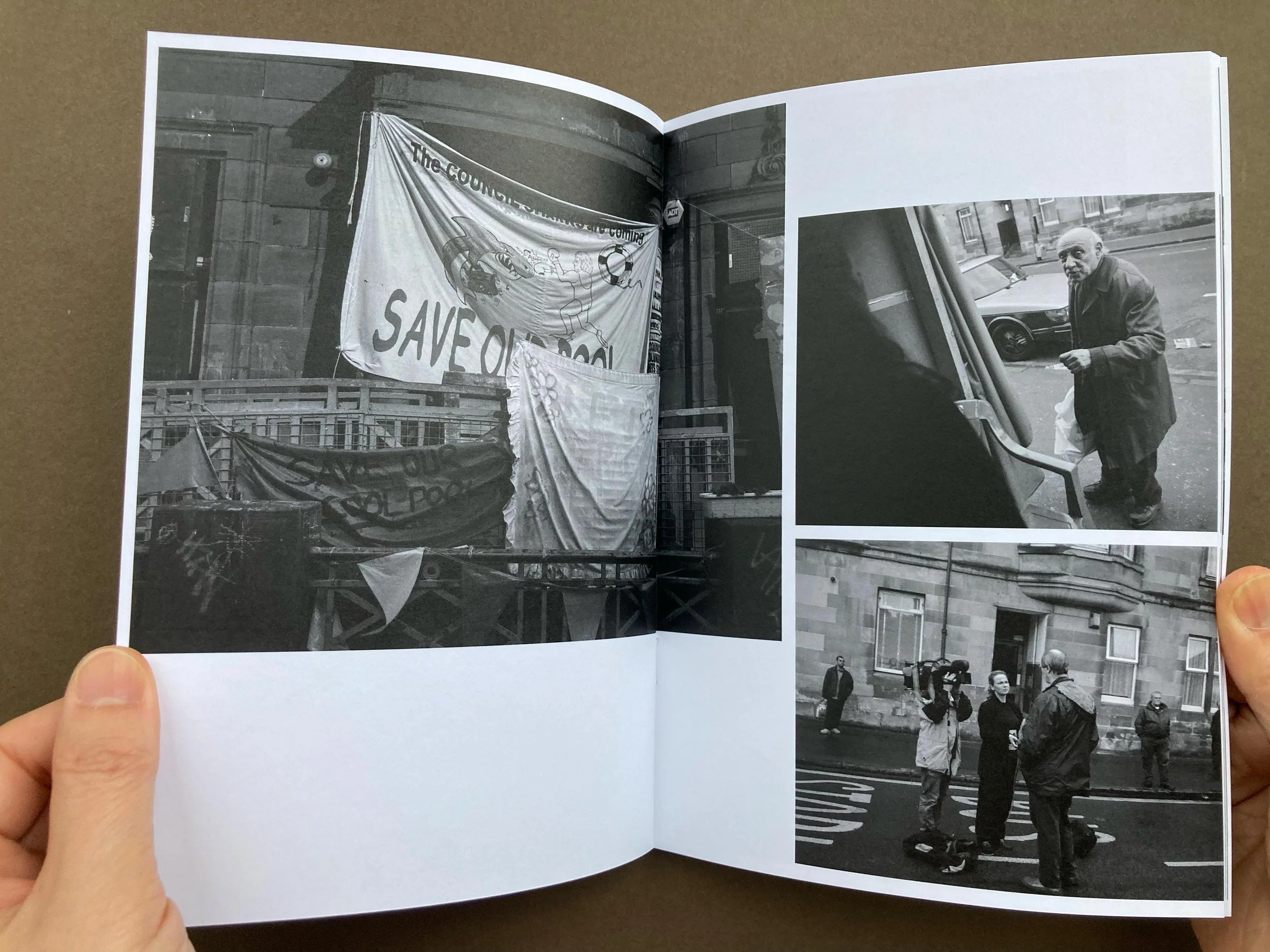
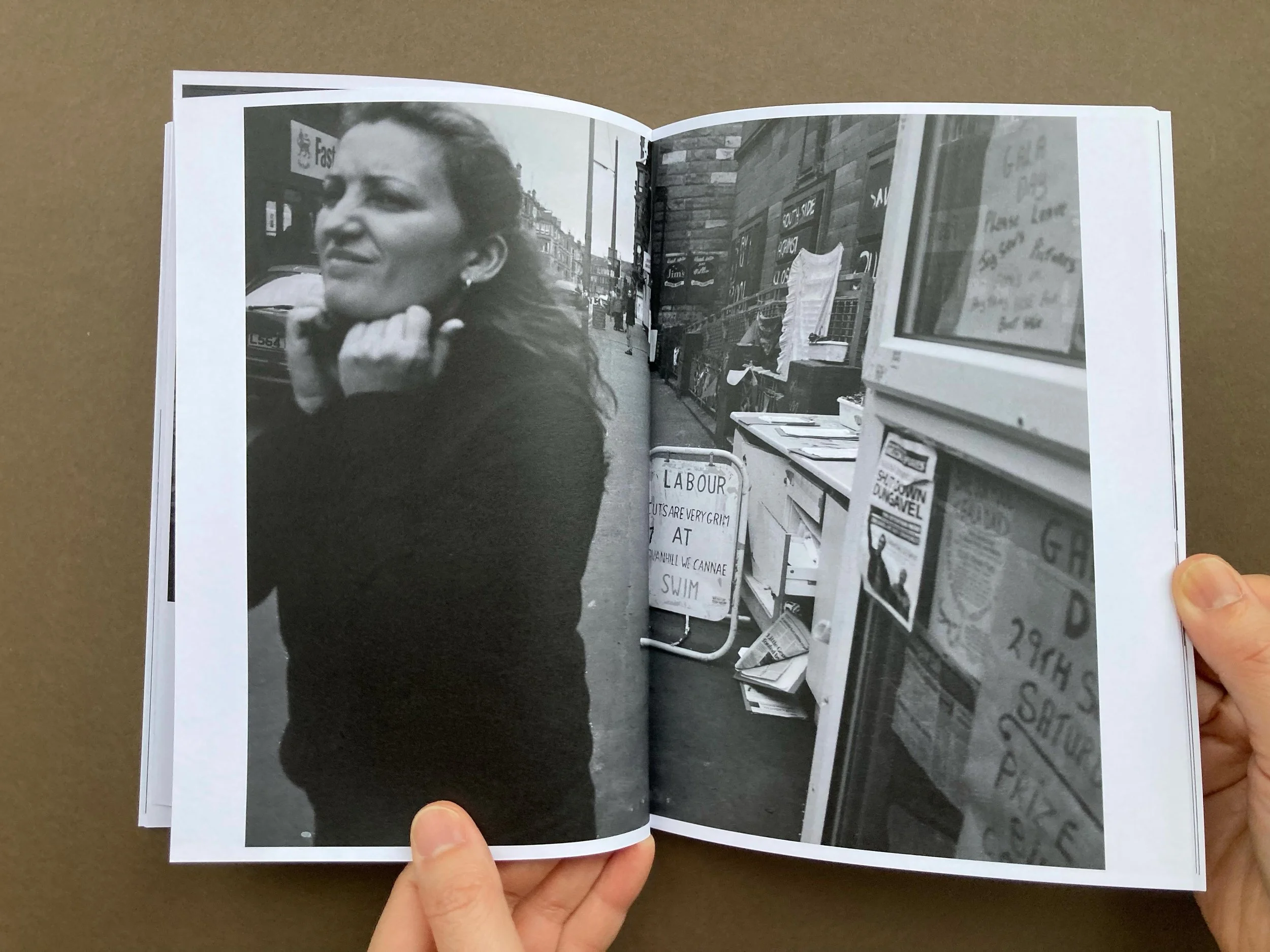
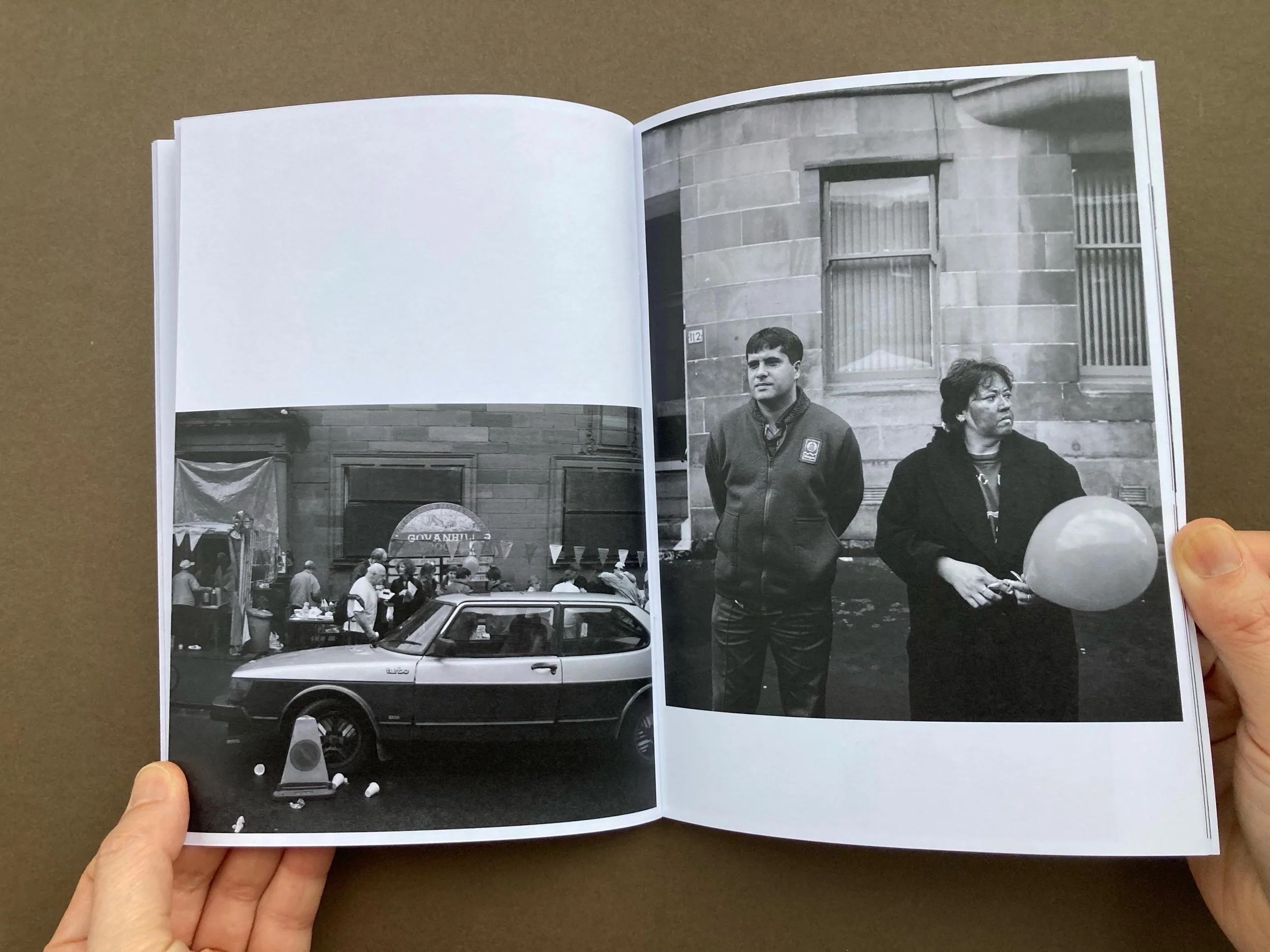
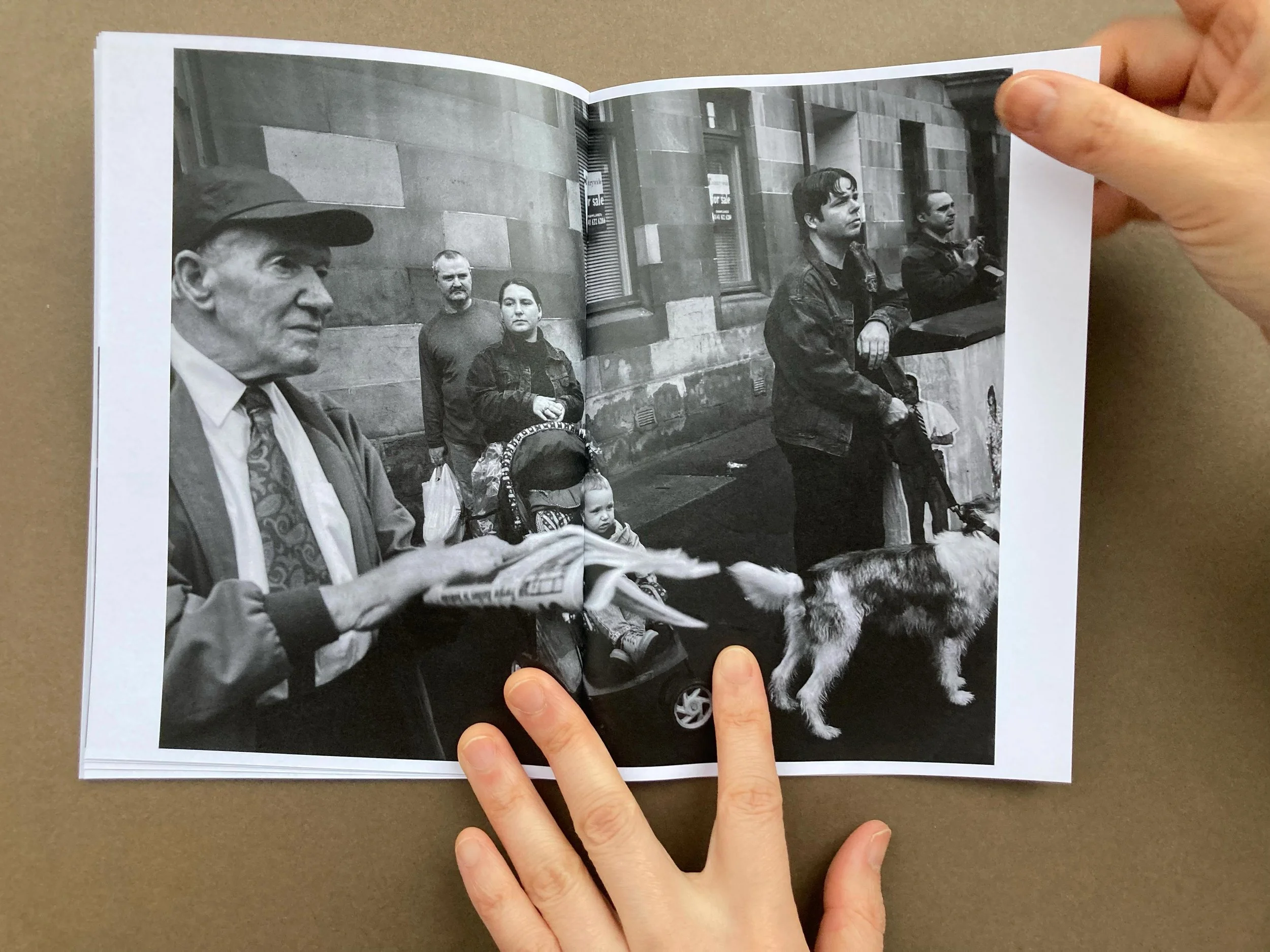
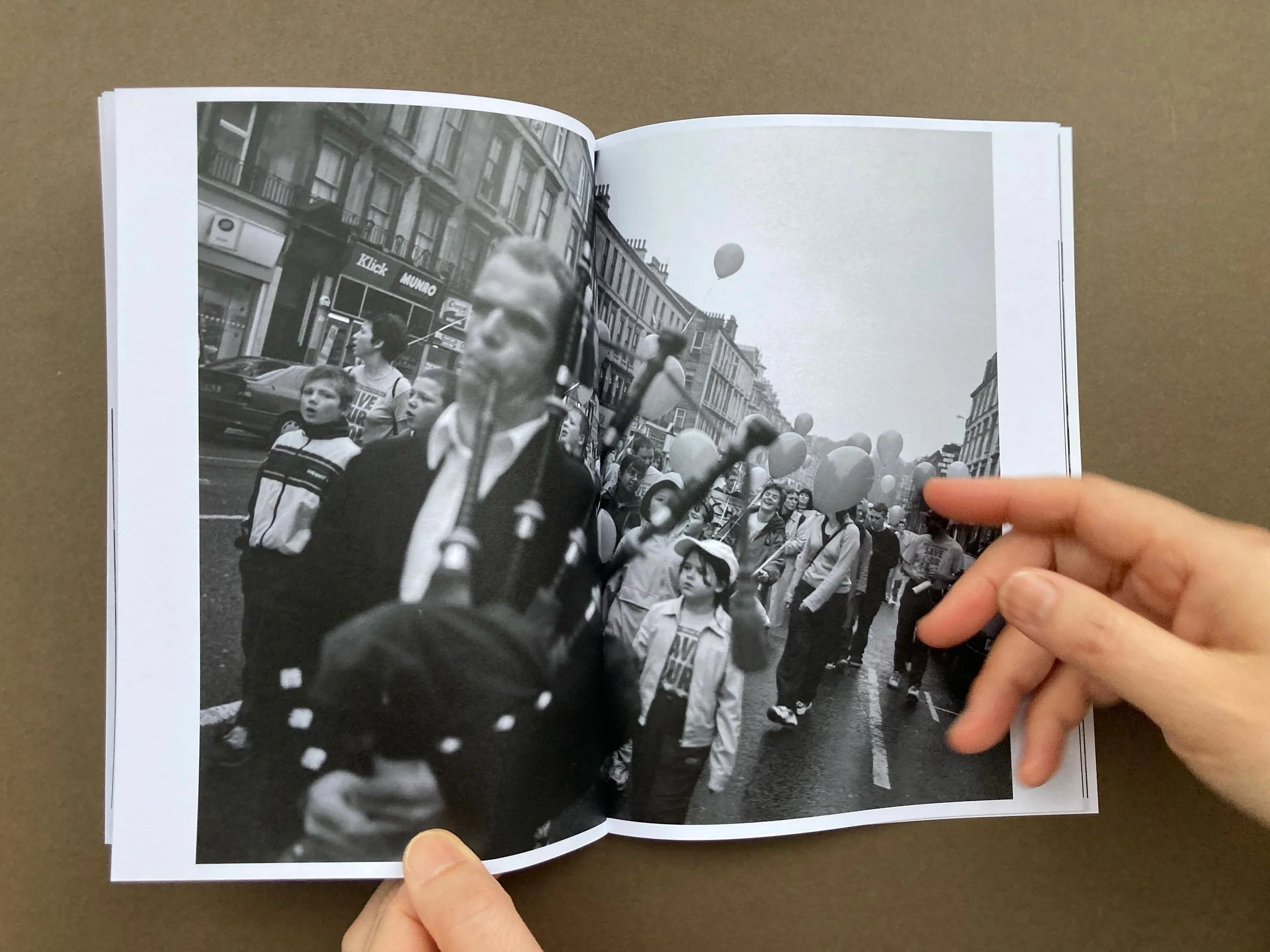
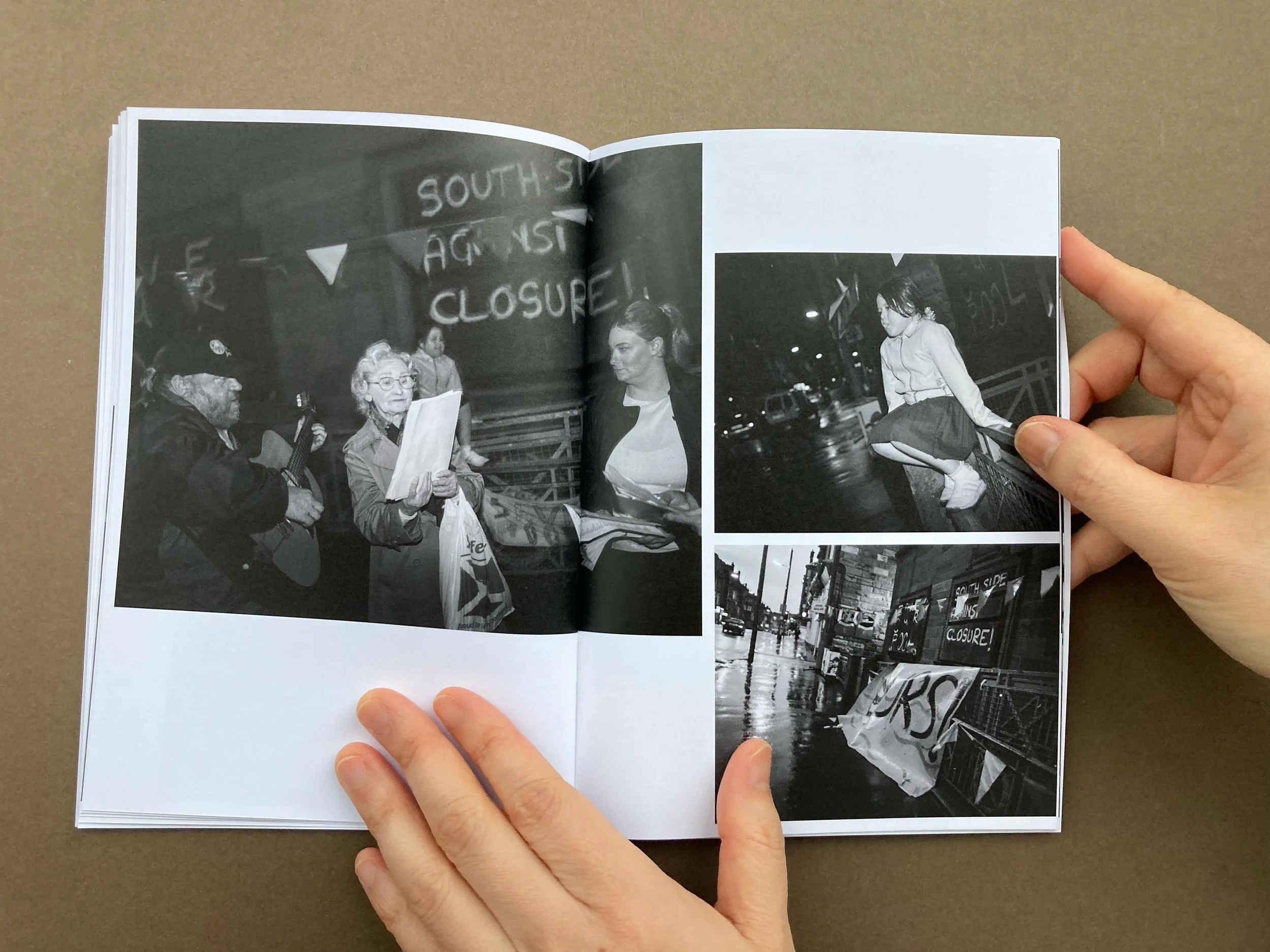
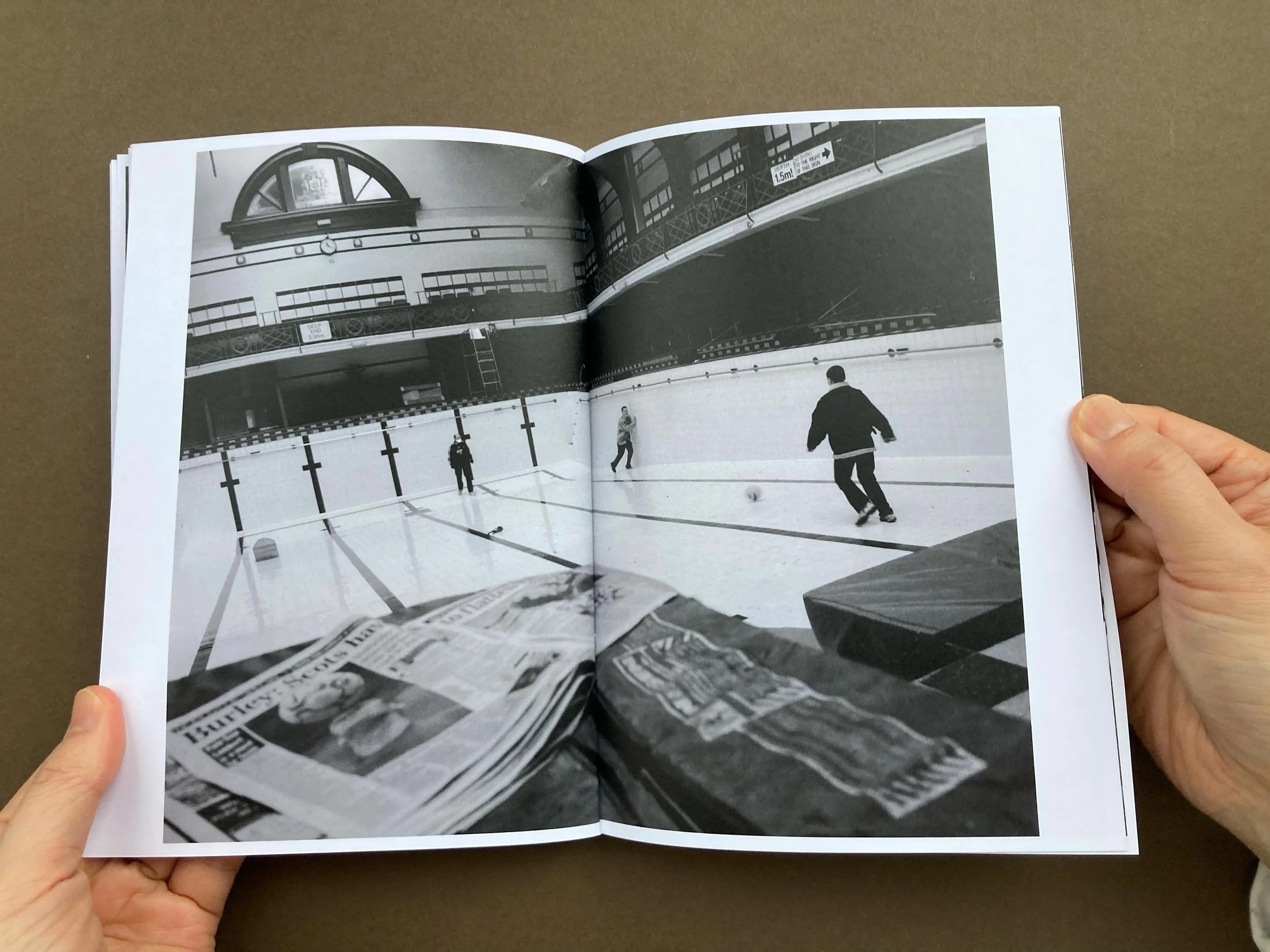
These photographs document a significant moment in Glasgow’s environmental activism movement and history, with marches by activists, local community and schoolchildren using direct action to object to the proposals of the carving through of Pollok Park woods and green space estate to create an M77 motorway extension.
Activists and concerned Glaswegians marched, from the city centre out to Pollok Park, and to what had become known as Carhenge - a symbolic anti-motorway protest using rusting cars, upended into the ground as an artistic show of defiance and grass roots resistance.
The protests evolved into Pollok Free State, a larger encampment of activism, a temporary autonomous zone resisting authority.
Further Information
Gehan Macleod, activist at the Pollok Free State camp who took part in resisting the M77 motorway extension talks in this article of her memories of that time, Words of Resistance: Pollok Free State, “Cordons, campfires and resisting car culture in the 1990s”.
Further information about the protests can be read here on South Glasgow Heritage and Environment Trust website: The Pollok Free State and it’s Legacy, written by Romy Galloway.
An image from this publication was recently exhibited as part of the Steve McQueen ‘Resistance’ exhibition at the Modern Two gallery, of National Galleries of Scotland: “Conceived by acclaimed artist and filmmaker, Steve McQueen, Resistance explored how acts of protest have shaped life in the UK and the powerful role of photography in documenting and driving change. Drawing from diverse public archives and personal collections, these photographs testify to the importance of the camera bearing witness.”
___
Zines are a low cost way of printing photographic publications, making them affordable to many and an accessible way into buying photography.
As such, as they are a low cost printing option, there can be slight variations in colour matching and printing across various zines from the same series, as ultimately they are printed on various printing presses at the printers.
Of course we try to minimise this, but this is the nature of zine printing. We appreciate your understanding.
‘No M77’ CarHenge, Glasgow, 1994/95.
A5
40 Pages
27 Photographs
With a foreword by Rosie Kane, activist at Pollok Free State, and former Member of Scottish Parliament.
‘No M77’ Carhenge, Pollok Estate, Glasgow, 1994/95.
These photographs document a significant moment in Glasgow’s environmental activism movement and history, with marches by activists, local community and schoolchildren using direct action to object to the proposals of the carving through of Pollok Park woods and green space estate to create an M77 motorway extension.
Activists and concerned Glaswegians marched, from the city centre out to Pollok Park, and to what had become known as Carhenge - a symbolic anti-motorway protest using rusting cars, upended into the ground as an artistic show of defiance and grass roots resistance.
The protests evolved into Pollok Free State, a larger encampment of activism, a temporary autonomous zone resisting authority.
Further Information
Gehan Macleod, activist at the Pollok Free State camp who took part in resisting the M77 motorway extension talks in this article of her memories of that time, Words of Resistance: Pollok Free State, “Cordons, campfires and resisting car culture in the 1990s”.
Further information about the protests can be read here on South Glasgow Heritage and Environment Trust website: The Pollok Free State and it’s Legacy, written by Romy Galloway.
An image from this publication was recently exhibited as part of the Steve McQueen ‘Resistance’ exhibition at the Modern Two gallery, of National Galleries of Scotland: “Conceived by acclaimed artist and filmmaker, Steve McQueen, Resistance explored how acts of protest have shaped life in the UK and the powerful role of photography in documenting and driving change. Drawing from diverse public archives and personal collections, these photographs testify to the importance of the camera bearing witness.”
___
Zines are a low cost way of printing photographic publications, making them affordable to many and an accessible way into buying photography.
As such, as they are a low cost printing option, there can be slight variations in colour matching and printing across various zines from the same series, as ultimately they are printed on various printing presses at the printers.
Of course we try to minimise this, but this is the nature of zine printing. We appreciate your understanding.